





horse-chestnut
Aesculus hippocastanum
The horse-chestnut tree is a tall tree with big, beautiful leaves and lovely white flowers. In the fall, it produces shiny, brown seeds called conkers that kids love to collect!
Habitat: Urban areas
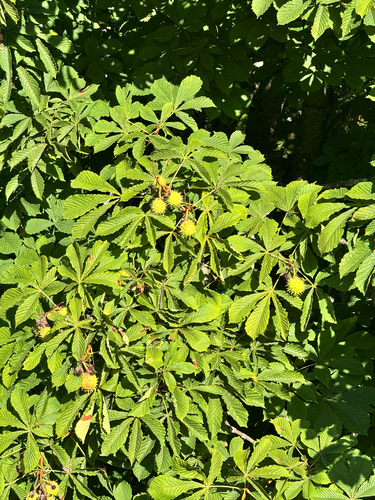
The horse-chestnut has large, palmate leaves, each with 5-7 leaflets. Its striking white, candle-like flower clusters feature unique yellow and red blotches, maturing into spiky green fruits containing shiny brown 'conkers'.
Category
PlantsRarity
Common
Danger
2/5 · Low
Snaps
5
Conkers were once ground up and used as soap due to natural frothing chemicals called saponins!
Horse-chestnut flowers start with yellow spots that magically turn red after being pollinated!
If you cut off a leaf, the scar left on the twig looks exactly like a tiny horseshoe.
The 'horse' in its name might come from old beliefs it could cure horses' coughs!
Horse-chestnut has a tough, spiky green husk that protects its developing seeds from hungry animals until they are ready to drop.
Its white flowers have yellow and red spots that change color, guiding pollinators to the freshest nectar.
Horse-chestnut leaves, bark, and seeds contain bitter compounds that deter most hungry animals from eating them.
Apis mellifera
Gathers nectar and pollen
Bombus terrestris
Important early-season pollinator
Cameraria ohridella
Larvae mine and damage leaves
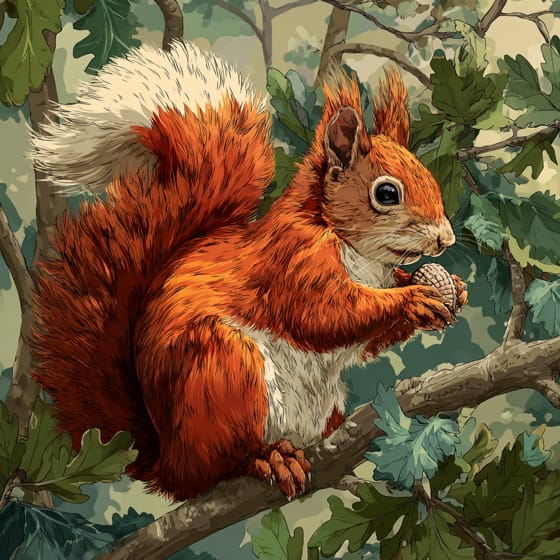
Sciurus vulgaris
Uses branches for nesting
Deciduous plants periodically shed all their leaves, typically during autumn or dry seasons.
Flowering plants are any plants that produce flowers as part of their reproductive cycle.
Shade tolerant plants are adapted to grow and thrive in areas with low light levels, requiring less direct sunlight.
Broadleaf trees are angiosperms characterized by flat, wide leaves that are typically shed annually in temperate climates.

Fruit-bearing plants produce fruits, which are the mature ovaries of flowering plants containing seeds.

Nut bearing plants produce hard-shelled fruits, commonly known as nuts, which contain a single seed and are a valuable food source.

Describes plants that are particularly attractive and beneficial to a wide range of pollinating organisms.

Rapid growing plants exhibit accelerated growth rates, quickly increasing in size and biomass within a short period.

This habitat trait indicates species that can coexist with humans in urban and suburban environments, utilizing man-made structures and green spaces.
Danger
2/5 · Low
Don't eat the seeds! They can make you feel sick.
The easiest way to identify horse-chestnut is to use the Snappit nature identifier app.
2000-3000 cm
1500-2500 cm
1-2 cm
Spring
No
Moderate
Perennial
Zoom in to split clusters and explore where this object has been snapped.
Jul 26, 2025
FairhavenPhoto attribution
(c) Nick T., some rights reserved (CC BY-SA)
License: CC BY-SA 4.0 ↗
Image may be shown cropped inside the card frame.

Maine, US
You might spot American Bullfrog and Three-Toothed Cinquefoil.
View guide →

Washington, US
You might spot Bigleaf Maple, Mule Deer, and Oregon Grape.
View guide →
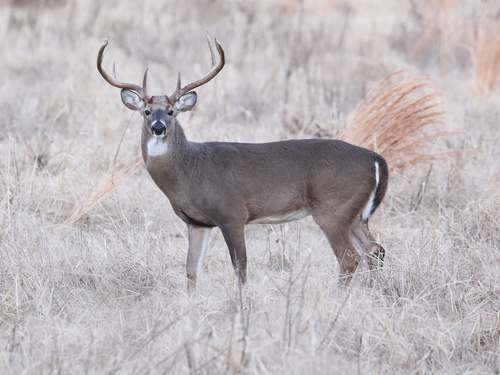
Ohio, US
You might spot White-Tailed Deer, Mayapple, and American Beech.
View guide →

Michigan, US
You might spot Trumpeter Swan and Ash-Throated Flycatcher.
View guide →

Washington, US
You might spot Duck, Eastern Gray Squirrel, and Western Redcedar.
View guide →

Washington, US
You might spot Snowy Owl, Bee, and American Crow.
View guide →
Take the discovery with you
Snap it with Snappit to identify it, learn what makes it special, and add the discovery to your collection.







.jpg&width=800)


_001.jpg&width=800)



