





Hoyosia codeti
Hoyosia codeti
Hoyosia codeti is a special type of insect that loves to live in warm places. It has a unique shape and bright colors that make it stand out in nature. Kids can spot it in gardens and parks!
Habitat: Urban areas
The Hoyosia codeti is a small, delicate moth with a wingspan of 25-40mm. Its wings often display intricate patterns of pale brown, beige, and sometimes subtle orange hues, featuring distinctive, slightly translucent patches that give them a 'windowed' appearance, setting them apart.
Category
InsectsRarity
Common
Danger
1/5 · Very low
Snaps
Be the first to snap!
Adult moths don't have mouths to chew; they drink their food!
Female moths release special scents to attract males from far away!
Moth wings are covered in thousands of tiny scales, like colorful dust!
Some moth caterpillars can camouflage themselves to look exactly like twigs!
Hoyosia codeti can fly accurately in the dark using complex eye structures that gather faint light, helping them find food and mates at night.
Hoyosia codeti has a long, coiled proboscis that acts like a straw, allowing it to sip nectar from deep flowers for energy.
Hoyosia codeti has furry bodies and wings covered in soft scales, which help absorb sound, making them harder for predators like bats to detect.
Young Hoyosia codeti munch on leaves, while adults sip sweet nectar from flowers!
Age differences: Larvae eat leaves; adults consume nectar using their proboscis.
Caprimulgus vociferus
Nocturnal bird that preys on flying insects.
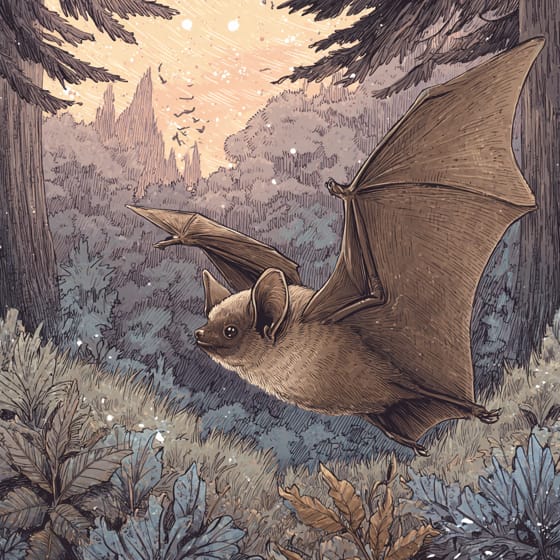
Myotis lucifugus
A common bat species that hunts moths using echolocation.

Ficus carica
Larvae may feed on the leaves of various fig species.

Datura wrightii
Visits night-blooming flowers for nectar, aiding pollination.
Social animals live in organized groups, cooperating for survival benefits such as foraging, defense, and raising offspring.
Colorful describes organisms or objects displaying a wide range of bright and distinct colors.
This trait characterizes organisms whose diet consists entirely or primarily of plant material.
Describes plants that are particularly attractive and beneficial to a wide range of pollinating organisms.

Diurnal animals are primarily active during daylight hours, typically resting or sleeping at night.

This habitat trait indicates species that can coexist with humans in urban and suburban environments, utilizing man-made structures and green spaces.

Describes organisms that transfer pollen, enabling the fertilization and reproduction of plants.
No aliases listed yet.
Danger
1/5 · Very low
Be gentle and watch from a distance; insects are delicate and can be scared easily.
The easiest way to identify Hoyosia codeti is to use the Snappit nature identifier app.
25-40 mm
10-18 mm
7-21 days
5-15 km/h
Young Hoyosia codeti munch on leaves, while adults sip sweet nectar from flowers!
Urban areas
Foraging
Zoom in to split clusters and explore where this object has been snapped.
Recent snaps will appear here as new observations are added.
Take the discovery with you
Snap it with Snappit to identify it, learn what makes it special, and add the discovery to your collection.







.jpg&width=800)



