





Ibex
Capra ibex
The Ibex is a wild mountain goat known for its long, curved horns. It is an excellent climber, often seen scaling steep cliffs with ease.
Habitat: Mountain regions
The Ibex has a stocky build and a short brownish-grey coat, often with a lighter belly. Males boast impressive, thick, ridged horns that curve backward, sometimes reaching over a meter long. Its distinctive horns and powerful legs make it stand out.
Category
MammalsRarity
Rare
Danger
2/5 · Low
Snaps
Be the first to snap!
A male ibex's magnificent curved horns can weigh more than 15 kilograms, quite a heavy crown!
Ibex eyes have horizontal pupils, giving them a super-wide panoramic view of their mountain home.
Ibex horns grow yearly rings, so you can count them to tell their age, like a tree!
They love licking mineral-rich rocks for salts, sometimes wearing deep grooves into the mountainside.
Ibex can scale incredibly steep rock faces using their specially adapted hooves, which gives them amazing grip.
Ibex has massive, ridged horns that help them defend against predators and battle rivals during mating season.
Ibex has excellent eyesight and balance, which helps them spot distant threats and navigate treacherous mountain paths.
Ibex can survive harsh, freezing mountain winters thanks to their thick double coat that provides insulation.
Ibex are plant-eaters, nibbling on grasses, herbs, and small shrubs found in their mountain homes.

Aquila chrysaetos
Preys on young or sick ibex.
Canis lupus
Hunts ibex, especially in winter.
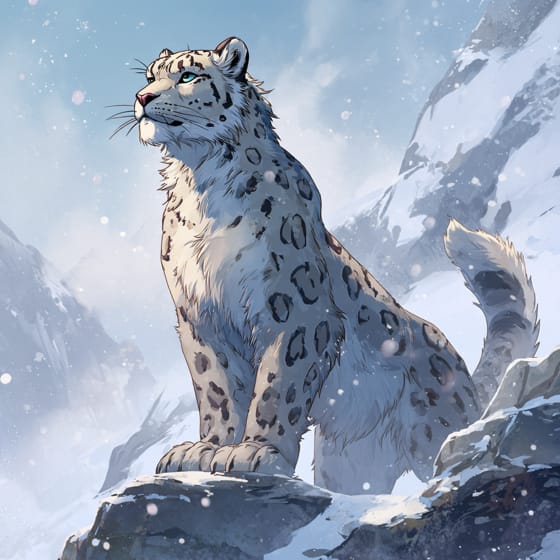
Panthera uncia
A primary predator in Asian ranges.
Poa alpina
A common food source for ibex.
Wildlife encompasses all undomesticated animal and plant life existing in their natural habitats.
Furry describes animals possessing a dense covering of soft hair or fur.
Social animals live in organized groups, cooperating for survival benefits such as foraging, defense, and raising offspring.
Characterized by having one or more hard, permanent, pointed projections on the head.

This trait characterizes organisms whose diet consists entirely or primarily of plant material.

This habitat trait identifies species found in mountainous regions, characterized by high elevation, steep slopes, and varying climate zones.

This trait signifies organisms belonging to a very old evolutionary group with ancestors dating back millions of years.
Danger
2/5 · Low
Do not approach wild ibexes. Admire them from a safe distance.
The easiest way to identify Ibex is to use the Snappit nature identifier app.
120-170 cm
30-100 kg
10-17 years
55 km/h
Ibex are plant-eaters, nibbling on grasses, herbs, and small shrubs found in their mountain homes.
Mountain regions
Foraging
Zoom in to split clusters and explore where this object has been snapped.
Recent snaps will appear here as new observations are added.
Take the discovery with you
Snap it with Snappit to identify it, learn what makes it special, and add the discovery to your collection.




.jpg&width=800)




.JPG&width=800)


.jpg&width=800)
