





Italian locust
Calliptamus italicus
The Italian locust is a lively grasshopper that loves to hop around in sunny fields. With its long legs and green body, it can jump really high and is often seen in groups.
Habitat: Grasslands
The Italian locust has a sturdy body, typically grey or brownish with darker spots on its wings. Its most distinctive feature is the bright reddish-orange coloring on the lower part of its powerful hind legs, which contrasts with its more muted body. It also has a prominent ridge on its back.
Category
InsectsRarity
Common
Danger
1/5 · Very low
Snaps
Be the first to snap!
A single female Italian locust can lay hundreds of eggs in a tiny underground pod!
Did you know that "locust" is just a phase some grasshoppers enter?
Their massive swarms can be so dense they sometimes block out the sun!
These powerful insects were even mentioned in ancient stories as forces of nature!
Italian locusts can gather in huge swarms because of overcrowding, that helps them find new food sources across wide areas.
Italian locusts can jump incredibly far because of their powerful hind legs, that helps them escape predators quickly.
Italian locusts have variable body colors that helps them blend perfectly with dry ground and vegetation.
Italian locusts can make sounds by rubbing their legs and wings together, which helps them attract mates.
These hungry insects munch on many different types of plants, especially grasses and cereals!

Falco tinnunculus
Kestrels hunt locusts as a food source.
Mantis religiosa
Mantises ambush and eat these locusts.

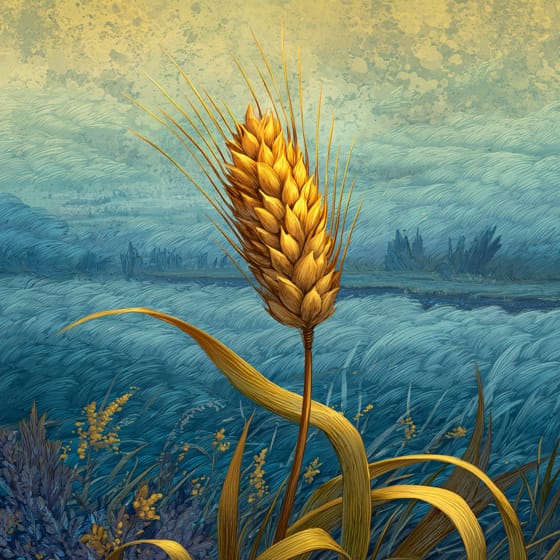
Triticum aestivum
Locusts can cause significant damage to wheat crops.
Hordeum vulgare
They consume barley, impacting agricultural fields.
Social animals live in organized groups, cooperating for survival benefits such as foraging, defense, and raising offspring.
Camouflaged describes organisms that possess coloring or patterns that allow them to blend into their environment.
Colorful describes organisms or objects displaying a wide range of bright and distinct colors.
Grassland habitats are terrestrial biomes dominated by grasses and herbaceous plants, supporting a variety of grazing animals.

This trait characterizes organisms whose diet consists entirely or primarily of plant material.

Diurnal animals are primarily active during daylight hours, typically resting or sleeping at night.

This trait identifies organisms that exhibit exceptional swiftness in movement for hunting, escape, or travel.

Describes organisms that transfer pollen, enabling the fertilization and reproduction of plants.
No aliases listed yet.
Danger
1/5 · Very low
Be gentle and don't try to catch them; they like to hop freely!
The easiest way to identify Italian locust is to use the Snappit nature identifier app.
30-60 mm
15-30 mm
30-90 days
15 km/h
These hungry insects munch on many different types of plants, especially grasses and cereals!
Grasslands
Grazing
Zoom in to split clusters and explore where this object has been snapped.
Recent snaps will appear here as new observations are added.
Take the discovery with you
Snap it with Snappit to identify it, learn what makes it special, and add the discovery to your collection.






.jpg&width=800)



