.jpg&width=800)





Japanese barberry
Berberis thunbergii
Japanese barberry is a small, colorful shrub with bright yellow flowers and red berries. It has sharp thorns that help protect it from animals. This plant is often used in gardens for its pretty colors!
Habitat: Urban areas
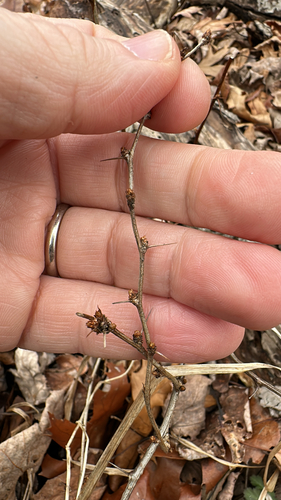
The Japanese barberry is a dense, spiny shrub with arching branches and small, spoon-shaped leaves that turn brilliant red, orange, or purple in fall. It produces tiny yellow-orange flowers and bright red, oval berries that often persist through winter, standing out against its sharp thorns.
Category
PlantsRarity
Common
Danger
2/5 · Low
Snaps
36
In some places, Japanese barberry is an invasive species, outcompeting native plants!
Its wood is very hard and was once used to make tool handles!
Some varieties of Japanese barberry don't even have thorns!
The name "barberry" comes from an Arabic word for "shell," referring to its shiny leaves!
Its bright red berries stay on the branches all winter, providing crucial food for birds when other sources are scarce.
Japanese barberry can grow in many different soil types, even poor ones, helping it survive in tough spots.
Birds eat its persistent berries and spread the seeds far and wide, helping new barberry plants grow.
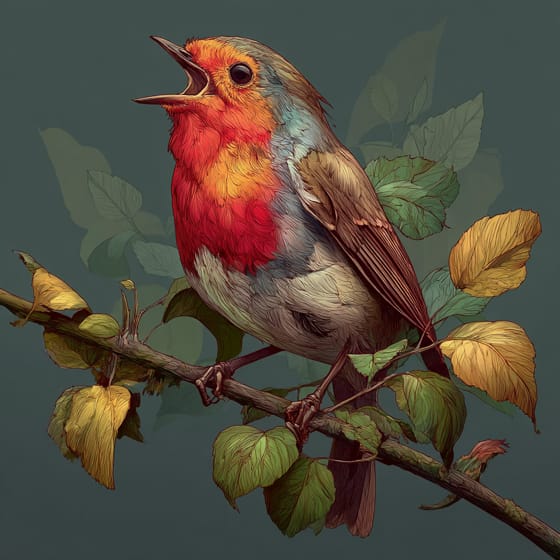
Turdus migratorius
Feeds on its red berries, especially in winter.
Apis mellifera
Relies on its flowers for nectar and pollen.

Peromyscus leucopus
Often uses its dense, thorny branches for protection.
Deciduous plants periodically shed all their leaves, typically during autumn or dry seasons.
Ornamental plants are cultivated primarily for their aesthetic appeal, enhancing landscapes and gardens with their attractive foliage, flowers, or form.
A shrub is a woody plant smaller than a tree, typically with multiple stems branching from or near the ground.
Spring blooming plants produce their flowers during the spring season, often signifying the end of winter and the start of new growth.

Fruit-bearing plants produce fruits, which are the mature ovaries of flowering plants containing seeds.

Drought-tolerant plants can survive and flourish in conditions with limited water availability.

Colorful describes organisms or objects displaying a wide range of bright and distinct colors.

Edible plants are those parts of a plant that are considered safe for human consumption.

Possessing sharp, pointed projections or spines on the body or surface.

This habitat trait indicates species that can coexist with humans in urban and suburban environments, utilizing man-made structures and green spaces.

Invasive species are non-native organisms that cause harm to the environment, economy, or human health.
No aliases listed yet.
Danger
2/5 · Low
Be careful of the sharp thorns when touching this plant.
The easiest way to identify Japanese barberry is to use the Snappit nature identifier app.
60-200 cm
60-200 cm
0.5-1 cm
Spring
Yes
Mild
Perennial
Zoom in to split clusters and explore where this object has been snapped.
Jan 15, 2026
Oak Knoll Wildlife SanctuaryPhoto attribution
(c) John Baur, some rights reserved (CC BY)
License: CC BY 4.0 ↗
Image may be shown cropped inside the card frame.

Ohio, US
You might spot Large White Trillium, Fire Pink, and Christmas Fern.
View guide →

Vermont, US
You might spot Asian Bittersweet, Alder Buckthorn, and Eastern Newt.
View guide →

Maryland, US
You might spot American Cancer-Root and Rue Anemone.
View guide →

Indiana, US
You might spot Eastern Fox Squirrel, Duck, and Canada Goose.
View guide →

Vermont, US
You might spot Eastern White Pine, Staghorn Sumac, and Box Elder.
View guide →

US
You might spot Pink Lady's Slipper and Canada Mayflower.
View guide →
Take the discovery with you
Snap it with Snappit to identify it, learn what makes it special, and add the discovery to your collection.








.jpg&width=800)


_001.jpg&width=800)



