





Jerboa
Jaculus jaculus
Jerboas are small, hopping mammals with big ears and long tails. They live in sandy deserts and move quickly to avoid predators.
Habitat: Desert
The Jerboa has incredibly long hind legs and a very long tail tipped with a brush of fur, making it look like a tiny kangaroo. Its soft, sandy-brown fur blends perfectly with the desert, contrasting with its large eyes and ears.
Category
MammalsRarity
Common
Danger
1/5 · Very low
Snaps
Be the first to snap!
Jerboas rarely drink water, getting moisture from their food.
Some species even 'swim' through sand, disappearing fast.
Their soft fur helps them blend perfectly with desert sands.
They move like tiny kangaroos, hopping on two legs!
Jerboa can leap great distances because of its powerful hind legs, helping them escape predators.
Jerboa has extremely large ears that help them detect predators and prey in the dark desert night.
Jerboa can quickly dig intricate burrows because of strong claws, providing shelter from heat and predators.
Jerboas mostly munch on seeds, plants, and sometimes tiny insects found in the desert!
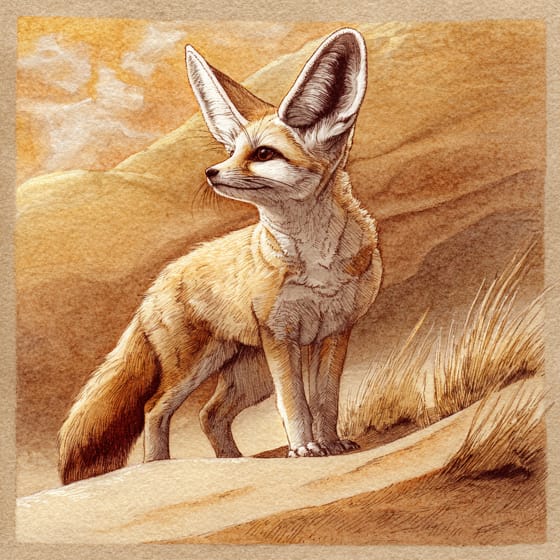
Vulpes zerda
A primary desert predator
Bubo ascalaphus
Nocturnal bird of prey
Cerastes cerastes
Desert snake that ambushes prey
Triticum aestivum
Eats seeds from various desert plants
Hodotermes mossambicus
Common insect prey in arid areas
Wildlife encompasses all undomesticated animal and plant life existing in their natural habitats.
Furry describes animals possessing a dense covering of soft hair or fur.
Burrowing animals dig tunnels and chambers in the ground, using these subterranean structures for shelter, hunting, or breeding.
This trait characterizes organisms whose diet consists entirely or primarily of plant material.

Desert habitats are arid regions characterized by extremely low precipitation and often extreme temperatures, supporting specialized flora and fauna.

This habitat trait describes species found in steppes, which are dry, treeless grasslands characterized by extreme seasonal temperature variations and low precipitation.

This trait characterizes organisms with an exceptionally long lifespan compared to others of their kind.

Nocturnal animals are primarily active during the nighttime hours, typically resting or sleeping during the day.
Danger
1/5 · Very low
If you ever see a jerboa in the wild, admire them from a distance to keep them safe.
The easiest way to identify Jerboa is to use the Snappit nature identifier app.
5-15 cm
0.028-0.15 kg
3-6 years
24 km/h
Jerboas mostly munch on seeds, plants, and sometimes tiny insects found in the desert!
Desert
Foraging
Zoom in to split clusters and explore where this object has been snapped.
Recent snaps will appear here as new observations are added.
Take the discovery with you
Snap it with Snappit to identify it, learn what makes it special, and add the discovery to your collection.




.jpg&width=800)



.JPG&width=800)

.jpg&width=800)
