.jpg&width=800)





Kirk's Dik-dik
Madoqua kirkii
Kirk's Dik-dik is a tiny antelope that is very shy and loves to hide in bushes. They have big eyes and a cute little face, making them one of the smallest antelopes in the world!
Habitat: Savannas
The Kirk's Dik-dik is a tiny antelope with a grey-brown back, reddish sides, and a white belly. It has large, dark eyes encircled by white rings and a distinct tuft of hair between its small, ridged horns. Its long, pointed snout is also a key feature.
Category
MammalsRarity
Common
Danger
1/5 · Very low
Snaps
Be the first to snap!
Kirk's Dik-diks often mate for life, staying with one partner.
Only male dik-diks grow tiny, spiky horns!
Their name sounds just like their alarm call!
They get almost all their water from eating plants.
Kirk's Dik-dik can mark its territory using sticky liquid from glands below its eyes, which helps them claim their space.
Kirk's Dik-dik can run in a fast, unpredictable zig-zag pattern, because this helps them escape from quick predators.
Kirk's Dik-dik has kidneys that help them conserve water so effectively that they rarely need to drink!
Kirk's Dik-dik has excellent eyesight and hearing that helps them detect danger from far away.
They munch on leaves, shoots, fruits, and flowers to get nutrients and water!
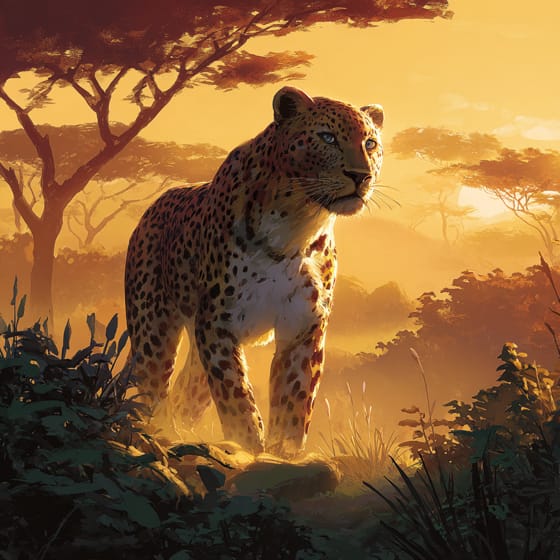
Panthera pardus
Leopards are a top predator in the dik-dik's savanna home.
Acinonyx jubatus
These swift cats hunt dik-diks, using speed to catch them.
Canis mesomelas
Jackals are opportunistic hunters that can prey on dik-diks.
Vachellia tortilis
Dik-diks browse on the leaves and shoots of acacia trees.
Furry describes animals possessing a dense covering of soft hair or fur.
Social animals live in organized groups, cooperating for survival benefits such as foraging, defense, and raising offspring.
Solitary animals live alone for most of their lives, only interacting with others for mating or parental care.
Camouflaged describes organisms that possess coloring or patterns that allow them to blend into their environment.

This trait characterizes organisms whose diet consists entirely or primarily of plant material.
This habitat trait denotes species native to savannas, which are grasslands with scattered trees, typically found in tropical or subtropical regions with distinct wet and dry seasons.

Pertaining to species that are significantly smaller than typical or average for their kind.

This trait identifies organisms that exhibit exceptional swiftness in movement for hunting, escape, or travel.

Threatened status denotes a species likely to become endangered in the foreseeable future without effective conservation interventions.
No aliases listed yet.
Danger
1/5 · Very low
Always watch animals from a distance and never try to touch them in the wild.
The easiest way to identify Kirk's Dik-dik is to use the Snappit nature identifier app.
50-70 cm
3-7 kg
10-12 years
42 km/h
They munch on leaves, shoots, fruits, and flowers to get nutrients and water!
Savannas
Foraging
Zoom in to split clusters and explore where this object has been snapped.
Recent snaps will appear here as new observations are added.
Take the discovery with you
Snap it with Snappit to identify it, learn what makes it special, and add the discovery to your collection.




.jpg&width=800)


.JPG&width=800)


.jpg&width=800)
