




Livilla variegata
Livilla variegata
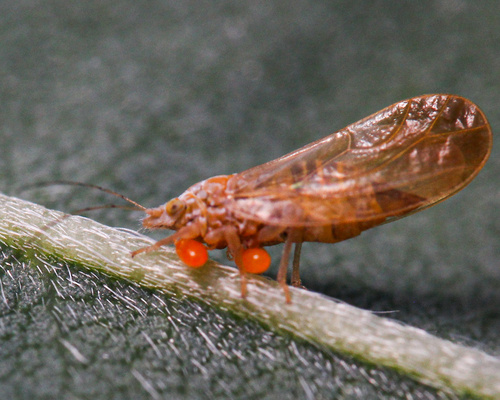
Livilla variegata is a colorful little insect that loves to hide in leaves. It has bright patterns that help it blend in with flowers and plants, making it a fun find for nature explorers!
Habitat: Urban areas
The Livilla variegata is a tiny insect, usually mottled brown or gray with hints of yellow, making it blend seamlessly with tree bark. Its clear, delicate wings feature distinct dark veins, helping to distinguish it from other small plant-dwelling insects.
Category
InsectsRarity
Common
Danger
1/5 · Very low
Snaps
Be the first to snap!
Livilla variegata sometimes causes larch tree needles to fall off earlier than usual.
Scientists sometimes call them "jumping plant lice" because of their incredible leaps!
Their young, called nymphs, secrete waxy "lerps" to hide under for protection!
They are related to tiny aphids and even the loud cicadas you hear in summer.
Livilla variegata can jump far because of its strong hind legs that help them escape predators quickly.
Livilla variegata has needle-like mouthparts that help them drink sugary sap from plants without harming the plant stem.
Livilla variegata produces sweet honeydew, a sugary liquid that helps feed other insects, like ants, in the forest.
This tiny insect is an herbivore that feeds on the sugary sap of larch trees.

Larix decidua
Feeds on the sap, sometimes causing needle damage.
Coccinella septempunctata
Larvae and adults hunt them for food.
Formica rufa
Ants collect their sweet honeydew for energy.
Solitary animals live alone for most of their lives, only interacting with others for mating or parental care.
Camouflaged describes organisms that possess coloring or patterns that allow them to blend into their environment.
Colorful describes organisms or objects displaying a wide range of bright and distinct colors.
This trait characterizes organisms whose diet consists entirely or primarily of plant material.
Diurnal animals are primarily active during daylight hours, typically resting or sleeping at night.
This habitat trait indicates species that can coexist with humans in urban and suburban environments, utilizing man-made structures and green spaces.
Describes organisms that transfer pollen, enabling the fertilization and reproduction of plants.
No aliases listed yet.
Danger
1/5 · Very low
Always look but don't touch insects unless an adult says it's okay.
Look for six legs, antennae, three body sections and the shape of the wings. Beetles have hardened front wings; flies have just one working pair. Tiny insects may need a close view before their group is clear. Insect Identifier: upload a photo and compare the visible details.
4-6 mm
2-3 mm
30-60 days
This tiny insect is an herbivore that feeds on the sugary sap of larch trees.
Urban areas
Foraging
6
Zoom in to split clusters and explore where this object has been snapped.
Recent snaps will appear here as new observations are added.
Take the discovery with you
Snap it with Snappit to identify it, learn what makes it special, and add the discovery to your collection.