





Eastern Comma
Polygonia comma
The Eastern Comma is a colorful butterfly with a unique shape. Its wings have orange and brown patterns that help it blend in with leaves, making it look like a dried leaf when resting.
Habitat: Forests
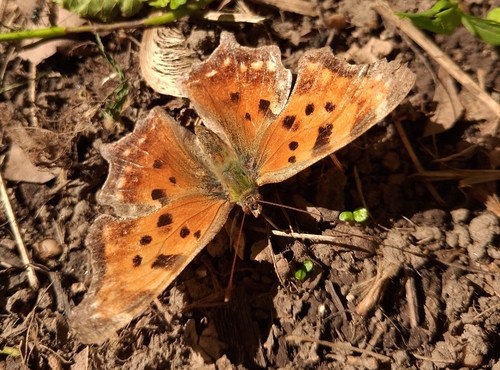
The Eastern Comma has ragged-edged, orange-brown wings with dark spots on the upper side. Its most distinctive feature is a small, silvery-white comma-shaped mark on the underside of each hindwing, contrasting with the drab brown, bark-like camouflage.
Category
InsectsRarity
Common
Danger
1/5 · Very low
Snaps
33
Adult butterflies live surprisingly long, often overwintering before laying eggs in spring!
Its caterpillars have spiky bodies, making them look like a tiny, walking bristly brush!
The two generations born each year look quite different, with one being darker than the other!
They often prefer to drink from mud puddles or animal droppings rather than flowers!
The Eastern Comma has wings that perfectly mimic dead leaves or tree bark when closed, which helps them disappear against tree trunks to avoid predators.
Eastern Commas can survive freezing temperatures by producing a natural antifreeze, which allows them to safely hibernate as adults during winter.
The Eastern Comma has a long proboscis that helps them sip nutritious tree sap and juices from rotting fruit, providing energy for flight and survival.
Adults sip tree sap and fruit juices, while caterpillars munch on leaves.
Age differences: Yes, caterpillars are herbivores, exclusively eating leaves of host plants, while adult butterflies primarily consume tree sap, rotting fruit, and sometimes animal droppings.
Urtica dioica
Caterpillars feed on its leaves for growth.
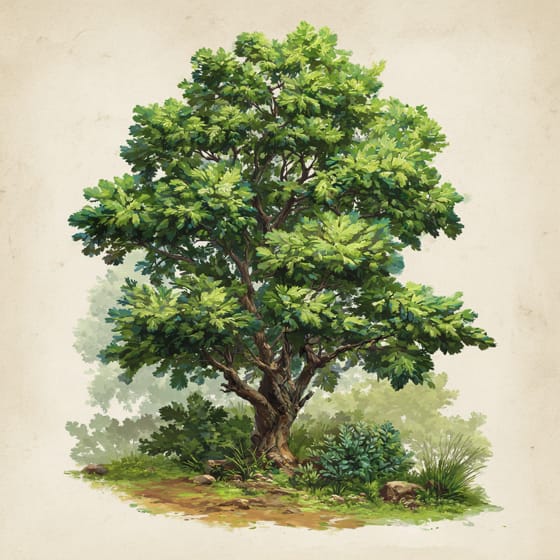
Ulmus rubra
Another key host plant for its caterpillars.
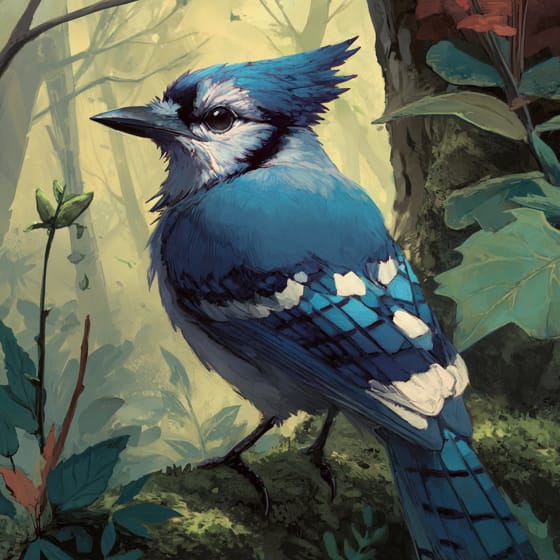
Cyanocitta cristata
A common bird that preys on adult butterflies.
Argiope aurantia
Spiders often catch adult butterflies in their webs.
Solitary animals live alone for most of their lives, only interacting with others for mating or parental care.
Camouflaged describes organisms that possess coloring or patterns that allow them to blend into their environment.
Colorful describes organisms or objects displaying a wide range of bright and distinct colors.
This trait characterizes organisms whose diet consists entirely or primarily of plant material.

Forest habitats are terrestrial environments dominated by dense tree cover, supporting a high diversity of plant and animal life.

Hibernating animals enter a state of metabolic depression during cold periods or when food is scarce, characterized by reduced body temperature and activity.

Diurnal animals are primarily active during daylight hours, typically resting or sleeping at night.

Describes organisms that transfer pollen, enabling the fertilization and reproduction of plants.
No aliases listed yet.
Danger
1/5 · Very low
Don't touch butterflies; just watch them flutter around!
The easiest way to identify Eastern Comma is to use the Snappit nature identifier app.
45-64 mm
45-64 mm
150-250 days
Adults sip tree sap and fruit juices, while caterpillars munch on leaves.
Forests
Foraging
6
Zoom in to split clusters and explore where this object has been snapped.
May 31, 2026
PrallsvillePhoto attribution
(c) Susan Mott, some rights reserved (CC BY-SA)
License: CC BY-SA 4.0 ↗
Image may be shown cropped inside the card frame.
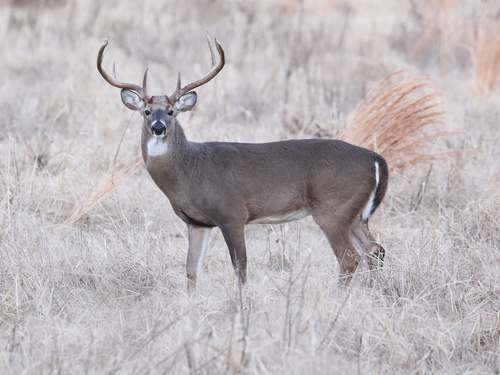
Virginia, US
You might spot White-Tailed Deer and House Sparrow.
View guide →

New York, US
You might spot American White Waterlily, Buttonbush, and Common Milkweed.
View guide →
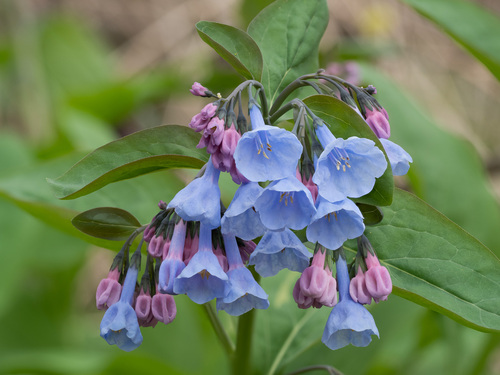
Virginia, US
You might spot Virginia Bluebells and Virginia Springbeauty.
View guide →

Wisconsin, US
You might spot Common Eastern Bumble Bee, Monarch, and Bee.
View guide →

Ohio, US
You might spot Brown-Belted Bumble Bee and Eastern Carpenter Bee.
View guide →

Pennsylvania, US
You might spot Harlequin Bug, White-Tailed Deer, and Bee.
View guide →
Take the discovery with you
Snap it with Snappit to identify it, learn what makes it special, and add the discovery to your collection.







.jpg&width=800)


