





marsh fleabane
Pluchea odorata
Marsh fleabane is a lovely plant that grows in wet areas like marshes. It has pretty purple flowers that attract butterflies and bees, making it a favorite among pollinators!
Habitat: Wetlands
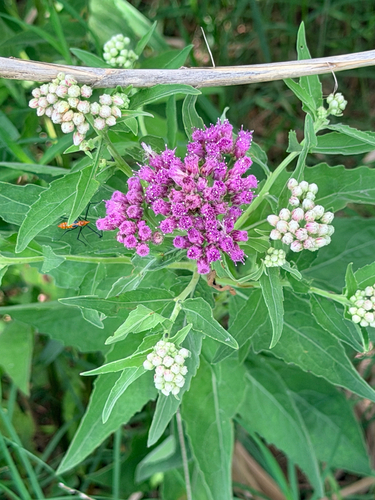
The marsh fleabane is a wetland plant with sturdy, upright stems topped by dense clusters of small, fuzzy, pinkish-purple flowers. Its lance-shaped, grayish-green leaves have serrated edges, making it distinctly textured and noticeable in marshes.
Category
PlantsRarity
Common
Danger
1/5 · Very low
Snaps
5
Indigenous peoples traditionally brewed its leaves into a tea for various herbal remedies!
Its name 'fleabane' comes from an old belief that its strong smell could repel fleas!
Marsh fleabane helps stabilize wetland soils, preventing erosion during strong floods!
This plant is often called 'stinkweed' due to its unique, pungent scent when crushed!
It releases a distinctive sweet, camphor-like scent that attracts various pollinators, ensuring successful reproduction in its marshy home.
Its tiny seeds are equipped with a feathery pappus, allowing them to be carried by the wind to new wetland locations.
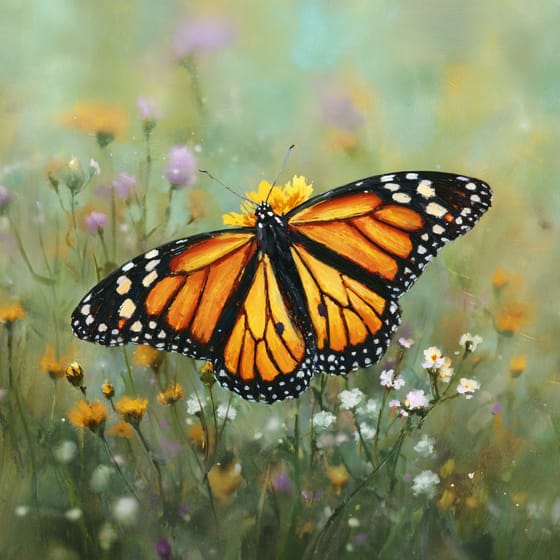
Danaus plexippus
Sips nectar, aiding plant reproduction.
Apis mellifera
Collects pollen and nectar.
Trichoplusia ni
Larvae munch on its leaves.
Anas platyrhynchos
Ducklings sometimes hide in its dense stands.
Flowering plants are any plants that produce flowers as part of their reproductive cycle.
A shrub is a woody plant smaller than a tree, typically with multiple stems branching from or near the ground.
Summer blooming plants produce their flowers during the summer season, often providing vibrant color when many other plants have finished.
Fragrant flowers emit a pleasant aroma, often to attract pollinators or for defense.

Medicinal plants possess chemical compounds that can be used for therapeutic purposes to treat illnesses or maintain health.

Describes plants that are particularly attractive and beneficial to a wide range of pollinating organisms.

This habitat trait identifies species found in wetlands, which are areas of land saturated with water, either permanently or seasonally, including marshes, swamps, and bogs.

Describes a species whose presence and role have a disproportionately large effect on its environment.
No aliases listed yet.
Danger
1/5 · Very low
Always explore plants with an adult and never eat anything you find without checking first.
The easiest way to identify marsh fleabane is to use the Snappit nature identifier app.
30-100 cm
30-60 cm
0.5-1 cm
Summer, Fall
No
None
Perennial
Zoom in to split clusters and explore where this object has been snapped.
May 31, 2026
Cameron Park ZooPhoto attribution
(c) Sue Ann Kendall, some rights reserved (CC BY)
License: CC BY 4.0 ↗
Image may be shown cropped inside the card frame.

Texas, US
You might spot African Elephant, Reticulated Giraffe, and African Lion.
View guide →

Florida, US
You might spot Cuban Tree Frog, Cane Toad, and Bee.
View guide →

California, US
You might spot Western Fence Lizard, Eastern Fox Squirrel, and Duck.
View guide →

Florida, US
You might spot Brown Anole, Peters's Rock Agama, and White Ibis.
View guide →

Florida, US
You might spot Brown Anole, Brown Pelican, and Eastern Lubber Grasshopper.
View guide →

Florida, US
You might spot Brown Anole, White Ibis, and Brown Pelican.
View guide →
Take the discovery with you
Snap it with Snappit to identify it, learn what makes it special, and add the discovery to your collection.








.jpg&width=800)


_001.jpg&width=800)




