





Martagon Lily
Lilium martagon
The Martagon Lily is a beautiful flower with unique, curled petals. It blooms in summer and can be found in meadows and forests, adding a splash of color to nature's canvas.
Habitat: Mountain regions
The Martagon Lily has unique, waxy petals that curl sharply backwards, resembling a 'Turk's Cap'. Its bell-shaped flowers are often spotted with dark freckles and come in shades of pink, purple, white, or yellow, growing in clusters along a tall stem.
Category
PlantsRarity
Common
Danger
1/5 · Very low
Snaps
Be the first to snap!
Its seeds can take a whole year to sprout, then another two years to bloom!
Some Martagon Lilies can live for over 50 years in the same spot!
The musky scent of its flowers can sometimes smell like old socks or wet fur!
This lily can grow wild high in the mountains, over 2,500 meters up!
Martagon Lily has a robust bulb that can bury itself deeply, helping it survive harsh winters and dry spells.
Its flowers release a strong, musky scent at dusk, attracting night-flying moths for pollination under moonlight.
Martagon Lily can store energy in its underground bulb, allowing it to re-emerge and bloom year after year.
Apis mellifera
Collects nectar and pollen from flowers.
Lilioceris lilii
Larvae and adults feed on leaves and buds.
Bombus terrestris
Visits flowers to gather nectar and pollen.
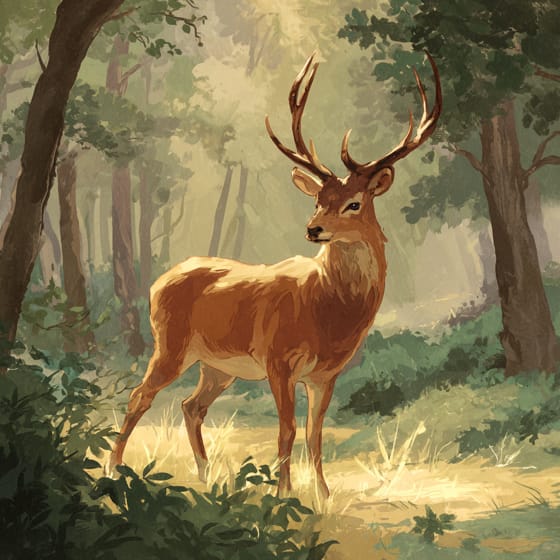
Cervus elaphus
Deer browse on the foliage and flower buds.
Bell-shaped flowers possess petals fused or arranged to form a cup-like or campanulate structure resembling a bell.
Flowering plants are any plants that produce flowers as part of their reproductive cycle.
Cluster flowers are inflorescences where individual flowers are arranged closely together on a common stem.
Summer blooming plants produce their flowers during the summer season, often providing vibrant color when many other plants have finished.

Fragrant flowers emit a pleasant aroma, often to attract pollinators or for defense.

Colorful describes organisms or objects displaying a wide range of bright and distinct colors.

Describes plants that are particularly attractive and beneficial to a wide range of pollinating organisms.

This habitat trait identifies species found in mountainous regions, characterized by high elevation, steep slopes, and varying climate zones.
Danger
1/5 · Very low
Do not pick flowers without asking an adult, as some flowers can be delicate.
The easiest way to identify Martagon Lily is to use the Snappit nature identifier app.
60-180 cm
30-60 cm
3-6 cm
Late spring to mid-summer
No
Mild
Perennial
Zoom in to split clusters and explore where this object has been snapped.
Recent snaps will appear here as new observations are added.
Take the discovery with you
Snap it with Snappit to identify it, learn what makes it special, and add the discovery to your collection.







.jpg&width=800)


_001.jpg&width=800)




