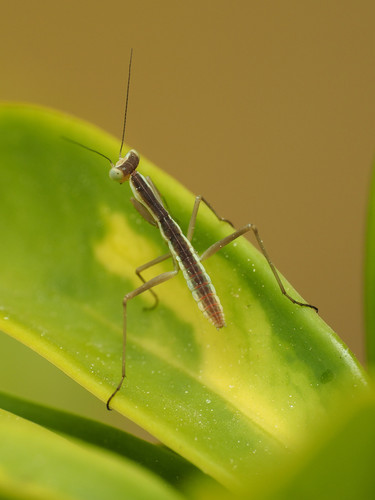


Mediterranean Mantis
iris oratoria
The Mediterranean Mantis (Iris oratoria) is a captivating and highly adaptable insect native to the warm, sun-drenched regions of the Mediterranean, though it has successfully established populations in parts of the southwestern United States. Known for its alertness and remarkable hunting prowess, this relatively small mantid brings a touch of wild drama to shrublands, dry hillsides, and suburban gardens alike. Unlike more passive insects, the Mediterranean Mantis actively watches its surroundings, turning its triangular head up to 180 degrees to track movement with its large, expressive compound eyes. It is a master of patience, waiting perfectly still for hours in a prayer-like posture until an unsuspecting insect wanders too close. This species is not only a fascinating predator but also a valuable natural pest controller, consuming a wide variety of garden pests and maintaining ecological balance in its warm habitats.
Habitat: Found in warm, arid environments such as dry shrublands, Mediterranean scrub, grasslands, and sunny suburban gardens.
Adult Mediterranean Mantises typically range from 3 to 6 centimeters in length, presenting a slender, elongated body that is usually pale green, yellowish-tan, or dusty brown to match dried vegetation. Females have shortened wings that do not fully cover their abdomens, while males possess longer, functional wings. The most striking visual identifier is hidden on the hind wings: when spread, they reveal brilliant, concentric eyespots featuring a purple-blue center encircled by black and yellow rings. Additionally, they can be distinguished from the similar European Mantis by a small, bright orange or reddish patch located on the underside of their first abdominal segment.
Category
InsectsRarity
Common
Danger
1/5 · Very low
Snaps
Be the first to snap!
If a female cannot find a mate, she can still lay eggs that will hatch into all-female clones through parthenogenesis.
The generic name 'Iris' comes from the Greek goddess of the rainbow, likely inspired by the beautiful iridescent eyespots on its hind wings.
Unlike many other mantis species which have completely clear wings, the Mediterranean Mantis uses its beautifully patterned wings as a primary defensive shield.
When threatened, it rears up, spreads its forelegs, and flashes its brightly colored hind wing eyespots to startle and deter predators.
Females are capable of reproducing asexually, producing viable offspring from unfertilized eggs when mates are scarce.
Possesses a highly flexible neck joint and wide-set compound eyes that allow it to scan almost its entire surroundings without moving its body.
A voracious ambush predator that feeds on almost any insect small enough to capture with its raptorial front legs.
Age differences: Nymphs feed on tiny soft-bodied insects like fruit flies and aphids, while adults progress to larger insects and occasionally other mantises.
Apis mellifera
Preys extensively on active pollinators visiting flowers in its habitat.

Mantis religiosa
Competes for food resources and occasionally engages in intraguild predation with other mantids.

Merops apiaster
Fishes and opportunistically preys upon mantises resting on exposed vegetation.
No trait badges are assigned for this object yet.
No aliases listed yet.
Collections for this object will appear here as more themes are added.
Danger
1/5 · Very low
No special safety notes yet.
Look for six legs, antennae, three body sections and the shape of the wings. Beetles have hardened front wings; flies have just one working pair. Tiny insects may need a close view before their group is clear. Insect Identifier: upload a photo and compare the visible details.
3+ cm
4+ cm
0.001+ kg
1+ years
A voracious ambush predator that feeds on almost any insect small enough to capture with its raptorial front legs.
Found in warm, arid environments such as dry shrublands, Mediterranean scrub, grasslands, and sunny suburban gardens.
Ambush
Zoom in to split clusters and explore where this object has been snapped.
Recent snaps will appear here as new observations are added.
Take the discovery with you
Snap it with Snappit to identify it, learn what makes it special, and add the discovery to your collection.