





Gray Hairstreak
Strymon melinus
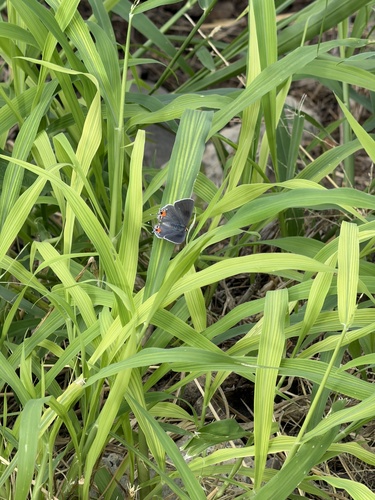
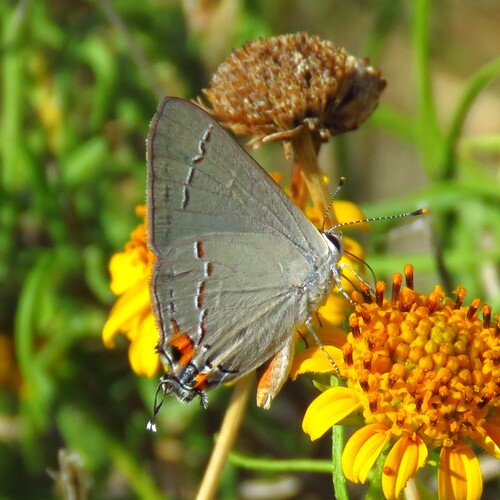
The Gray Hairstreak is a small butterfly with beautiful gray wings and orange spots. They flutter around gardens and fields, bringing joy to everyone who sees them.
Habitat: Urban areas
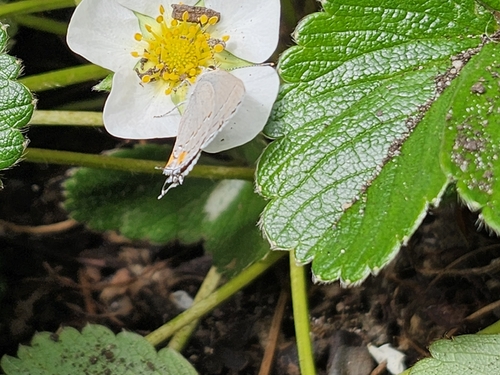
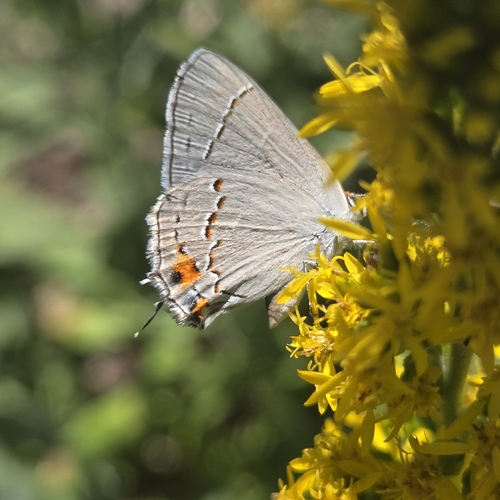
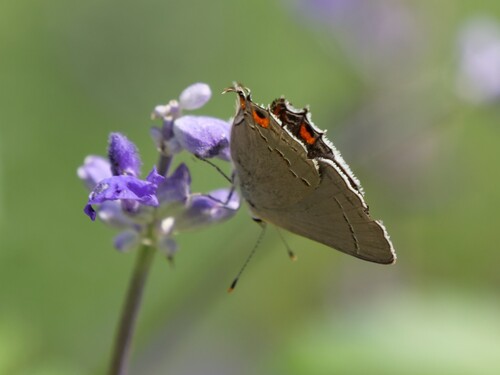
The Gray Hairstreak is a small butterfly, typically grayish-brown above with an often lighter underside. It has distinct orange-rimmed black spots and two tiny, delicate 'tails' on each hindwing that make it look unique.
Category
InsectsRarity
Common
Danger
1/5 · Very low
Snaps
67
Did you know the Gray Hairstreak is one of the most common and widespread butterflies in North America? Wow!
Its caterpillars are incredibly adaptable, munching on over 50 different kinds of plants! Wow!
Some Gray Hairstreak caterpillars even have a sweet secretion that ants love, earning them protection! Wow!
These tiny butterflies often bask with wings closed, twitching their hindwings to make tails look like antennae! Wow!
Gray Hairstreak has delicate hindwing tails and false 'eye spots' that help them trick predators into attacking the wrong end.
Gray Hairstreak can fly quickly and erratically, helping them dart away from birds or other dangers.
Gray Hairstreak caterpillars are often green or brownish, blending perfectly with plants to hide from hungry predators.
Adults sip nectar from flowers, while caterpillars munch on leaves and seeds from many different plants.
Age differences: Larvae feed on plant leaves and seeds, while adults drink nectar from flowers.
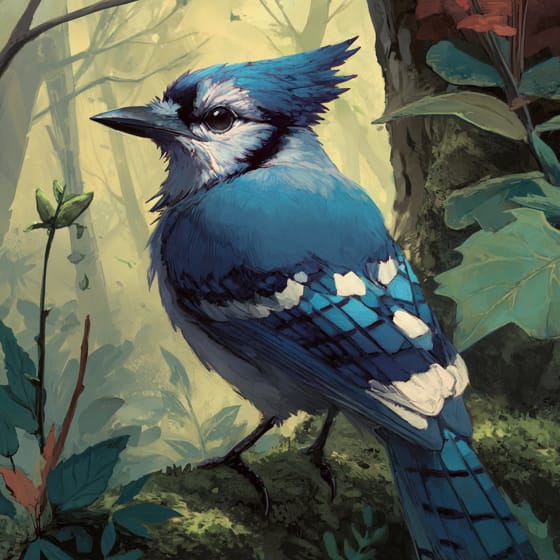
Cyanocitta cristata
Adult butterflies are prey for birds

Argiope aurantia
Can get caught in spider webs

Asclepias syriaca
Visits flowers to drink nectar

Trifolium repens
Helps fertilize clover plants
Phaseolus vulgaris
Caterpillars feed on leaves and pods
Marked with spots or patches of a different color.
Solitary animals live alone for most of their lives, only interacting with others for mating or parental care.
Camouflaged describes organisms that possess coloring or patterns that allow them to blend into their environment.
Colorful describes organisms or objects displaying a wide range of bright and distinct colors.

This trait characterizes organisms whose diet consists entirely or primarily of plant material.

Describes plants that are particularly attractive and beneficial to a wide range of pollinating organisms.

Diurnal animals are primarily active during daylight hours, typically resting or sleeping at night.

This habitat trait indicates species that can coexist with humans in urban and suburban environments, utilizing man-made structures and green spaces.

Describes organisms that transfer pollen, enabling the fertilization and reproduction of plants.
No aliases listed yet.
Danger
1/5 · Very low
Butterflies are gentle and safe to watch, but be careful not to touch them too much.
The easiest way to identify Gray Hairstreak is to use the Snappit nature identifier app.
22-30 mm
10-14 mm
7-21 days
15 km/h
Adults sip nectar from flowers, while caterpillars munch on leaves and seeds from many different plants.
Urban areas
Foraging
Zoom in to split clusters and explore where this object has been snapped.
Jun 20, 2026
Theater DistrictPhoto attribution
no rights reserved
License: CC0 1.0 ↗
Image may be shown cropped inside the card frame.
Jun 1, 2026
Fullerton ArboretumPhoto attribution
no rights reserved
License: CC0 1.0 ↗
Image may be shown cropped inside the card frame.
May 30, 2026
BricktownPhoto attribution
(c) Alexandria Szakacs, some rights reserved (CC BY)
License: CC BY 4.0 ↗
Image may be shown cropped inside the card frame.
May 23, 2026
Fort McIntoshPhoto attribution
(c) Ian McFaul, some rights reserved (CC BY)
License: CC BY 4.0 ↗
Image may be shown cropped inside the card frame.
Oct 17, 2025
Fort LancasterPhoto attribution
(c) Annika Lindqvist, some rights reserved (CC BY)
License: CC BY 4.0 ↗
Image may be shown cropped inside the card frame.

New York, US
You might spot Sundial Lupine, Spotted Horsemint, and New Jersey Tea.
View guide →

California, US
You might spot California Poppy and Common Side-Blotched Lizard.
View guide →

California, US
You might spot Monarch, Canada Goose, and Western Gull.
View guide →

New Mexico, US
You might spot Tree Cholla, Colorado Pinyon, and House Finch.
View guide →

California, US
You might spot Monarch, Bee, and Anise Swallowtail.
View guide →

Texas, US
You might spot Anole, Monarch, and Pinkladies.
View guide →
Take the discovery with you
Snap it with Snappit to identify it, learn what makes it special, and add the discovery to your collection.







.jpg&width=800)



