





Mexican Duck
Anas diazi
The Mexican Duck is a beautiful bird with a shiny green head and a soft brown body. They love to swim in ponds and eat plants and small insects. These ducks are friendly and can often be seen in groups!
Habitat: Wetlands
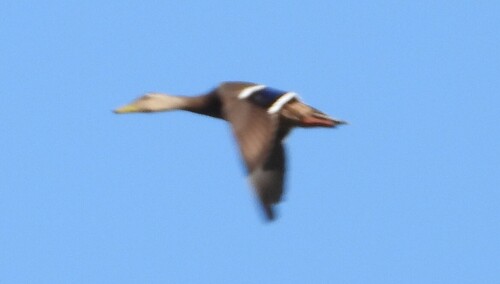
The Mexican Duck is a medium-sized dabbling duck with an overall dark brown, mottled body. It has a bright yellow-orange bill with a dark tip, especially noticeable on males. Unlike the similar Mallard, it lacks a distinct white border around its blue-green wing patch.
Category
BirdsRarity
Common
Danger
1/5 · Very low
Snaps
2
Mexican Ducks were once thought to be the same species as the Mallard!
Newly hatched ducklings can swim and find their own food within hours!
These ducks can live in cool mountain wetlands, high above sea level!
They often build their nests well-hidden in tall reeds right at the water's edge.
Mexican Duck has mottled brown feathers that help them blend perfectly with wetland plants and reeds.
Mexican Duck tips upside-down in shallow water to reach submerged food without fully diving.
Mexican Duck can live comfortably in mountain wetlands, adapting to cooler, thinner air.
These omnivores eat a mix of plants and small creatures found in wetland waters.
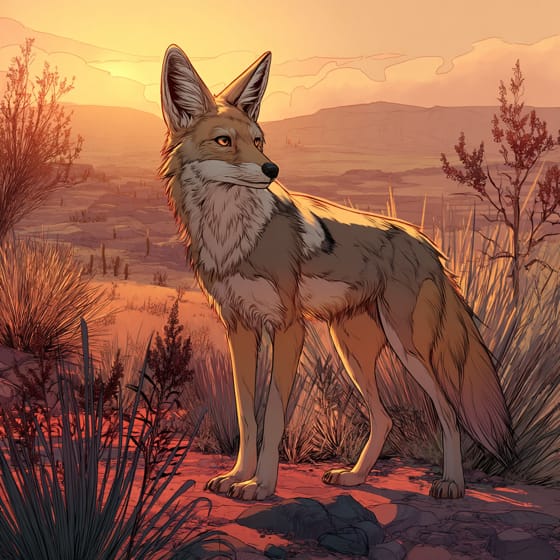
Canis latrans
Preys on adult ducks and ducklings.

Procyon lotor
Raids nests for eggs and ducklings.
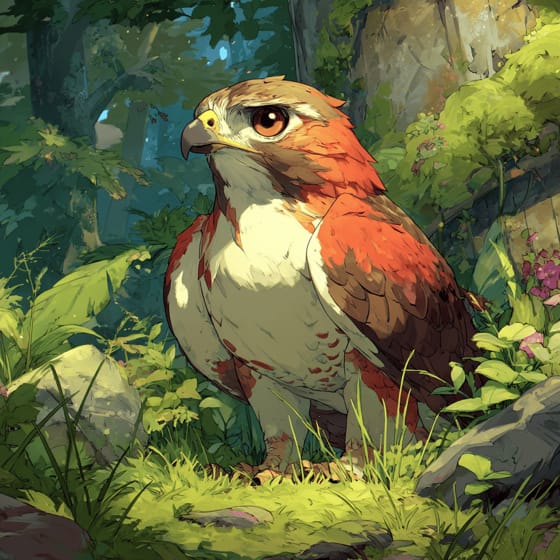
Buteo jamaicensis
Hunts ducklings and juvenile ducks.
Typha latifolia
Provides dense cover for nests and young.

Potamogeton nodosus
Consumes seeds, leaves, and stems from this plant.
Feathered describes animals, primarily birds, possessing a covering of feathers.
Characterized by having toes connected by a membrane, typically aiding in swimming.
Social animals live in organized groups, cooperating for survival benefits such as foraging, defense, and raising offspring.
This trait identifies organisms whose diet includes both plant and animal matter.

Colorful describes organisms or objects displaying a wide range of bright and distinct colors.

This habitat trait identifies species found in wetlands, which are areas of land saturated with water, either permanently or seasonally, including marshes, swamps, and bogs.

Diurnal animals are primarily active during daylight hours, typically resting or sleeping at night.

Freshwater habitats include non-saline aquatic environments such as rivers, lakes, ponds, and wetlands, vital for numerous species.

Aquatic habitats encompass environments where organisms live predominantly in water, including oceans, rivers, lakes, and wetlands.
No aliases listed yet.
Danger
1/5 · Very low
Always watch ducks from a distance and don't feed them bread, as it can be bad for their tummies.
The easiest way to identify Mexican Duck is to use the Snappit nature identifier app.
51-56 cm
81-91 cm
0.8-1.2 kg
5-10 years
80 km/h
These omnivores eat a mix of plants and small creatures found in wetland waters.
Wetlands
Zoom in to split clusters and explore where this object has been snapped.
May 24, 2026
Chihuahuan Desert Nature Center and Botanical GardensPhoto attribution
no rights reserved
License: CC0 1.0 ↗
Image may be shown cropped inside the card frame.

Texas, US
You might spot Texas Hedgehog Cactus, Ornate Tree Lizard, and Cactus Wren.
View guide →
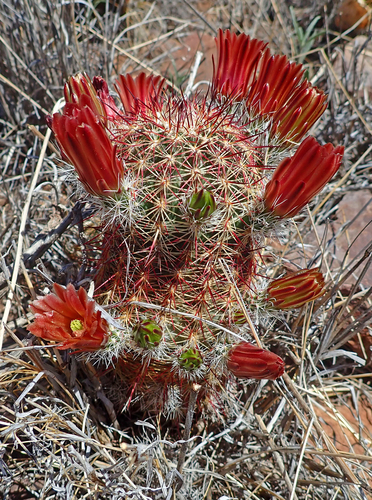
Texas, US
You might spot Texas Hedgehog Cactus, Cactus Wren, and Ornate Tree Lizard.
View guide →

US
You might spot Great-Tailed Grackle, Duck, and Pond Slider.
View guide →
Take the discovery with you
Snap it with Snappit to identify it, learn what makes it special, and add the discovery to your collection.




.jpg&width=800)








