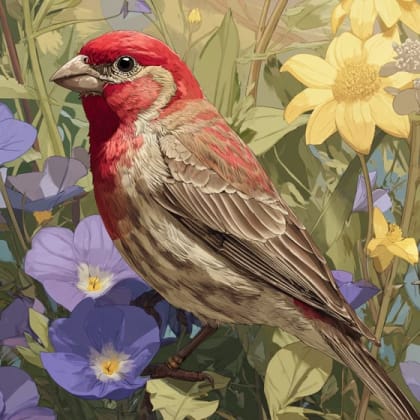





House Finch

The Chihuahuan Desert Nature Center offers an immersive journey into a diverse desert ecosystem.
The Chihuahuan Desert Nature Center offers an immersive journey into a diverse desert ecosystem. This 507-acre nonprofit nature center and botanical garden, located in the foothills of the Davis Mountains near Fort Davis, Texas, provides a unique opportunity to explore the rich flora, fauna, and geology of the Chihuahuan Desert. It stands as an educational hub, promoting awareness and appreciation for nature through a combination of visitor experiences, educational programs, and ongoing research.
Wander through 18 acres of meticulously curated botanical gardens featuring over 165 native plant species, including the renowned Maxie Templeton Cactus Museum Collection, housing approximately 200 species of cacti and succulents. Explore the vibrant Pollinator Garden, bustling with hummingbirds and butterflies, or embark on nearly 6.5 miles of hiking trails. Discover the lush Modesta Canyon with its permanent springs and Texas Madrone trees, or ascend to Clayton's Overlook for breathtaking 360-degree views of the volcanic landscape and a fascinating geology exhibit.
Beyond its natural beauty, the center also offers a glimpse into regional history with its interactive Mining Heritage Exhibit, recreating an 1880s silver mine. The Bird Blind, complete with a 30-foot water feature, provides exceptional opportunities for birdwatching and photography, making the Chihuahuan Desert Nature Center and Botanical Gardens a truly memorable destination for nature lovers and curious minds alike. Unlock an interactive field guide for this spot: get the Snappit app to identify nature on the go.
The Chihuahuan Desert Nature Center is operated by the Chihuahuan Desert Research Institute (CDRI), a nonprofit organization established in December 1973 by professors from Sul Ross State University. The institute's mission is rooted in promoting public awareness, appreciation, and concern for the natural diversity of the Chihuahuan Desert region through education, visitor experiences, and research. The physical site, comprising 507 acres of semi-desert grasslands and igneous rock outcrops, was acquired in 1978, officially establishing the Chihuahuan Desert Nature Center. Since its inception, it has expanded its offerings to include educational programs like the Chihuahuan Desert Field School, launched in 2004, and various workshops, furthering its commitment to conservation and learning.
Engage in self-guided hikes along the center's various trails, explore the meticulously labeled native plants in the botanical gardens, delve into the history of local mining, and enjoy birdwatching from the dedicated blind. Educational programs and guided tours (for groups) are also available.
Spring: Expect a colorful display of wildflowers and cacti in bloom.
Summer: The desert greens up with monsoon rains, attracting hummingbirds. Evenings cool down, so bring a light jacket. Be prepared for very hot daytime temperatures.
Fall: A great time for spotting butterflies and various migrating bird species, especially hummingbirds.
Winter: While some plants are dormant and wildlife activity may decrease, the dried grasses and desert landscapes offer a unique, serene beauty.
The Powell Visitor Center features a wheelchair ramp and designated handicapped parking. The Botanical Gardens generally offer wheelchair access on their dirt and gravel paths, and the Scenic Vista Loop Trail is also accessible.
Don't miss the extensive Maxie Templeton Cactus Museum Collection, the scenic Modesta Canyon Trail with its permanent springs, and the panoramic vistas from Clayton's Overlook. The interactive Mining Heritage Exhibit and the Bird Blind are also popular attractions.
Each card links to a full Explore page with photos, traits, and fun facts.
Start with the big picture, then zoom in to explore individual wildlife observations around this place.
Allocate Ample Time
Plan for at least 3-5 hours to fully experience the gardens, trails, and exhibits without rushing.
Wear Appropriate Footwear
Trails are earthen and can be uneven with loose gravel; sturdy, closed-toe shoes with good grip are highly recommended for comfort and safety.
Stay Hydrated
Bring plenty of water, especially during warmer months. Refill stations are available at the Visitor Center.
Check in at the Visitor Center
Upon arrival, visit the Powell Visitor Center to pick up maps and trail guide booklets, which will enhance your self-guided exploration.
Utilize "Too Early Tuesdays"
During hotter periods, consider visiting on "Too Early Tuesdays" for cooler morning temperatures, ideal for hiking and exploring.
Pack a Picnic
You are welcome to bring a picnic lunch to enjoy at the Visitor Center, taking in the scenic views.
May 29, 2026
Photo attribution
no rights reserved
License: CC0 1.0 ↗
Image may be shown cropped inside the card frame.
May 24, 2026
Photo attribution
no rights reserved
License: CC0 1.0 ↗
Image may be shown cropped inside the card frame.
May 24, 2026
Photo attribution
no rights reserved
License: CC0 1.0 ↗
Image may be shown cropped inside the card frame.
May 20, 2026
Photo attribution
(c) Cleveland Powell, some rights reserved (CC BY)
License: CC BY 4.0 ↗
Image may be shown cropped inside the card frame.
Jun 17, 2026

Maryland, US
You might spot White-Tailed Deer and Eastern Gray Squirrel.
View guide →
.jpg)
District of Columbia, US
You might spot Eastern Gray Squirrel, Duck, and House Sparrow.
View guide →

Illinois, US
You might spot American Robin, Canada Goose, and House Sparrow.
View guide →

Virginia, US
You might spot Spotted Lanternfly and Northern Cardinal.
View guide →
Take the discovery with you
Identify the wildlife you spot, learn as you go, and keep a collection of the adventure.