





mule fat
Baccharis salicifolia
Mule fat is a bushy plant that grows tall and has long, narrow leaves. It loves to grow near water and is very important for animals and insects in its habitat.
Habitat: Wetlands
The mule fat is a dense, leafy shrub with long, narrow, willow-like green leaves. It produces many small, greenish-white to yellowish flowers clustered at the ends of its branches, which give it a fluffy appearance. Its overall look is often described as bushy and robust.
Category
PlantsRarity
Common
Danger
1/5 · Very low
Snaps
Be the first to snap!
After flowering, female mule fat plants release thousands of tiny, fluffy seeds that can float far on the wind!
Indigenous peoples used parts of the mule fat plant to create traditional medicines and even baskets.
Its common name, 'mule fat,' might come from its waxy leaves, or because mules found it good to eat!
Mule fat plants are often either all male or all female, making them a 'two-gender' species!
Mule fat can withstand rushing water and grow back quickly, thanks to its strong root system that anchors it in place.
This plant has the amazing ability to sprout anew from its roots even after fires, helping landscapes recover fast.
Mule fat has deep, spreading roots that hold soil firmly, preventing it from washing away, especially near water.
Apis mellifera
Bees gather nectar and pollen from its tiny flowers.
Bombus vosnesenskii
This native bumblebee helps spread pollen between mule fat plants.
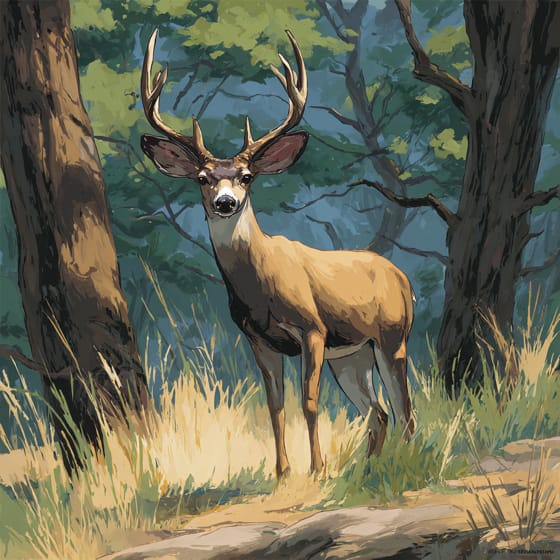
Odocoileus hemionus
Deer browse on the leaves and tender shoots of the plant.

Sylvilagus audubonii
Cottontails hide from predators within its dense, protective branches.
Deciduous plants periodically shed all their leaves, typically during autumn or dry seasons.
Describes organisms capable of converting atmospheric nitrogen into compounds usable by plants.
Ornamental plants are cultivated primarily for their aesthetic appeal, enhancing landscapes and gardens with their attractive foliage, flowers, or form.
A shrub is a woody plant smaller than a tree, typically with multiple stems branching from or near the ground.

Describes plants that are particularly attractive and beneficial to a wide range of pollinating organisms.

Rapid growing plants exhibit accelerated growth rates, quickly increasing in size and biomass within a short period.

This habitat trait identifies species found in wetlands, which are areas of land saturated with water, either permanently or seasonally, including marshes, swamps, and bogs.

Describes a species whose presence and role have a disproportionately large effect on its environment.
No aliases listed yet.
Danger
1/5 · Very low
Always look but don't touch plants without asking an adult.
The easiest way to identify mule fat is to use the Snappit nature identifier app.
100-400 cm
100-300 cm
0.1-0.3 cm
Late spring to fall
No
None
Perennial
Zoom in to split clusters and explore where this object has been snapped.
Recent snaps will appear here as new observations are added.
Take the discovery with you
Snap it with Snappit to identify it, learn what makes it special, and add the discovery to your collection.









.jpg&width=800)



_001.jpg&width=800)




