





New Caledonian Giant Gecko
Rhacodactylus leachianus
The New Caledonian Giant Gecko is a big, friendly lizard that loves to climb trees! With its bright colors and big eyes, it's a fun creature to discover in the wild.
Habitat: Forests
The New Caledonian Giant Gecko is the world's largest gecko, with a robust body and loose, often bumpy skin. It displays mottled patterns of browns, greens, grays, and creams, helping it blend into tree bark. Its large eyes feature vertical pupils.
Category
ReptilesRarity
Common
Danger
1/5 · Very low
Snaps
Be the first to snap!
Female leachies can lay eggs every month for up to a year!
If threatened, a giant gecko can drop its tail and grow a new one!
These geckos sometimes eat their own shed skin for nutrients! Gross but smart!
They are endemic, meaning they are only found on the islands of New Caledonia.
New Caledonian Giant Geckos can make loud growls and barks that help them defend their territory.
New Caledonian Giant Geckos have a robust, semi-prehensile tail that helps them balance and grip branches.
New Caledonian Giant Geckos have loose, textured skin that helps them blend perfectly with tree bark.
Giant geckos are omnivores, munching on fruits, insects, small animals, and even nectar!
Age differences: Young geckos primarily eat insects, while adults add more fruit and small vertebrates to their diet.
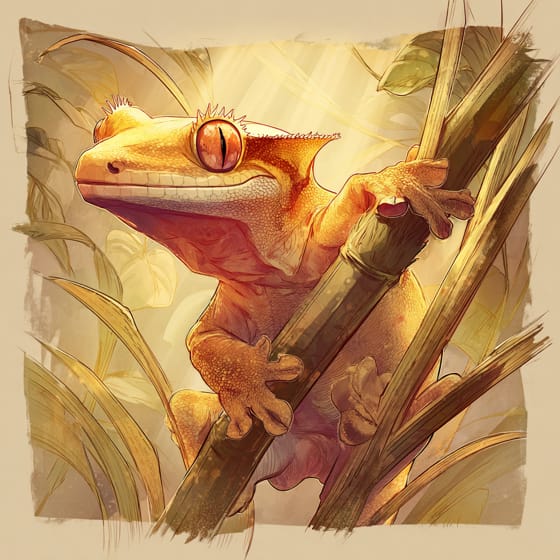
Rhacodactylus ciliatus
Hunts smaller, arboreal geckos found in the same habitat.
Ficus neo-ebudarum
Consumes ripe fruits from this native New Caledonian fig.
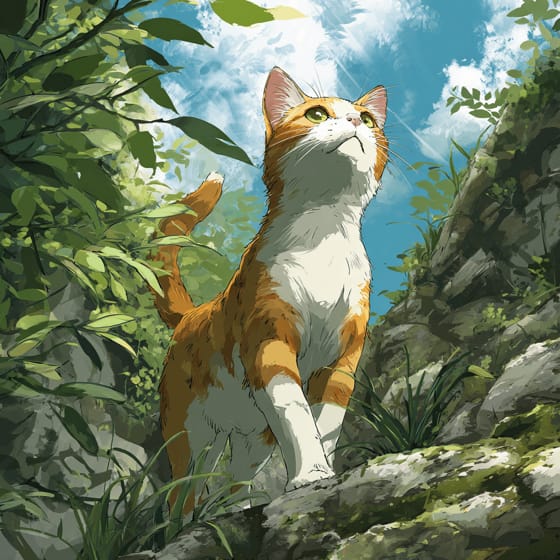
Felis catus
Vulnerable to predation by introduced feral cats.

Rattus rattus
Eggs and young are often preyed upon by invasive rats.
Arboreal animals live primarily in trees, utilizing them for shelter, food, and protection from predators.
Camouflaged describes organisms that possess coloring or patterns that allow them to blend into their environment.
Colorful describes organisms or objects displaying a wide range of bright and distinct colors.
This trait identifies organisms whose diet primarily consists of insects and other small invertebrates.

Forest habitats are terrestrial environments dominated by dense tree cover, supporting a high diversity of plant and animal life.

Giant describes organisms or objects of significantly larger size than average for their species or type.

Nocturnal animals are primarily active during the nighttime hours, typically resting or sleeping during the day.

Endangered status indicates a species is at a very high risk of extinction in the wild in the near future.
Danger
1/5 · Very low
Always watch geckos from a distance and don't try to touch them, as they can be shy.
The easiest way to identify New Caledonian Giant Gecko is to use the Snappit nature identifier app.
25-36 cm
0.2-0.4 kg
15-20 years
Giant geckos are omnivores, munching on fruits, insects, small animals, and even nectar!
Forests
Ambush
1-2
Zoom in to split clusters and explore where this object has been snapped.
Recent snaps will appear here as new observations are added.
Take the discovery with you
Snap it with Snappit to identify it, learn what makes it special, and add the discovery to your collection.












