





Black Rat
Rattus rattus
The Black Rat is a small, clever rodent with a long tail and big ears. They are often found in homes and gardens, where they look for food and shelter.
Habitat: Urban areas
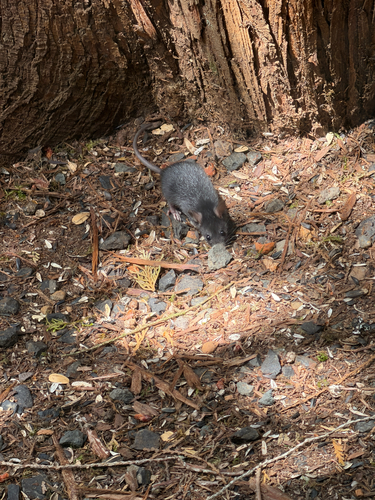
The Black Rat is a sleek, medium-sized rodent with large ears, a pointed snout, and a very long, hairless tail usually longer than its body. It typically has black or dark brown fur on its back and a lighter belly, making it distinct from the larger, stockier Norway rat.
Category
MammalsRarity
Common
Danger
2/5 · Low
Snaps
3
Black rats are thought to have spread the Black Death across Europe centuries ago!
Black rats can jump impressively far, sometimes over three feet high!
Female black rats can have up to 5 litters in just one year, making many babies!
They constantly gnaw on things to keep their teeth from growing too long!
Black Rat can climb incredibly well because of their strong claws and agile bodies, helping them reach high places.
Black Rat has a long, flexible tail that helps them balance like a tightrope walker, preventing falls from high perches.
Black Rat can sense changes in air currents and vibrations using their whiskers, helping them navigate perfectly in total darkness.
Black Rat has incredible hearing that lets them detect ultrasonic sounds, helping them find food and avoid predators.
They are omnivores, eating almost anything from grains and fruits to insects and even small animals.

Tyto alba
A significant nocturnal predator.

Felis catus
Frequently hunts rats in urban and rural settings.

Pantherophis obsoletus
A common snake predator of rodents.
Triticum aestivum
Black rats consume wheat grains from fields and storage.

Prunus domestica
Black rats consume plum fruits as part of their varied diet.
Furry describes animals possessing a dense covering of soft hair or fur.
Social animals live in organized groups, cooperating for survival benefits such as foraging, defense, and raising offspring.
This trait identifies organisms whose diet includes both plant and animal matter.
Scavengers consume dead organic matter, helping to decompose carcasses and other waste in the ecosystem.

This habitat trait indicates species that can coexist with humans in urban and suburban environments, utilizing man-made structures and green spaces.

Invasive species are non-native organisms that cause harm to the environment, economy, or human health.

Nocturnal animals are primarily active during the nighttime hours, typically resting or sleeping during the day.
Danger
2/5 · Low
Don't touch or chase wild rats; it's best to watch them from a distance.
The easiest way to identify Black Rat is to use the Snappit nature identifier app.
13-18 cm
0.075-0.2 kg
1-3 years
12 km/h
They are omnivores, eating almost anything from grains and fruits to insects and even small animals.
Urban areas
Foraging
Zoom in to split clusters and explore where this object has been snapped.
Jun 17, 2026
Lower Cushman DamPhoto attribution
no rights reserved
License: CC0 1.0 ↗
Image may be shown cropped inside the card frame.

Washington, US
You might spot Barrow's Goldeneye and Pacific Banana Slug.
View guide →

Virginia, US
You might spot Tiger, Giraffes, and White Rhinoceros.
View guide →

Virginia, US
You might spot Yellow-Crowned Night Heron, Monarch, and Peregrine Falcon.
View guide →

California, US
You might spot Pipevine Swallowtail, Canada Goose, and Duck.
View guide →
Florida, US
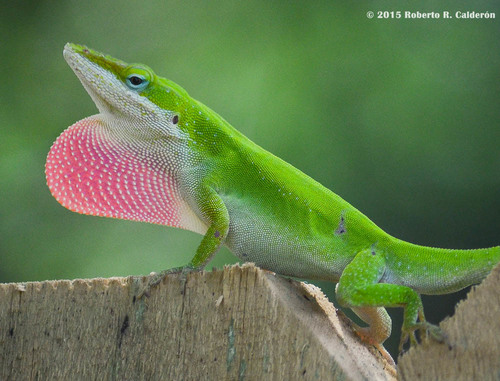
You might spot Anole, Common Gallinule, and White Beggarticks.
View guide →

British Columbia, CA
You might spot Douglas Fir, Oregon Oak, and Purple Foxglove.
View guide →
Take the discovery with you
Snap it with Snappit to identify it, learn what makes it special, and add the discovery to your collection.




.jpg&width=800)



.JPG&width=800)



.jpg&width=800)
