



Noble Spiny Lizard
Sceloporus oberon
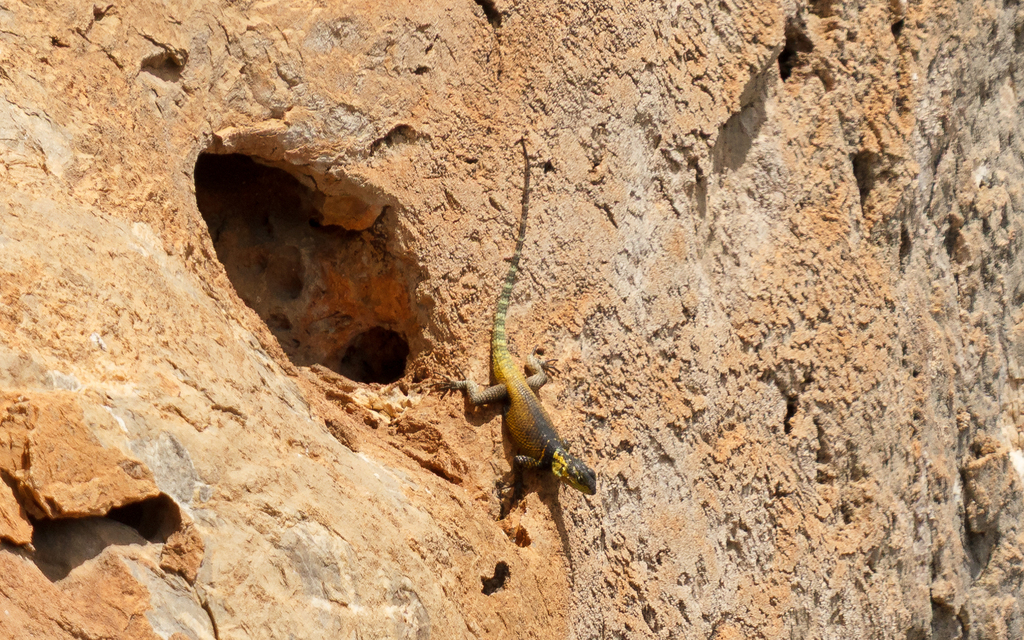
The Noble Spiny Lizard is a small, colorful lizard with spiky scales. It loves to bask in the sun and can often be seen on rocks or tree branches, showing off its beautiful colors.
Habitat: Woodlands
The Noble Spiny Lizard is a medium-sized reptile with rough, keeled scales giving it a spiky texture. Its body color varies from grey or brown to olive, often with darker bands. Males flash striking blue or turquoise patches on their throat and sides, especially during mating season.
Category
ReptilesRarity
Common
Danger
1/5 · Very low
Snaps
Be the first to snap!
Noble Spiny Lizards are sun-worshippers, soaking up rays to warm their bodies for energy.
Some spiny lizards can drop their tail if grabbed, then grow a new one back!
Their tiny scales act like armor, protecting them from scratches and minor bumps.
They do push-ups! Males display by bobbing their heads to impress females.
Noble Spiny Lizard can change its skin color to blend seamlessly with rocks or trees, helping them hide from predators and ambush prey.
Noble Spiny Lizard has rough, spiny scales that provide excellent grip on rocky surfaces and make them harder for predators to swallow.
Noble Spiny Lizard males can flash vibrant blue throat and side patches to attract mates and warn off rival lizards, communicating without a sound.
Tiny terrors of the insect world, these lizards feast on all sorts of creepy crawlies.

Buteo jamaicensis
A common hawk that preys on many small reptiles.

Crotalus atrox
Venomous snake that hunts lizards in rocky habitats.
Formica fusca
Active ants are a frequent and nutritious meal.
Apis mellifera
Opportunistically preys on various flying insects.

Argiope aurantia
Snacks on spiders found in its rocky domain.
Arboreal animals live primarily in trees, utilizing them for shelter, food, and protection from predators.
Camouflaged describes organisms that possess coloring or patterns that allow them to blend into their environment.
Colorful describes organisms or objects displaying a wide range of bright and distinct colors.
This trait identifies organisms whose diet primarily consists of insects and other small invertebrates.
Thermoregulating organisms maintain a stable internal body temperature despite fluctuations in the external environment.
Forest habitats are terrestrial environments dominated by dense tree cover, supporting a high diversity of plant and animal life.
Possessing sharp, pointed projections or spines on the body or surface.
Diurnal animals are primarily active during daylight hours, typically resting or sleeping at night.
No aliases listed yet.
Danger
1/5 · Very low
If you see a lizard, watch it from a distance and don't try to touch it.
Compare toes, scales, head shape, crests and tail proportions. Many lizards can drop and regrow their tails, so a short tail isn't always a species trait. Lizard Identifier: upload a photo and compare the visible details.
15-25 cm
0.02-0.05 kg
3-7 years
20 km/h
Tiny terrors of the insect world, these lizards feast on all sorts of creepy crawlies.
Woodlands
Ambush
Zoom in to split clusters and explore where this object has been snapped.
Recent snaps will appear here as new observations are added.
Take the discovery with you
Snap it with Snappit to identify it, learn what makes it special, and add the discovery to your collection.