





North American Elm Sawfly
Cimbex americanus
The North American Elm Sawfly is a small insect that loves to munch on elm tree leaves. They have a unique look with bright colors and can be found in many gardens and parks.
Habitat: Forests
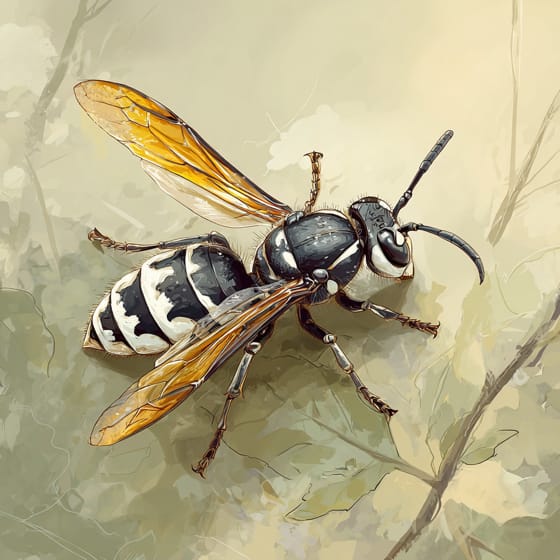
The North American Elm Sawfly is a large, stout-bodied insect resembling a wasp, but without the narrow 'waist'. It has a black head and thorax, with a striking yellowish-white abdomen marked with black bands or spots. Its wings are typically smoky brown, which distinguishes it from many true wasps.
Category
InsectsRarity
Common
Danger
1/5 · Very low
Snaps
Be the first to snap!
Wow! Adults drink flower nectar, but the larvae are leaf-munching machines!
Wow! Their chunky larvae look like caterpillars but have extra belly legs!
Wow! This big 'wasp' won't sting you, it's actually a sawfly!
Wow! When threatened, the larvae can curl into a tight 'C' shape!
North American Elm Sawfly females have a serrated ovipositor that helps them cut precise slits into elm leaves to lay eggs securely.
North American Elm Sawfly larvae can release a foul-smelling green liquid that helps them deter birds and other predators.
North American Elm Sawfly larvae have powerful mouthparts that help them rapidly chew and consume large quantities of elm leaves.
Adults sip nectar; larvae munch on elm leaves.
Age differences: Larvae exclusively feed on elm leaves, while adults consume nectar and pollen from various flowers.
Solitary animals live alone for most of their lives, only interacting with others for mating or parental care.
Colorful describes organisms or objects displaying a wide range of bright and distinct colors.
This trait characterizes organisms whose diet consists entirely or primarily of plant material.
Forest habitats are terrestrial environments dominated by dense tree cover, supporting a high diversity of plant and animal life.

Diurnal animals are primarily active during daylight hours, typically resting or sleeping at night.

Describes organisms that transfer pollen, enabling the fertilization and reproduction of plants.
No aliases listed yet.
Danger
1/5 · Very low
It's best to watch these insects from a distance and not touch them.
The easiest way to identify North American Elm Sawfly is to use the Snappit nature identifier app.
30-45 mm
18-25 mm
200-365 days
Adults sip nectar; larvae munch on elm leaves.
Forests
Foraging
6
Zoom in to split clusters and explore where this object has been snapped.
Recent snaps will appear here as new observations are added.
Take the discovery with you
Snap it with Snappit to identify it, learn what makes it special, and add the discovery to your collection.







.jpg&width=800)


