

Northern Kelp Crab
pugettia producta
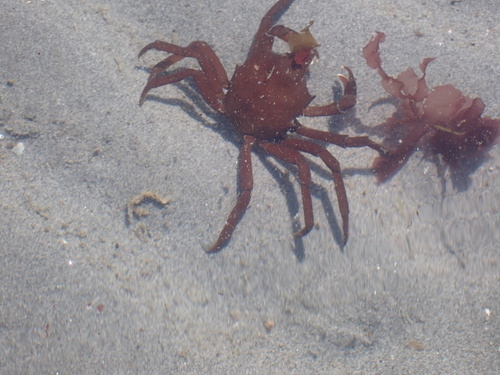
The Northern Kelp Crab (Pugettia producta) is a robust marine crustacean native to the rocky tide pools and lush canopy ecosystems of the Pacific coast of North America. Strongly associated with giant kelp forests, this crab plays a vital ecological role by grazing on massive kelp structures and serving as a key food source for marine mammals like sea otters. Unlike its decorator crab relatives, the adult Northern Kelp Crab rarely drapes itself in debris, relying instead on its natural coloration to remain hidden. These crabs possess incredibly strong, pointed legs that act like grappling hooks, allowing them to cling tightly to swaying kelp fronds amid powerful coastal swells. Their diet shifts dynamically with the seasons, showcasing an impressive adaptability that helps them survive the harsh winter months when kelp beds naturally die back.
Habitat: Typically found in rocky intertidal and subtidal zones along the wave-swept Pacific coast, closely associated with giant kelp forests, surfgrass, and harbor pilings.
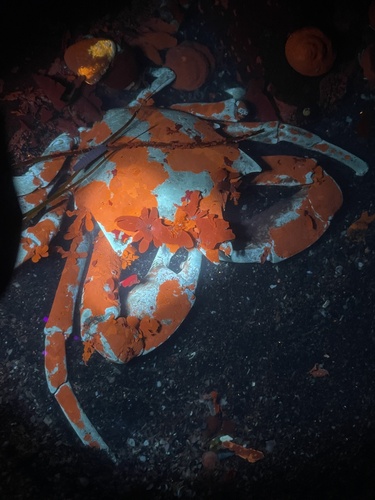
The Northern Kelp Crab is identified by its smooth, shield-shaped carapace, which typically ranges from olive green to yellowish-brown on the upper surface, mimicking the color of mature kelp. The underside is often much brighter, showing off shades of cream, yellow, or vivid red. They have a distinctively smooth body surface without the dense spines found on other spider crabs. Their long, robust legs are tipped with sharp, hook-like claws, and their main pincers are heavy and powerful, capable of delivering a formidable pinch.
Category
AnimalRarity
Common
Danger
1/5 · Very low
Snaps
2
Their claws are so strong that they can easily crush hard barnacle shells and inflict a painful pinch to human fingers if handled carelessly.
Unlike other members of the decorator crab family, adult Northern Kelp Crabs do not decorate their shells, as their smooth carapaces naturally mimic kelp blades perfectly.
When juvenile Northern Kelp Crabs molt, they may temporarily decorate their shells with bits of red algae to blend in with the understory before growing into their mature kelp-colored shell.
Possesses sharp, curved tips on its legs called dactyli, which act like climbing spikes to anchor the crab securely onto slick kelp fronds in heavy surf.
Can transition from a strictly herbivorous diet of brown algae in the summer to an omnivorous scavenger diet in winter when kelp is scarce.
Maintains a natural carapace color that precisely matches the local species of giant kelp, rendering them almost invisible to predators when clinging to fronds.
Feeds primarily on large brown algae during the spring and summer, but readily consumes small invertebrates, bryozoans, and carrion when kelp becomes scarce in winter.
Age differences: Juveniles often feed more heavily on red algae and small invertebrates, while mature adults consume larger volumes of brown kelp canopy.
Macrocystis pyrifera
Feeds extensively on this giant brown alga, using it both as a primary food source and structural shelter.
Enhydra lutris nereis
Preys heavily on Northern Kelp Crabs, crushing their hard shells with ease.
Scorpaenichthys marmoratus
This large, bottom-dwelling fish actively hunts crabs and other crustaceans along rocky reefs.
No trait badges are assigned for this object yet.
No aliases listed yet.
Collections for this object will appear here as more themes are added.
Danger
1/5 · Very low
No special safety notes yet.
Look for fins, arms, tentacles, shells and body symmetry. Underwater light shifts colors, so structure and markings usually matter more than shade. Sea Creature Identifier: upload a photo and compare the visible details.
5-10 cm
0.1-0.4 kg
1-3 years
Feeds primarily on large brown algae during the spring and summer, but readily consumes small invertebrates, bryozoans, and carrion when kelp becomes scarce in winter.
Typically found in rocky intertidal and subtidal zones along the wave-swept Pacific coast, closely associated with giant kelp forests, surfgrass, and harbor pilings.
Grazing
10000-80000
Zoom in to split clusters and explore where this object has been snapped.
Jun 16, 2026
Discovery ParkPhoto attribution
(c) eebee, some rights reserved (CC BY)
License: CC BY 4.0 ↗
Image may be shown cropped inside the card frame.

Washington, US
You might spot Great Blue Heron, Aggregating Anemone, and Ochre Sea Star.
View guide →

Alaska, US
You might spot Bald Eagle, Salmonberry, and Ochre Sea Star.
View guide →

Washington, US
You might spot Ochre Sea Star, Painted Anemone, and Aggregating Anemone.
View guide →

California, US
You might spot Sea Star, Leopard Shark, and Swellshark.
View guide →

British Columbia, CA
You might spot Ochre Sea Star and Yellow Shore Crab.
View guide →
British Columbia, CA
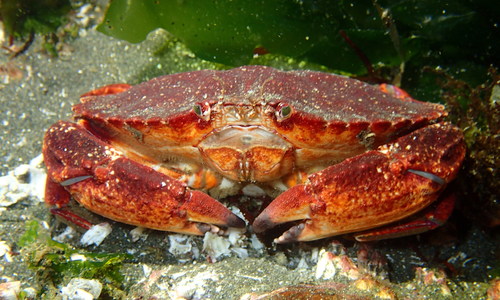
You might spot Red Rock Crab, Dungeness Crab, and Salal.
View guide →
Take the discovery with you
Snap it with Snappit to identify it, learn what makes it special, and add the discovery to your collection.