

Pāʻū O HiʻIaka
jacquemontia sandwicensis
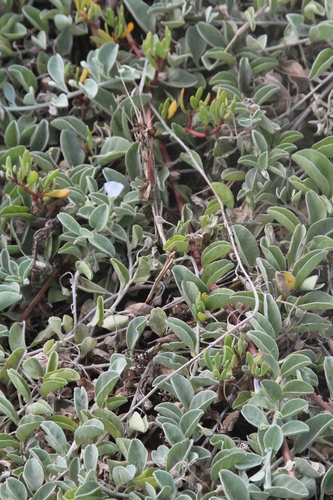
Pāʻū O HiʻIaka (Jacquemontia sandwicensis) is a beautiful, sprawling coastal vine endemic to the Hawaiian Islands. This hardy perennial species forms dense, low-growing mats across sandy beaches and rocky coastlines, serving as a vital ecological anchor that prevents wind and water erosion. With its small, bell-shaped blossoms that transition from white to pale blue or lavender, it adds a delicate splash of color to the rugged, sun-drenched shorelines. Beyond its ecological value, the plant holds a deeply revered place in Hawaiian culture, forever linked to tales of the goddess Pele and her beloved younger sister.
Habitat: Found in coastal dunes, sandy beaches, and rocky shoreline environments across the Hawaiian archipelago.
This prostrate vine features fleshy, oval-to-oblong light green leaves that measure up to 5 centimeters in length. Its slender, creeping stems root at the nodes to form expansive groundcover mats. The flowers are small, funnel-shaped, and resemble miniature morning glories, ranging in color from brilliant white to soft lavender-blue, typically blooming throughout the year.
Category
PlantsRarity
Common
Danger
1/5 · Very low
Snaps
Be the first to snap!
Despite living in harsh, salty, and windy beach conditions, its delicate flowers can bloom almost continuously throughout the year.
It plays a crucial role in coastal conservation by binding loose beach sand and preventing wind erosion.
The Hawaiian name translates to 'skirt of Hiʻiaka', referring to a legend where the volcano goddess Pele covered her baby sister with this vine to shade her from the sun.
Possesses a highly specialized waxy cuticle on its leaves that repels salt spray and minimizes moisture loss in coastal environments.
Creeping stems root at nodes when they touch soil, allowing the plant to rapidly anchor shifting coastal sands.
Fleshy leaves store excess water, helping the vine survive long periods of intense tropical sun and drought.
As a primary producer, it creates energy through photosynthesis using solar radiation, water, and carbon dioxide.
Hylaeus anthracinus
Native yellow-faced bees visit the flowers for nectar, acting as the primary pollinators of the plant.
Capra hircus
Invasive goats often graze on coastal vegetation, including this native vine, threatening its local populations.
No trait badges are assigned for this object yet.
No aliases listed yet.
Collections for this object will appear here as more themes are added.
Danger
1/5 · Very low
No special safety notes yet.
Start with the whole plant, then compare leaf arrangement, leaf edges, stems and any flowers or fruit. Opposite leaves grow in pairs; alternate leaves come one at a time along the stem. These details tell you far more together than a single green leaf does. Plant Identifier: upload a photo and compare the visible details.
50-300 cm
0.2-3 kg
3-10 years
As a primary producer, it creates energy through photosynthesis using solar radiation, water, and carbon dioxide.
Found in coastal dunes, sandy beaches, and rocky shoreline environments across the Hawaiian archipelago.
Photosynthesis
1-4
Zoom in to split clusters and explore where this object has been snapped.
Recent snaps will appear here as new observations are added.
Take the discovery with you
Snap it with Snappit to identify it, learn what makes it special, and add the discovery to your collection.