





Pacific Forktail
Ischnura cervula
The Pacific Forktail is a small, colorful dragonfly that loves to flutter around ponds and streams. With its bright blue and green colors, it looks like a tiny jewel in the air!
Habitat: Wetlands
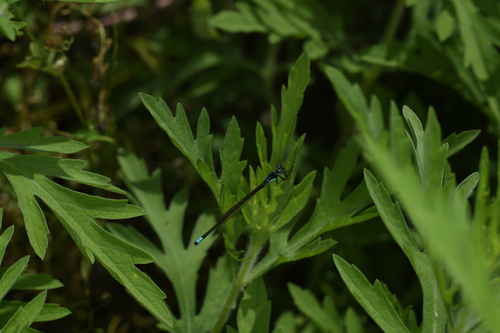
The Pacific Forktail is a slender damselfly, with males sporting a vibrant sky-blue body marked with black patterns, particularly on their tail. Females are typically greenish-yellow or brown. They can be distinguished from dragonflies by their much thinner bodies and by holding their four wings neatly together over their back when at rest.
Category
InsectsRarity
Common
Danger
1/5 · Very low
Snaps
12
Males display a bright blue 'tail fork' used for identifying mates, making them easy to spot!
Pacific Forktail nymphs spend up to two years growing underwater before transforming into adults!
These tiny hunters have massive eyes that give them almost 360-degree vision to spot prey!
When mating, a male and female Pacific Forktail form a beautiful heart shape with their bodies!
Pacific Forktail nymphs can breathe underwater because of specialized gills on their tails, which helps them survive and hunt in aquatic environments.
Pacific Forktail can dart and hover with four independently controlled wings, helping them expertly catch tiny flying insects mid-air.
Pacific Forktail females have a special blade-like organ that helps them insert eggs safely into underwater plant stems.
These tiny hunters catch and eat other small insects in the air, keeping mosquito populations in check!
Age differences: Nymphs hunt small aquatic invertebrates, while adults catch flying insects.
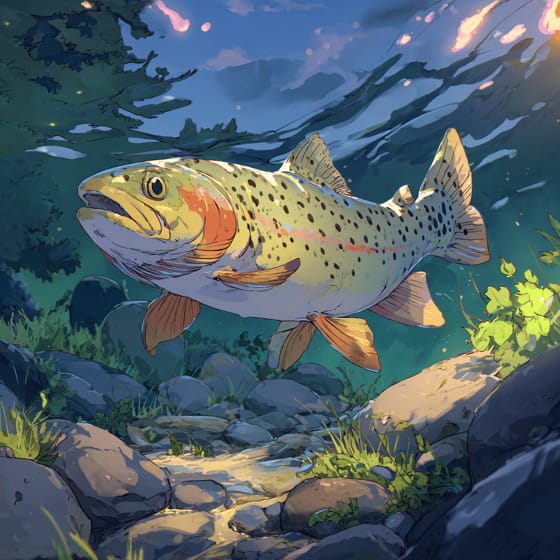
Oncorhynchus mykiss
Trout eagerly consume damselfly nymphs and adults when hunting in water.
Culex pipiens
Adult Pacific Forktails are skilled hunters of flying mosquitoes near water.
Lithobates pipiens
Frogs frequently prey on damselflies found resting or flying near the water's edge.
Solitary animals live alone for most of their lives, only interacting with others for mating or parental care.
Aerial creatures spend a significant portion of their lives airborne, utilizing flight for various activities such as hunting, migration, or nesting.
Colorful describes organisms or objects displaying a wide range of bright and distinct colors.
This trait identifies organisms whose diet primarily consists of insects and other small invertebrates.

This habitat trait identifies species found in wetlands, which are areas of land saturated with water, either permanently or seasonally, including marshes, swamps, and bogs.

Diurnal animals are primarily active during daylight hours, typically resting or sleeping at night.

This trait identifies organisms that exhibit exceptional swiftness in movement for hunting, escape, or travel.

Describes organisms that transfer pollen, enabling the fertilization and reproduction of plants.
No aliases listed yet.
Danger
1/5 · Very low
Be careful around water where dragonflies live, and always stay close to an adult.
The easiest way to identify Pacific Forktail is to use the Snappit nature identifier app.
30-45 mm
25-35 mm
365-730 days
15 km/h
These tiny hunters catch and eat other small insects in the air, keeping mosquito populations in check!
Wetlands
Pursuit
Zoom in to split clusters and explore where this object has been snapped.
May 27, 2026
Folsom City Zoo SanctuaryPhoto attribution
(c) Hawk T., some rights reserved (CC BY)
License: CC BY 4.0 ↗
Image may be shown cropped inside the card frame.

Oregon, US
You might spot Duck, Pacific Trillium, and Wood Duck.
View guide →

Washington, US
You might spot Pacific Tree Frog and Long-Toed Salamander.
View guide →

California, US
You might spot Western Fence Lizard, Duck, and California Brittlebush.
View guide →

Washington, US
You might spot Rock Pigeon, Great Blue Heron, and Duck.
View guide →

California, US
You might spot Western Fence Lizard, Duck, and Black Phoebe.
View guide →

Washington, US
You might spot Duck, Western Sword Fern, and Rock Pigeon.
View guide →
Take the discovery with you
Snap it with Snappit to identify it, learn what makes it special, and add the discovery to your collection.








.jpg&width=800)



