




American Cockroach
Periplaneta americana
The American Cockroach is a large, brown insect that loves warm places. They are fast runners and can even fly short distances! They often come out at night to find food.
Habitat: Urban areas
The American Cockroach is a large, reddish-brown insect with a distinct yellowish margin on its pronotum, located behind its head. Its flattened, oval body and long antennae distinguish it from smaller, darker species. Both sexes have fully developed wings.
Category
InsectsRarity
Common
Danger
1/5 · Very low
Snaps
20
A single female cockroach can lay over 150 eggs in her lifetime!
Cockroaches have been on Earth for over 300 million years!
Their antennae are always wiggling to smell and feel their surroundings!
They can hold their breath for up to 40 minutes underwater!
The American Cockroach can run incredibly fast, covering up to 50 body lengths per second to escape predators.
American Cockroaches have an exoskeleton that helps them squeeze through tiny cracks and crevices quickly.
American Cockroaches can live for a week or more without their head because they breathe through body segments.
American Cockroaches use their long antennae to sense chemicals, finding food and mates even in darkness.
An opportunistic scavenger, eating almost anything organic it finds in its environment.
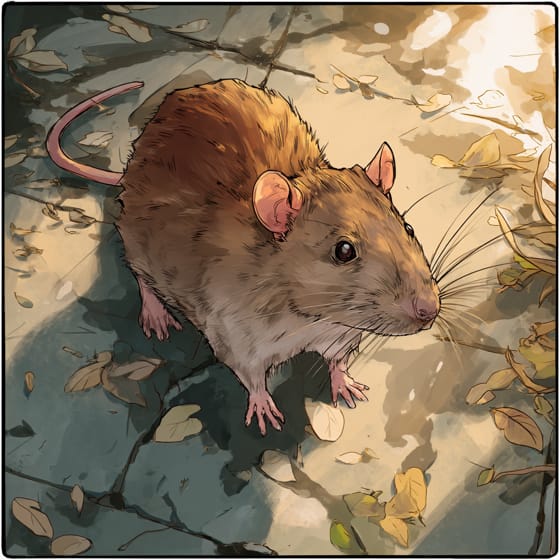
Rattus norvegicus
Rats prey on cockroaches when available.
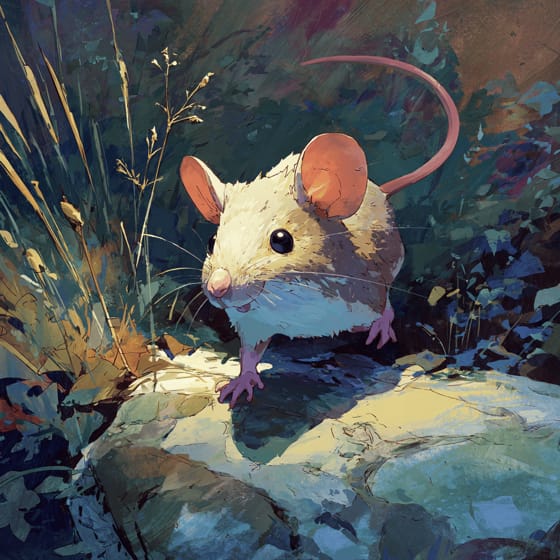
Mus musculus
Mice consume cockroaches as a food source.
Evania appendigaster
Wasp larvae develop inside cockroach egg cases.
Blatticola blattae
Nematodes live in the cockroach's gut.
Solitary animals live alone for most of their lives, only interacting with others for mating or parental care.
This trait identifies organisms whose diet includes both plant and animal matter.
Scavengers consume dead organic matter, helping to decompose carcasses and other waste in the ecosystem.
Camouflaged describes organisms that possess coloring or patterns that allow them to blend into their environment.

This trait identifies organisms that exhibit exceptional swiftness in movement for hunting, escape, or travel.

This habitat trait indicates species that can coexist with humans in urban and suburban environments, utilizing man-made structures and green spaces.

Nocturnal animals are primarily active during the nighttime hours, typically resting or sleeping during the day.
Danger
1/5 · Very low
If you see a cockroach, it's best to leave it alone and tell an adult.
The easiest way to identify American Cockroach is to use the Snappit nature identifier app.
40-55 mm
35-50 mm
400-600 days
An opportunistic scavenger, eating almost anything organic it finds in its environment.
Urban areas
Scavenging
6
Zoom in to split clusters and explore where this object has been snapped.

Michigan, US
You might spot Eastern Gray Squirrel, Tree-Of-Heaven, and House Sparrow.
View guide →

Arkansas, US
You might spot Eastern Gray Squirrel and Asian Lady Beetle.
View guide →

Louisiana, US
You might spot Brown Anole, White Ibis, and Duck.
View guide →

Hawaii, US
You might spot Hawaiian Garden Spider, Beach Naupaka, and Black Noddy.
View guide →

Arizona, US
You might spot Great-Tailed Grackle, Stinknet, and Northern Mockingbird.
View guide →

US
You might spot Laughing Gull, Brown Anole, and Green Iguana.
View guide →
Take the discovery with you
Snap it with Snappit to identify it, learn what makes it special, and add the discovery to your collection.









.jpg&width=800)




