.jpg&width=800)





Palmleaf Mistflower
Conoclinium dissectum
The Palmleaf Mistflower is a beautiful flower with bright blue blossoms. It grows in clusters and attracts butterflies and bees, making it a lovely sight in nature.
Habitat: Grasslands
The Palmleaf Mistflower has finely dissected, deep green leaves that resemble small palm fronds. Its fuzzy, dome-shaped flower clusters are a striking lavender-blue to purplish color, creating a soft, misty appearance atop slender stems.
Category
PlantsRarity
Common
Danger
1/5 · Very low
Snaps
1
Butterflies love its late-season nectar, fueling their long journeys!
It blooms so late, it's a vital food source when others fade!
Its 'mist' of tiny purple flowers can make whole fields look hazy!
Its leaves are divided so deeply, they look like mini green hands!
Palmleaf Mistflower has nectar-rich flowers that attract many butterflies, helping it spread its pollen far and wide.
Palmleaf Mistflower has a strong root system that helps it grow in challenging soils and resist erosion.
Palmleaf Mistflower can quickly re-sprout after being cut back or grazed, allowing it to recover and bloom again.
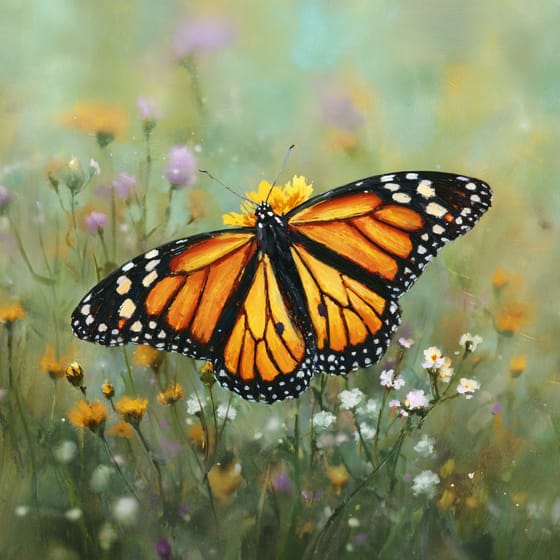
Danaus plexippus
Nectar source for adults
Apis mellifera
Collects nectar and pollen
Bombus impatiens
Important late-season nectar source
Flowering plants are any plants that produce flowers as part of their reproductive cycle.
Cluster flowers are inflorescences where individual flowers are arranged closely together on a common stem.
Summer blooming plants produce their flowers during the summer season, often providing vibrant color when many other plants have finished.
Fragrant flowers emit a pleasant aroma, often to attract pollinators or for defense.

Colorful describes organisms or objects displaying a wide range of bright and distinct colors.

Grassland habitats are terrestrial biomes dominated by grasses and herbaceous plants, supporting a variety of grazing animals.

Describes plants that are particularly attractive and beneficial to a wide range of pollinating organisms.
No aliases listed yet.
Danger
1/5 · Very low
Always look but don't touch flowers without asking an adult first.
The easiest way to identify Palmleaf Mistflower is to use the Snappit nature identifier app.
60-120 cm
60-90 cm
0.5-1 cm
Late summer to fall (July-October)
No
Mild
Perennial
Zoom in to split clusters and explore where this object has been snapped.
Take the discovery with you
Snap it with Snappit to identify it, learn what makes it special, and add the discovery to your collection.








.jpg&width=800)


_001.jpg&width=800)




