





Wild Yam
dioscorea villosa
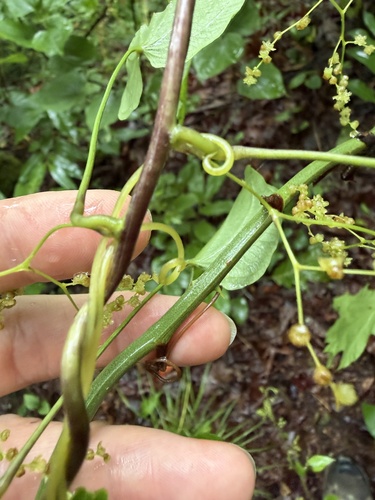
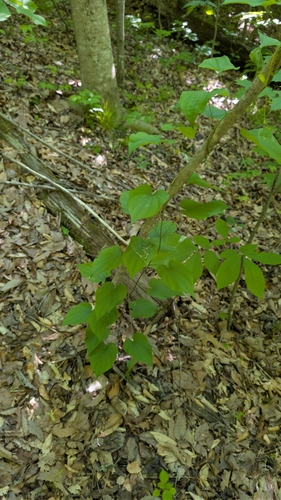
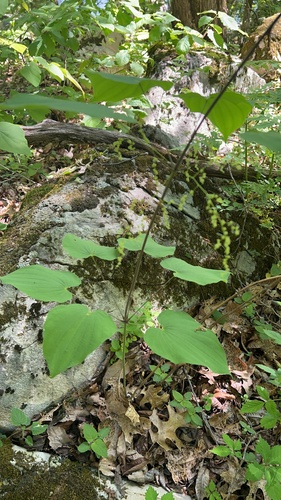
Wild Yam is a climbing plant that can grow many feet tall! Its heart-shaped leaves and beautiful flowers make it a fun plant to discover in the wild.
Habitat: Wild Yam typically grows in wooded areas, along streams, and in open fields.
The Wild Yam is a slender, twining vine with distinctive heart-shaped leaves, often arranged alternately along its stem. Its small, greenish-yellow flowers bloom in drooping clusters, making it blend subtly into the forest understory rather than standing out.
Category
PlantsRarity
Common
Danger
1/5 · Very low
Snaps
20
Its roots were historically used to make important medicines, sometimes called 'nature's pharmacy'!
Some people say its leaves look like tiny green hearts, sending love to the forest floor!
Unlike the sweet potatoes we eat, Wild Yam isn't really a potato at all, but a different plant family!
Wild Yam has separate male and female plants, so you need both for it to make seeds!
Wild Yam can twine its flexible stems around other plants, helping it climb towards sunlight and higher ground to grow taller.
Wild Yam has a deep, thick root system that stores energy, helping it survive winter and regrow year after year.
Wild Yam has natural compounds called saponins that can taste bitter to some animals, helping to protect its leaves from being eaten.
Climbing or vine plants are characterized by a growth habit that allows them to ascend upwards by twining, tendrils, or adhesive roots.
Colorful describes organisms or objects displaying a wide range of bright and distinct colors.
This trait characterizes organisms whose diet consists entirely or primarily of plant material.
Forest habitats are terrestrial environments dominated by dense tree cover, supporting a high diversity of plant and animal life.

Describes organisms that transfer pollen, enabling the fertilization and reproduction of plants.
Danger
1/5 · Very low
Always ask an adult before touching or eating wild plants.
The easiest way to identify Wild Yam is to use the Snappit nature identifier app.
150-450 cm
50-200 cm
0.1-0.3 cm
Summer
Yes
Mild
Perennial
Zoom in to split clusters and explore where this object has been snapped.
May 24, 2026
Andrews GeyserPhoto attribution
(c) Terry Loeb, some rights reserved (CC BY)
License: CC BY 4.0 ↗
Image may be shown cropped inside the card frame.
May 8, 2026
Clark State ForestPhoto attribution
(c) Peyton Phelps, some rights reserved (CC BY)
License: CC BY 4.0 ↗
Image may be shown cropped inside the card frame.
Apr 14, 2026
Nickajack CavePhoto attribution
(c) will shepard, some rights reserved (CC BY)
License: CC BY 4.0 ↗
Image may be shown cropped inside the card frame.
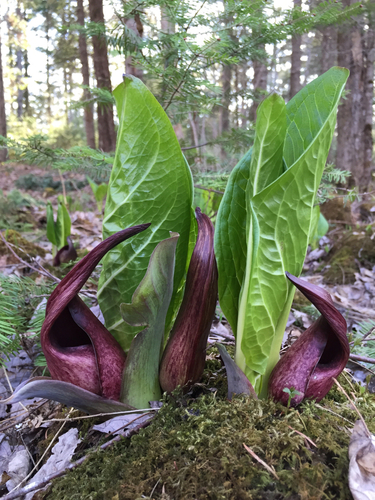
Connecticut, US
You might spot Eastern Skunk Cabbage and Eastern White Pine.
View guide →

Pennsylvania, US
You might spot Large Yellow Underwing and Eastern Black Carpenter Ant.
View guide →

Michigan, US
You might spot Eastern Box Turtle, Autumn Olive, and Common Watersnake.
View guide →
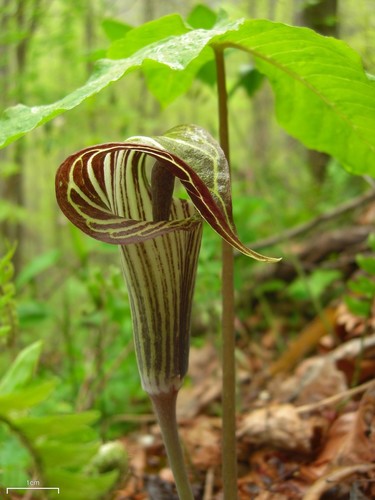
Kentucky, US
You might spot Jack-In-The-Pulpit and Prairie Trillium.
View guide →

Kentucky, US
You might spot Multiflora Rose, Eastern Newt, and American Beech.
View guide →

North Carolina, US
You might spot Galax, Mountain Laurel, and Downy Rattlesnake Plantain.
View guide →
Take the discovery with you
Snap it with Snappit to identify it, learn what makes it special, and add the discovery to your collection.










.jpg&width=800)



_001.jpg&width=800)




