





Pan
Pan
Chimps are playful and smart animals that love to swing in trees! They live in groups called troops and are known for their funny behaviors and strong family bonds.
Habitat: Forests
The Pan is covered in shaggy black fur, with a bare face, hands, and feet that can range from pink to dark brown. They have prominent brow ridges and large, expressive ears. Males are generally larger and more robust than females.
Category
MammalsRarity
Common
Danger
3/5 · Moderate
Snaps
Be the first to snap!
A chimpanzee is much stronger than a human, able to easily rip apart tough branches!
Chimpanzees build a unique, comfy nest in a tree every night to sleep safely!
Chimpanzees in some groups perform rain dances when a storm approaches, a curious behavior!
Young chimps stay with their mothers for up to five years, learning everything they need!
Pan can use sticks to 'fish' for termites and stones to crack nuts, helping them access tricky foods.
Pan has incredibly strong arms and gripping feet that help them navigate high up in the forest canopy with ease.
Pan can use a wide range of vocalizations, facial expressions, and body language to share information within their group.
Pan has a fantastic memory for locations of food and water sources, which helps them find sustenance reliably.
Chimps are omnivores, eating lots of fruits and plants, but also enjoying insects and sometimes hunting for meat!
Ficus exasperata
A crucial food source, especially fruits.
Cercopithecus nictitans
Preys on these monkeys for protein.
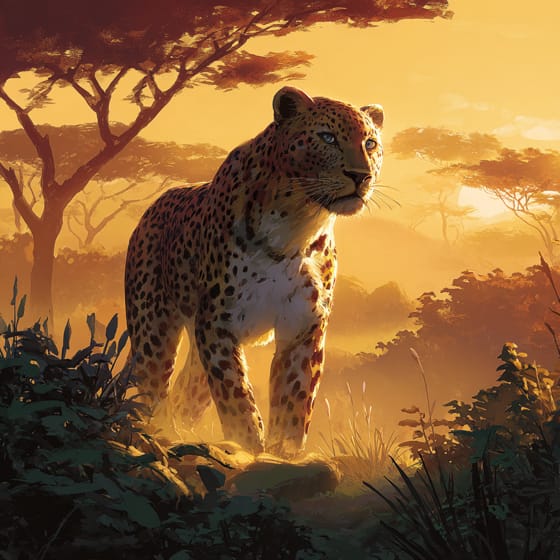
Panthera pardus
Major predator of chimps, especially young.
Termes bellicosus
Uses tools to extract these insects.
Furry describes animals possessing a dense covering of soft hair or fur.
Social animals live in organized groups, cooperating for survival benefits such as foraging, defense, and raising offspring.
This trait identifies organisms whose diet includes both plant and animal matter.
This trait describes organisms that manipulate external objects to achieve a specific goal.

Forest habitats are terrestrial environments dominated by dense tree cover, supporting a high diversity of plant and animal life.

Endangered status indicates a species is at a very high risk of extinction in the wild in the near future.
No aliases listed yet.
Danger
3/5 · Moderate
Always watch from a distance and never try to touch wild animals.
The easiest way to identify Pan is to use the Snappit nature identifier app.
100-170 cm
27-70 kg
40-50 years
40 km/h
Chimps are omnivores, eating lots of fruits and plants, but also enjoying insects and sometimes hunting for meat!
Forests
Foraging
Zoom in to split clusters and explore where this object has been snapped.
Recent snaps will appear here as new observations are added.

New York, US
You might spot Coral, Sea Lion, and African Penguin.
View guide →
New York, US
You might spot Sand Tiger Shark, African Penguin, and Sea Lion.
View guide →

Baden-Württemberg, DE
You might spot Asian Elephant, Polar Bear, and Sea Lion.
View guide →

New Mexico, US
You might spot Olive Tree, Saguaro Cactus, and Sheep.
View guide →

British Columbia, CA
You might spot Bald Eagle, Seal, and Sea Lion.
View guide →

US
You might spot Sandstone, Pan, and Ling.
View guide →
Take the discovery with you
Snap it with Snappit to identify it, learn what makes it special, and add the discovery to your collection.




.jpg&width=800)


.JPG&width=800)



.jpg&width=800)
