_Biston_betularia_-_Lustenice_Czech_Republic_-_Male.jpg&width=800)





Peppered Moth
Biston betularia
The Peppered Moth is a special insect that can change its color! It helps scientists understand how animals adapt to their surroundings. These moths are often found resting on trees, blending in with the bark.
Habitat: Forests
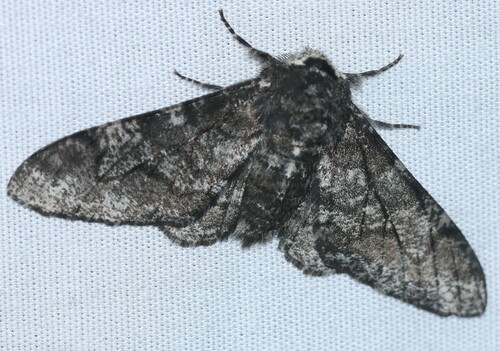
The Peppered Moth has a distinctive mottled appearance, typically pale with dark speckles across its wings and body, resembling lichen-covered bark. Some individuals are entirely dark or black, a form known as melanic, which makes them look starkly different from their speckled relatives.
Category
InsectsRarity
Common
Danger
1/5 · Very low
Snaps
7
Adult Peppered Moths typically don't eat anything, living only for a short time to lay eggs!
Baby Peppered Moths, called caterpillars, look like twigs to fool predators!
Scientists use Peppered Moths to teach about natural selection and evolution in action.
Their color can shift from light to dark, or back again, in just a few years!
Peppered Moths can quickly change their common wing color over generations because of genetic shifts that help them survive in changing environments.
Peppered Moths have specific speckled or dark wing patterns that make them look exactly like tree bark or lichen, helping them hide from hungry birds.
Peppered Moths developed darker wings in polluted areas because of adaptation that helped them camouflage better on sooty trees.
Baby moths eat tree leaves, while adult moths usually do not feed at all.
Age differences: Larvae (caterpillars) feed on various tree leaves, but adult moths typically do not feed or only sip water.
Quercus robur
Its larvae feed on the leaves of this tree.
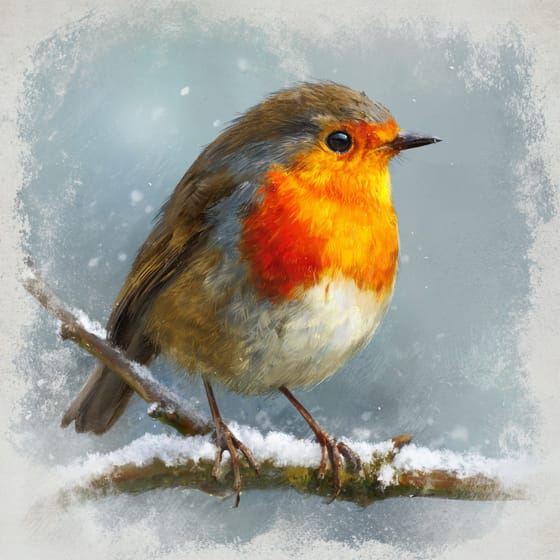
Erithacus rubecula
Common predator of adult Peppered Moths.
Pipistrellus pipistrellus
Nocturnal bats hunt adult moths at night.
Solitary animals live alone for most of their lives, only interacting with others for mating or parental care.
Camouflaged describes organisms that possess coloring or patterns that allow them to blend into their environment.
This trait characterizes organisms whose diet consists entirely or primarily of plant material.
Forest habitats are terrestrial environments dominated by dense tree cover, supporting a high diversity of plant and animal life.

Nocturnal animals are primarily active during the nighttime hours, typically resting or sleeping during the day.

Describes organisms that transfer pollen, enabling the fertilization and reproduction of plants.
No aliases listed yet.
Danger
1/5 · Very low
Moths are safe to observe, but don't touch them as they can be delicate.
The easiest way to identify Peppered Moth is to use the Snappit nature identifier app.
35-60 mm
20-30 mm
10-20 days
8 km/h
Baby moths eat tree leaves, while adult moths usually do not feed at all.
Forests
Foraging
Zoom in to split clusters and explore where this object has been snapped.
Jul 6, 2024
Nyack Ranger Station Historic DistrictPhoto attribution
(c) Rich Sommer, some rights reserved (CC BY)
License: CC BY 4.0 ↗
Image may be shown cropped inside the card frame.

Ontario, CA
You might spot Canada Jay, American Beaver, and Black-Capped Chickadee.
View guide →

Illinois, US
You might spot Chicory, Hackberry Emperor, and Compass Plant.
View guide →

Massachusetts, US
You might spot Red Trillium, Round-Leaved Sundew, and Pitch Pine.
View guide →

Vermont, US
You might spot American Robin and Black-Capped Chickadee.
View guide →

Vermont, US
You might spot American Robin and Black-Capped Chickadee.
View guide →

New York, US
You might spot Spotted Salamander, American Robin, and Garter Snake.
View guide →
Take the discovery with you
Snap it with Snappit to identify it, learn what makes it special, and add the discovery to your collection.








.jpg&width=800)



