.jpg&width=800)





Large Lace-Border Moth
scopula limboundata
The Large Lace-Border Moth has beautiful lace-like patterns on its wings that look like delicate art. These moths are most active at night and love to flutter around lights, creating a magical sight!
Habitat: Large Lace-Border Moths are commonly found in gardens, forests, and fields across North America.
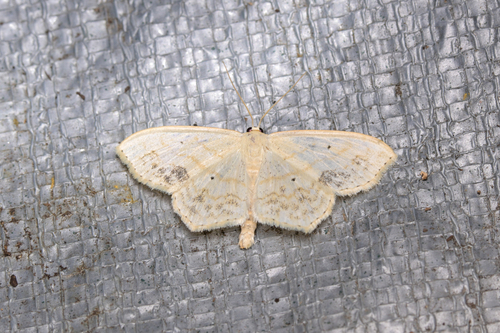
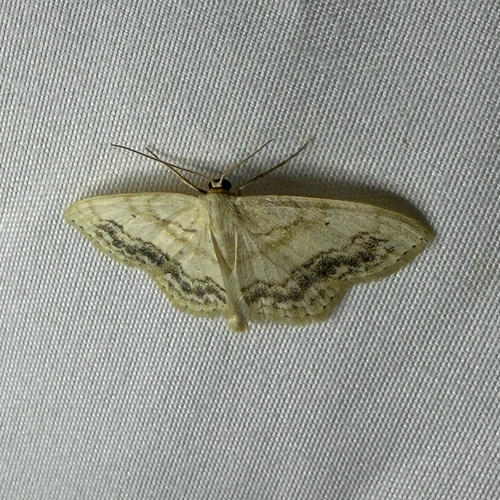
The Large Lace-Border Moth has pale yellow to creamy white wings, each featuring a distinct wavy, dark brown or black border resembling delicate lace. A small, dark discal spot is often visible on each wing. Its slender body usually matches the lighter wing color.
Category
InsectsRarity
Common
Danger
0/5 · No known danger
Snaps
25
Its caterpillars are called "inchworms" because they move by looping their bodies!
Some Lace-Border Moths can have several generations in just one year!
The adult moths often rest with their wings held flat, showing off their unique borders.
They are part of a huge moth family called Geometridae, meaning "earth measurers".
Large Lace-Border Moth has intricate, wavy patterns on its wings that create a visual illusion, helping it blend into varied backgrounds.
Large Lace-Border Moths can see well in low light, allowing them to navigate and find mates and nectar sources after sunset.
Male Large Lace-Border Moths use powerful chemical signals called pheromones to find females across significant distances.
As caterpillars, they munch on plant leaves; as adults, they typically do not eat or just sip water.
Age differences: Caterpillars eat plant leaves; adult moths typically do not feed or only sip water/nectar.
Solitary animals live alone for most of their lives, only interacting with others for mating or parental care.
Camouflaged describes organisms that possess coloring or patterns that allow them to blend into their environment.
Colorful describes organisms or objects displaying a wide range of bright and distinct colors.
This trait characterizes organisms whose diet consists entirely or primarily of plant material.

Nocturnal animals are primarily active during the nighttime hours, typically resting or sleeping during the day.
Danger
0/5 · No known danger
No special safety notes yet.
The easiest way to identify Large Lace-Border Moth is to use the Snappit nature identifier app.
25-35 mm
12-18 mm
7-14 days
10-20 km/h
As caterpillars, they munch on plant leaves; as adults, they typically do not eat or just sip water.
Large Lace-Border Moths are commonly found in gardens, forests, and fields across North America.
6
Zoom in to split clusters and explore where this object has been snapped.
Jun 19, 2026
River ParkPhoto attribution
(c) Becca, some rights reserved (CC BY)
License: CC BY 4.0 ↗
Image may be shown cropped inside the card frame.
Jun 7, 2026
Sugar Loaf MountainPhoto attribution
(c) Jacqueline Raiford, some rights reserved (CC BY)
License: CC BY 4.0 ↗
Image may be shown cropped inside the card frame.

Michigan, US
You might spot Eastern Gray Squirrel, Tree-Of-Heaven, and House Sparrow.
View guide →

New York, US
You might spot Bald Eagle, Common Eastern Bumble Bee, and Red-Tailed Hawk.
View guide →

Indiana, US
You might spot Common Reed, Rosepink, and Bearberry.
View guide →

Virginia, US
You might spot Eastern Tiger Swallowtail, Fowler's Toad, and Monarch.
View guide →

Illinois, US
You might spot Eastern Red-Backed Salamander and Blanchard's Cricket Frog.
View guide →

Tennessee, US
You might spot Monarch and Eastern Tiger Swallowtail.
View guide →
Take the discovery with you
Snap it with Snappit to identify it, learn what makes it special, and add the discovery to your collection.











.jpg&width=800)



