





Pine Woods Tree Frog
Hyla femoralis
The Pine Woods Tree Frog is a small, green frog that loves to live in pine forests. They are great jumpers and can make a funny sound that sounds like a whistle!
Habitat: Forests
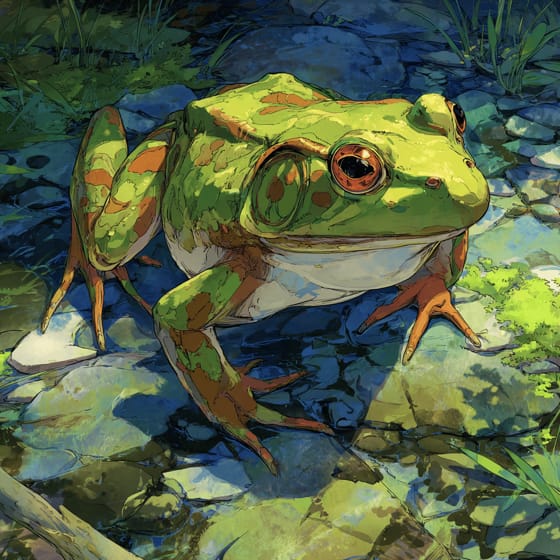
The Pine Woods Tree Frog is a slender frog, typically tan to reddish-brown with variable darker spots or streaks. Its most distinctive feature is the bright yellow or orange spots on the hidden surfaces of its thighs, which are visible when it jumps.
Category
AmphibiansRarity
Common
Danger
1/5 · Very low
Snaps
1
Female Pine Woods Tree Frogs can lay up to 2,000 eggs in one night!
Their distinct 'dot-dash' call sounds like Morse code broadcasting from the trees!
These tiny frogs spend nearly their entire lives high up in the tree canopy!
They often breed in shallow, temporary rain puddles, racing against the clock!
Pine Woods Tree Frogs have special toe pads that help them stick to leaves and branches, allowing them to climb high in trees.
Pine Woods Tree Frogs can change their skin tone from light to dark to perfectly match their surroundings, helping them hide from predators.
Pine Woods Tree Frogs have bright yellow or orange spots on their inner thighs that flash when they jump, which can startle predators.
Pine Woods Tree Frogs can breed in temporary rain puddles, allowing their tadpoles to develop quickly before the water dries up.
Tiny insects and other small invertebrates are the Pine Woods Tree Frog's favorite meal, which they catch with their sticky tongue.
Thamnophis sirtalis
hunts them in vegetation.
Lithobates catesbeianus
preys on smaller frogs.

Procyon lotor
forages for them near water.
Singing animals produce complex vocalizations, often for purposes of attracting mates, defending territory, or communicating within their species.
Arboreal animals live primarily in trees, utilizing them for shelter, food, and protection from predators.
Camouflaged describes organisms that possess coloring or patterns that allow them to blend into their environment.
Colorful describes organisms or objects displaying a wide range of bright and distinct colors.

This trait identifies organisms whose diet primarily consists of insects and other small invertebrates.

Forest habitats are terrestrial environments dominated by dense tree cover, supporting a high diversity of plant and animal life.

Nocturnal animals are primarily active during the nighttime hours, typically resting or sleeping during the day.
No aliases listed yet.
Danger
1/5 · Very low
Always wash your hands after touching frogs, as they can have sensitive skin.
The easiest way to identify Pine Woods Tree Frog is to use the Snappit nature identifier app.
2.5-3.8 cm
0.001-0.005 kg
2-5 years
Tiny insects and other small invertebrates are the Pine Woods Tree Frog's favorite meal, which they catch with their sticky tongue.
Forests
Ambush
1000-2000
Zoom in to split clusters and explore where this object has been snapped.
Take the discovery with you
Snap it with Snappit to identify it, learn what makes it special, and add the discovery to your collection.







.JPG&width=800)


.jpg&width=800)

