





Pinkladies
Oenothera speciosa
Pinkladies are beautiful flowers that bloom in shades of pink and white. They open in the evening and close in the morning, making them special night-time flowers!
Habitat: Grasslands
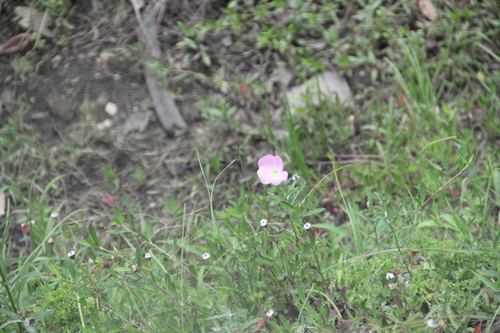
The Pinkladies has delicate, cup-shaped flowers, usually a soft pink or white, with four broad petals that often fade to a deeper rose. Its slender stems bear narrow, lance-shaped leaves, creating an airy, naturalistic appearance in meadows and gardens.
Category
PlantsRarity
Common
Danger
1/5 · Very low
Snaps
37
Pinkladies are sometimes called "Showy Evening Primrose" even though they often bloom during the day!
Some Pinkladies flowers can actually change color from white to pink after they've been open!
The root of the Pinkladies plant was once mashed and eaten like a potato by Native Americans!
Their tiny seeds are super tough; they can sprout even after many years!
Pinkladies can open their flowers at dusk, releasing a sweet fragrance to attract night-flying moths for pollination.
Pinkladies has creeping rhizomes that help it spread quickly, forming large colonies and stabilizing soil.
Pinkladies can tolerate dry conditions, thanks to its deep root system, helping it survive in less fertile areas.
Manduca sexta
Visits flowers at dusk for nectar.
Apis mellifera
Collects pollen and nectar during the day.
Bombus impatiens
Gathers nectar and pollen from flowers.
Ostrinia nubilalis
Larvae can bore into stems and leaves.
Flowering plants are any plants that produce flowers as part of their reproductive cycle.
Fragrant flowers emit a pleasant aroma, often to attract pollinators or for defense.
Medicinal plants possess chemical compounds that can be used for therapeutic purposes to treat illnesses or maintain health.
Night blooming plants open their flowers after sunset, often to attract nocturnal pollinators with their scent and appearance.

Edible plants are those parts of a plant that are considered safe for human consumption.

Grassland habitats are terrestrial biomes dominated by grasses and herbaceous plants, supporting a variety of grazing animals.

Describes plants that are particularly attractive and beneficial to a wide range of pollinating organisms.

Rapid growing plants exhibit accelerated growth rates, quickly increasing in size and biomass within a short period.
No aliases listed yet.
Danger
1/5 · Very low
Always look but don't pick flowers in nature so they can keep growing.
The easiest way to identify Pinkladies is to use the Snappit nature identifier app.
30-60 cm
30-90 cm
3-5 cm
Spring to summer
Yes
None
Perennial
Zoom in to split clusters and explore where this object has been snapped.
May 31, 2026
Bear Creek Pioneers ParkPhoto attribution
(c) Texas Bird Family, some rights reserved (CC BY)
License: CC BY 4.0 ↗
Image may be shown cropped inside the card frame.

Alabama, US
You might spot Elf Orpine, Canada Goose, and Leatherleaf Mahonia.
View guide →

Georgia, US
You might spot Common Vetch, Tiny Bluet, and Carolina Crane's-Bill.
View guide →

Arkansas, US
You might spot Eastern Gray Squirrel and Asian Lady Beetle.
View guide →

California, US
You might spot Monarch, Bee, and Anise Swallowtail.
View guide →

Alabama, US
You might spot Anole, Bee, and Bristle Thistle.
View guide →

Alabama, US
You might spot Anole, Bee, and Bristle Thistle.
View guide →
Take the discovery with you
Snap it with Snappit to identify it, learn what makes it special, and add the discovery to your collection.








.jpg&width=800)


_001.jpg&width=800)



