





prairie phlox
Phlox pilosa
Prairie phlox is a beautiful flower that blooms in shades of pink and purple. It loves sunny places and attracts butterflies and bees, making gardens colorful and lively.
Habitat: Grasslands
The prairie phlox has clusters of star-shaped flowers, usually bright pink, purple, or white. Its fuzzy, narrow leaves grow opposite on hairy stems. Unlike garden phlox, it often appears more delicate and sparse in its native prairie habitat.
Category
PlantsRarity
Common
Danger
1/5 · Very low
Snaps
10
Its scientific name "Phlox" comes from Greek, meaning "flame," for its bright colors!
Many types of phlox exist, but this one especially loves sunny, wide-open grasslands!
Some moths visit its flowers at night, drawn by its subtle, sweet fragrance!
These beautiful flowers often grow in huge, colorful patches across open prairies!
Prairie phlox uses sweet nectar and bright petals to guide long-tongued insects, ensuring its seeds are spread widely.
Prairie phlox has deep roots that help it find water, allowing it to survive dry periods in its sunny, open grassland home.
Its fuzzy stems and leaves may deter some hungry herbivores, making it less appealing for a quick snack.
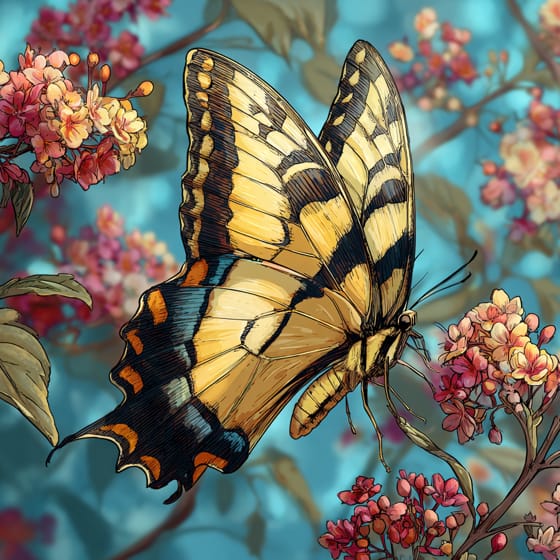
Papilio glaucus
Visits for nectar and pollen
Bombus impatiens
A frequent visitor for nectar
Chlosyne gorgone
Larvae feed on leaves
Aromatic plants produce and emit fragrant volatile organic compounds, often for defense or to attract pollinators.
Flowering plants are any plants that produce flowers as part of their reproductive cycle.
Spring blooming plants produce their flowers during the spring season, often signifying the end of winter and the start of new growth.
Summer blooming plants produce their flowers during the summer season, often providing vibrant color when many other plants have finished.

Fragrant flowers emit a pleasant aroma, often to attract pollinators or for defense.

Colorful describes organisms or objects displaying a wide range of bright and distinct colors.

Grassland habitats are terrestrial biomes dominated by grasses and herbaceous plants, supporting a variety of grazing animals.

Describes plants that are particularly attractive and beneficial to a wide range of pollinating organisms.
No aliases listed yet.
Danger
1/5 · Very low
Always look but don't pick flowers, so everyone can enjoy them!
The easiest way to identify prairie phlox is to use the Snappit nature identifier app.
30-60 cm
30-45 cm
1-2 cm
Late Spring to Mid-Summer
No
None
Perennial
Zoom in to split clusters and explore where this object has been snapped.

Iowa, US
You might spot Common Eastern Bumble Bee and Eastern Cottontail.
View guide →

Illinois, US
You might spot Viceroy, Common Wood-Nymph, and Acadian Hairstreak.
View guide →

Kansas, US
You might spot American Robin, Monarch, and Italian Wall Lizard.
View guide →

Wisconsin, US
You might spot Green Comet Milkweed, Wood Lily, and Flowering Spurge.
View guide →

Illinois, US
You might spot Common Eastern Bumble Bee and Brown-Belted Bumble Bee.
View guide →

Illinois, US
You might spot Common Eastern Bumble Bee and Eastern Forktail.
View guide →
Take the discovery with you
Snap it with Snappit to identify it, learn what makes it special, and add the discovery to your collection.








.jpg&width=800)


_001.jpg&width=800)




