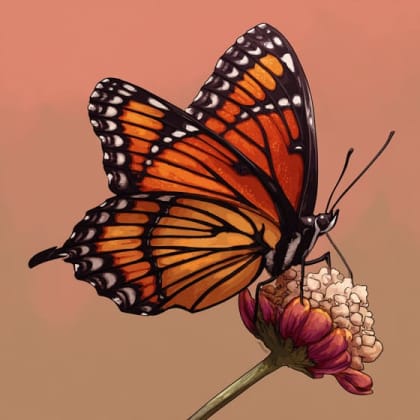





Viceroy

Gensburg-Markham Prairie offers a vibrant window into Illinois' natural heritage, preserving a high-quality tallgrass prairie ecosystem.
Gensburg-Markham Prairie offers a vibrant window into Illinois' natural heritage, preserving a high-quality tallgrass prairie ecosystem. This 105.6-acre (or 167-acre depending on source, but Wikipedia states 105.6) National Natural Landmark, also known as Markham Prairie, is a testament to the region's pre-settlement landscape, providing a crucial habitat amidst urban surroundings. It's an unusual example of sandy loam prairie, combining characteristics of both black silt loam and true sand prairies.
The prairie boasts a remarkable diversity of plant life, including dominant grasses like Big Bluestem, Indian Grass, and Prairie Dropseed, which paint the landscape with their shifting colors throughout the seasons. Visitors can discover rare plant species such as Grape Fern, Sundrop, Narrow-leaved Sundew, and Grass Pink Orchid, alongside more common but equally beautiful prairie wildflowers like Cream Wild Indigo, Prairie Coreopsis, and Prairie Alum Root. The varied terrain, a result of glacial Lake Chicago's recession, creates a mosaic of wet-mesic, mesic, and dry mesic sand prairie communities, providing distinct niches for a wide array of species.
Visiting Gensburg-Markham Prairie is an immersive experience, inviting contemplation and discovery as you explore its trails and observe its rich biodiversity. It's a living laboratory and a peaceful escape, offering a unique opportunity to connect with a critical, nearly lost ecosystem. The preserve's beauty changes with the seasons, from the vibrant blooms of wildflowers in late spring and summer to the golden hues of tall grasses in autumn, making every visit a fresh encounter with nature. Planning to visit? Download the Snappit app to identify the wildlife you spot in real-time.
The Gensburg-Markham Prairie's origins trace back to the Wisconsin glaciation, when post-glacial Lake Chicago deposited a large sand beach in what is now southern Cook County. The poorly drained, sandy soil of the area resisted successful farming, leading early settlers to leave patches of tallgrass prairie undisturbed. Much of the prairie was annexed by the municipality of Markham with the intention of future development; however, the less-than-ideal drainage and economic conditions after World War II made it less attractive for land development. A pivotal moment occurred in 1971 when the Gensburg family donated a key 60-acre parcel at the heart of the prairie to Northeastern Illinois University, leading to the preserve's current name. At the time of this donation, the prairie had suffered degradation from invasive exotic plants. Decades of dedicated restoration efforts, notably led by Robert Betz of Northeastern Illinois University, along with controlled burns, have been crucial in clearing brush and allowing the original tallgrass flora to re-establish. The prairie was officially listed as an Illinois Nature Preserve in September 1980 and designated a National Natural Landmark in 1987. It is now part of the larger Indian Boundary Prairies, collaboratively managed by Northeastern Illinois University, The Nature Conservancy, and the Natural Land Institute.
Hiking, nature photography, birdwatching, insect observation, and enjoying the tranquility of a rare tallgrass prairie ecosystem.
Spring (May-June): Early wildflowers like Cream Wild Indigo and ferns emerge. Bird migration can be active.
Summer (July-August): Peak wildflower season with dramatic displays of Blazing Star and other prairie blooms. Butterflies are abundant.
Fall (September-October): Late-blooming flowers and grasses turn golden, offering beautiful photographic opportunities.
Winter (November-April): The prairie is dormant but still offers unique stark beauty, with seed heads providing food for birds and structural interest.
While specific accessibility details are not extensively documented, visitors should be prepared for unpaved prairie trails. The entrance gate, though appearing locked, is often just chained, allowing access. Parking is available in a gravel lot.
Explore wet-mesic, mesic, and dry mesic sand prairie communities.
Seek out Grape Fern, Sundrop, Narrow-leaved Sundew, and Grass Pink Orchid.
Enjoy vibrant displays of Cream Wild Indigo, Prairie Coreopsis, Prairie Alum Root, Rattlesnake Master, Compass Plant, Prairie Dock, and various Blazing Star species.
Marvel at the dominant Big Bluestem, Indian Grass, and Prairie Dropseed.
Each card links to a full Explore page with photos, traits, and fun facts.
Start with the big picture, then zoom in to explore individual wildlife observations around this place.
Wear appropriate footwear
Trails are unpaved prairie paths, so sturdy walking shoes are recommended.
Protect yourself from the sun and insects: Bring a hat, sunscreen, and insect repellent, especially during summer months.
Respect the natural environment
Stay on marked trails to protect fragile ecosystems and avoid disturbing wildlife.
Bring binoculars
Essential for birdwatching and observing distant details of the prairie's unique flora and fauna.
Check the season
Different plants and animals are active throughout the year, so consider visiting in different seasons for varied experiences.
Be aware of the entrance
The entrance gate might appear locked, but the chain is often just draped over the top, allowing access.
Jun 18, 2026
Jun 18, 2026
Jun 16, 2026
Jun 13, 2026
Jun 13, 2026

Maryland, US
You might spot White-Tailed Deer and Eastern Gray Squirrel.
View guide →
.jpg)
District of Columbia, US
You might spot Eastern Gray Squirrel, Duck, and House Sparrow.
View guide →

Illinois, US
You might spot American Robin, Canada Goose, and House Sparrow.
View guide →

Virginia, US
You might spot Spotted Lanternfly and Northern Cardinal.
View guide →
Take the discovery with you
Identify the wildlife you spot, learn as you go, and keep a collection of the adventure.