





prairie sunflower
Helianthus petiolaris
The prairie sunflower is a bright and cheerful flower that loves to grow in sunny places. Its big yellow petals and brown center make it look like a little sun shining in the grass!
Habitat: Grasslands
The prairie sunflower has bright yellow ray petals surrounding a reddish-brown central disk of tiny florets. Its stems are hairy and rough to the touch, often branching. The leaves are typically triangular or lance-shaped, appearing rugged.
Category
PlantsRarity
Common
Danger
1/5 · Very low
Snaps
3
Each big 'flower' is actually hundreds of tiny flowers packed together!
Its scientific name, Helianthus petiolaris, means 'sun flower with small stalks'!
Native Americans historically used parts of this sunflower for food and dye!
This tough plant can grow even in dry, sandy, or disturbed soils!
Prairie sunflower has a long taproot that helps it find water deep underground, surviving dry prairie conditions.
Young prairie sunflowers can turn their heads to follow the sun, getting maximum energy for growth.
Prairie sunflower produces hundreds of seeds that help it reproduce widely and feed many prairie creatures.
Apis mellifera
gathers nectar and pollen from its flowers.

Bombus impatiens
collects pollen and nectar, aiding reproduction.
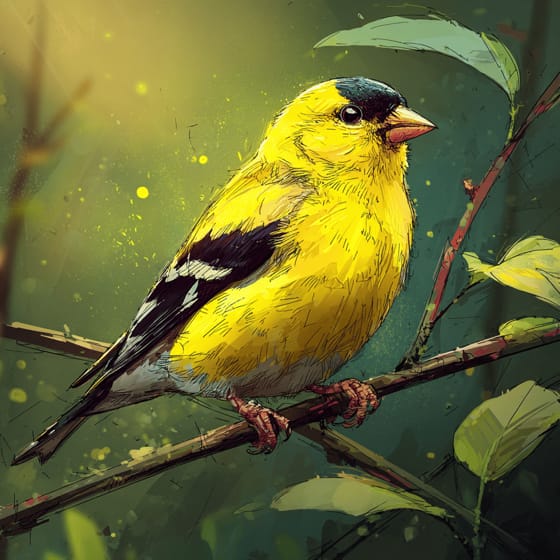
Carduelis tristis
feasts on the tiny, oil-rich seeds.
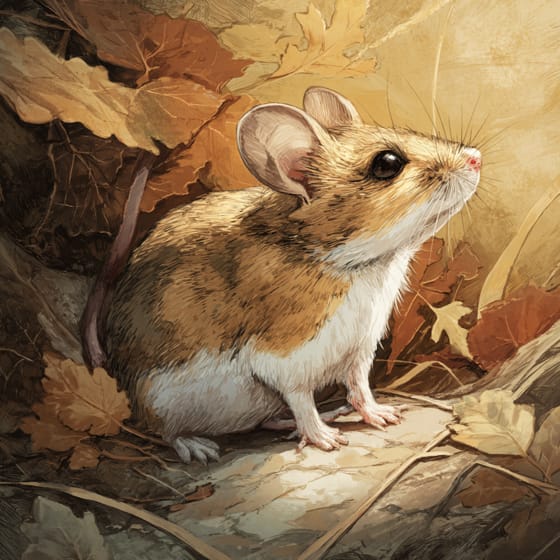
Peromyscus maniculatus
eats its protein-rich seeds.
Flowering plants are any plants that produce flowers as part of their reproductive cycle.
Summer blooming plants produce their flowers during the summer season, often providing vibrant color when many other plants have finished.
Fragrant flowers emit a pleasant aroma, often to attract pollinators or for defense.
Colorful describes organisms or objects displaying a wide range of bright and distinct colors.

Edible plants are those parts of a plant that are considered safe for human consumption.

Grassland habitats are terrestrial biomes dominated by grasses and herbaceous plants, supporting a variety of grazing animals.

Describes plants that are particularly attractive and beneficial to a wide range of pollinating organisms.

Rapid growing plants exhibit accelerated growth rates, quickly increasing in size and biomass within a short period.

Describes a species whose presence and role have a disproportionately large effect on its environment.
No aliases listed yet.
Danger
1/5 · Very low
Always look but don't pick flowers in nature to help them grow.
The easiest way to identify prairie sunflower is to use the Snappit nature identifier app.
30-180 cm
30-60 cm
5-10 cm
Summer to early fall
Yes
None
Annual
Zoom in to split clusters and explore where this object has been snapped.

Nebraska, US
You might spot Showy Milkweed and Straight-Lined Wave.
View guide →

Texas, US
You might spot Mexican Buckeye, Agarita, and Monarch.
View guide →

Texas, US
You might spot Field Bindweed and Purple Groundcherry.
View guide →

South Dakota, US
You might spot Scarlet Globemallow, Leadplant, and Yellow Salsify.
View guide →
Take the discovery with you
Snap it with Snappit to identify it, learn what makes it special, and add the discovery to your collection.








.jpg&width=800)


_001.jpg&width=800)



