





Prionyx kirbii
Prionyx kirbii
Prionyx kirbii, also known as the Kirby's grasshopper, is a colorful insect that loves to hop around in fields. It has long legs and can jump very high, making it fun to watch!
Habitat: Grasslands
The Prionyx kirbii is a slender, medium-sized digger wasp, typically black with a striking red or orange abdomen, and often reddish hind legs. Its long, narrow waist and dark, smoky wings make it distinct, contrasting with its generally dark body.
Category
InsectsRarity
Common
Danger
1/5 · Very low
Snaps
Be the first to snap!
Each Prionyx kirbii mother digs a separate underground nest for every egg.
They use their strong jaws and front legs to quickly dig into sandy soil.
This wasp can fly swiftly to find grasshoppers even bigger than itself!
Wasp mothers leave paralyzed prey for their babies to eat when they hatch!
Prionyx kirbii can deliver a venomous sting because it has a specialized stinger that helps them paralyze large prey.
Prionyx kirbii can quickly excavate burrows because it has strong mandibles and spiny forelegs that help them dig into sandy soil.
Prionyx kirbii can locate and subdue grasshoppers because it has keen senses and powerful flight that help them find and capture prey.
This wasp hunts and paralyzes grasshoppers and crickets as food for its young!
Age differences: Adults feed on nectar from flowers, while larvae consume paralyzed insects left in the nest.
Chorthippus parallelus
Main prey for larvae
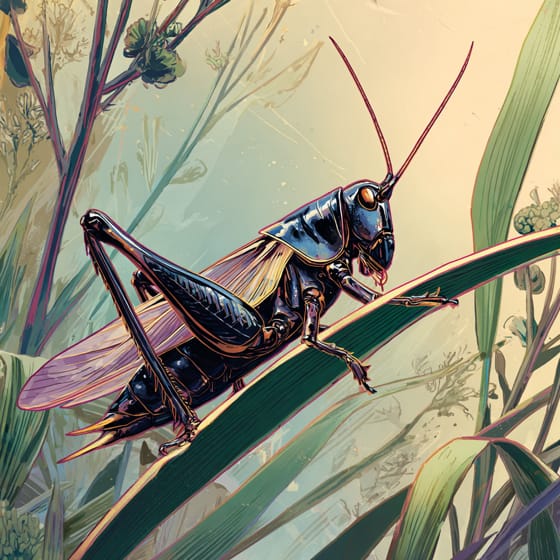
Gryllus campestris
Common prey item
Achillea millefolium
Adults feed on its nectar

Lanius collurio
May be impaled by shrikes
Singing animals produce complex vocalizations, often for purposes of attracting mates, defending territory, or communicating within their species.
Camouflaged describes organisms that possess coloring or patterns that allow them to blend into their environment.
Colorful describes organisms or objects displaying a wide range of bright and distinct colors.
Grassland habitats are terrestrial biomes dominated by grasses and herbaceous plants, supporting a variety of grazing animals.

This trait characterizes organisms whose diet consists entirely or primarily of plant material.

Diurnal animals are primarily active during daylight hours, typically resting or sleeping at night.

This trait identifies organisms that exhibit exceptional swiftness in movement for hunting, escape, or travel.

Describes organisms that transfer pollen, enabling the fertilization and reproduction of plants.
Danger
1/5 · Very low
Be gentle and watch from a distance, as insects can be delicate.
The easiest way to identify Prionyx kirbii is to use the Snappit nature identifier app.
25-35 mm
14-20 mm
20-60 days
20 km/h
This wasp hunts and paralyzes grasshoppers and crickets as food for its young!
Grasslands
Pursuit
Zoom in to split clusters and explore where this object has been snapped.
Recent snaps will appear here as new observations are added.
Take the discovery with you
Snap it with Snappit to identify it, learn what makes it special, and add the discovery to your collection.






.jpg&width=800)



