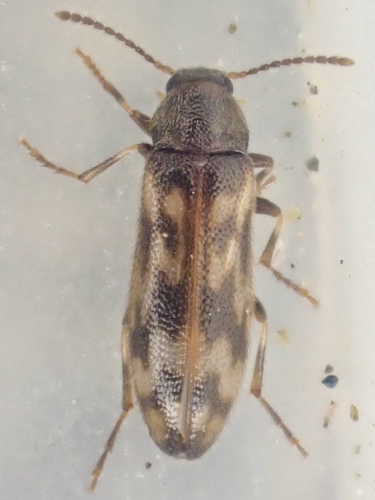





Prothalpia holmbergi
Prothalpia holmbergi
Prothalpia holmbergi is a colorful insect that loves to flutter around flowers. It has beautiful wings that sparkle in the sunlight and helps plants by spreading pollen.
Habitat: Gardens
The Prothalpia holmbergi is a medium-sized moth with intricate patterns of reddish-brown and cream on its wings. Its forewings feature distinctive wavy lines and a prominent eyespot, making it visually distinct from plainer moth species. The hindwings are often a contrasting pale color, visible only in flight.
Category
InsectsRarity
Common
Danger
1/5 · Very low
Snaps
Be the first to snap!
It transforms completely from a tiny egg to a caterpillar, then a moth!
Moths can taste with their feet to find yummy leaves for their young!
Some moths have special scales on their wings that feel like soft velvet!
This moth has excellent night vision to fly safely in the dark.
Prothalpia holmbergi has wing patterns that mimic bark or leaves, helping them hide from predators by blending perfectly into their environment.
Prothalpia holmbergi can fly and find food in darkness, using specialized antennae to detect scents and navigate their surroundings.
Prothalpia holmbergi can transfer pollen between flowers, helping plants reproduce as they sip nectar with their long proboscis.
Adult Prothalpia holmbergi sips nectar from flowers, while caterpillars munch on leaves.
Age differences: Larvae (caterpillars) eat leaves, while adult moths feed only on flower nectar and sap.

Myotis lucifugus
A tasty nighttime snack.
Turdus migratorius
Feeds on larvae by day.
Baccharis trimera
Larvae feast on its leaves.
Nicotiana alata
Helps night-blooming flowers reproduce.
Aerial creatures spend a significant portion of their lives airborne, utilizing flight for various activities such as hunting, migration, or nesting.
Colorful describes organisms or objects displaying a wide range of bright and distinct colors.
This trait characterizes organisms whose diet consists entirely or primarily of plant material.
Describes plants that are particularly attractive and beneficial to a wide range of pollinating organisms.
Diurnal animals are primarily active during daylight hours, typically resting or sleeping at night.
Describes a species whose presence and role have a disproportionately large effect on its environment.
This habitat trait indicates species that can coexist with humans in urban and suburban environments, utilizing man-made structures and green spaces.
Describes organisms that transfer pollen, enabling the fertilization and reproduction of plants.
No aliases listed yet.
Danger
1/5 · Very low
Always watch insects from a distance and don't touch them, as they can be delicate.
Look for hard wing covers meeting in a line down the back, then compare the antennae, body shape, legs and markings. Metallic colors shift a lot with lighting. Beetle Identifier: upload a photo and compare the visible details.
50-80 mm
25-40 mm
14-30 days
5 km/h
Adult Prothalpia holmbergi sips nectar from flowers, while caterpillars munch on leaves.
Gardens
Foraging
Zoom in to split clusters and explore where this object has been snapped.
Recent snaps will appear here as new observations are added.
Take the discovery with you
Snap it with Snappit to identify it, learn what makes it special, and add the discovery to your collection.