%3B_Parauapebas%2C_Par%C3%A1%2C_Brazil.jpg&width=800)





Purple-throated Fruitcrow
Querula purpurata
The Purple-throated Fruitcrow is a colorful bird found in tropical forests. It has a beautiful purple throat and loves to eat fruits, making it a special part of its habitat.
Habitat: Forests
The Purple-throated Fruitcrow is a medium-sized, stocky bird with glossy black plumage. Its most striking feature is the large, iridescent patch of bright purple feathers on the male's throat. It has a broad bill and a relatively short tail.
Category
BirdsRarity
Common
Danger
1/5 · Very low
Snaps
Be the first to snap!
Their calls can sound like deep 'rroop-rroop' hoots echoing through the jungle!
These birds often gather in 'leks' where males show off their bright purple throats!
They build flimsy, flat nests so thin you can sometimes see the egg through them!
Unlike many birds, the males help feed the chick, a rare family effort in their group.
Purple-throated Fruitcrow can make loud, booming calls because of specialized throat muscles that help them communicate across dense rainforests.
Purple-throated Fruitcrow has excellent eyesight that helps them spot ripe fruits high in the tree canopy, even in low light conditions.
Male Purple-throated Fruitcrows can perform impressive group displays on branches to attract mates, showing off their bright throats.
Purple-throated Fruitcrow can eat many fruits whole, which helps them spread seeds far and wide, aiding new plant growth.
These birds mainly eat fruits, especially from palm trees, helping spread seeds in the forest.
Euterpe oleracea
Consumes its nutritious fruits.
Ficus insipida
Feeds on its figs, often found in its diet.
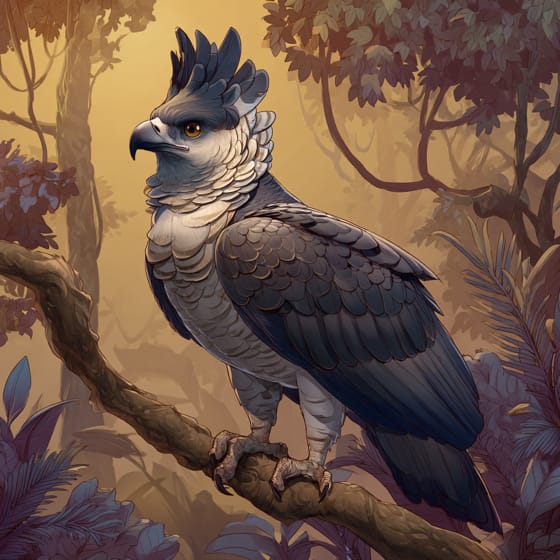
Harpia harpyja
Is a potential prey item for this powerful raptor.
Attalea maripa
Disperses its seeds after consuming the fruit.
Feathered describes animals, primarily birds, possessing a covering of feathers.
Social animals live in organized groups, cooperating for survival benefits such as foraging, defense, and raising offspring.
This trait identifies organisms whose diet includes both plant and animal matter.
Singing animals produce complex vocalizations, often for purposes of attracting mates, defending territory, or communicating within their species.

Arboreal animals live primarily in trees, utilizing them for shelter, food, and protection from predators.

Colorful describes organisms or objects displaying a wide range of bright and distinct colors.

Forest habitats are terrestrial environments dominated by dense tree cover, supporting a high diversity of plant and animal life.

Diurnal animals are primarily active during daylight hours, typically resting or sleeping at night.
No aliases listed yet.
Danger
1/5 · Very low
Enjoy watching birds from a distance and don't try to touch them.
The easiest way to identify Purple-throated Fruitcrow is to use the Snappit nature identifier app.
28-31 cm
45-55 cm
0.105-0.14 kg
8-12 years
35 km/h
These birds mainly eat fruits, especially from palm trees, helping spread seeds in the forest.
Forests
Zoom in to split clusters and explore where this object has been snapped.
Recent snaps will appear here as new observations are added.
Take the discovery with you
Snap it with Snappit to identify it, learn what makes it special, and add the discovery to your collection.




.jpg&width=800)







