


Pyrrhobryum Spiniforme
pyrrhobryum spiniforme
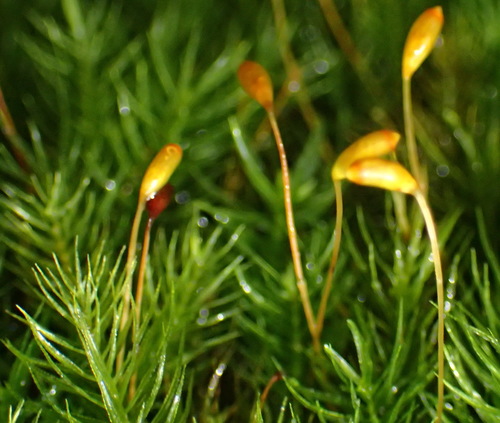
Pyrrhobryum spiniforme, commonly known as the spinose pyrrho-moss, is a striking bryophyte that resembles a miniature pine forest. Flourishing in damp, humid conditions, it forms dense, lush tufts that bring vibrant life to the forest floor, decaying logs, and tree trunks. Its ancient evolutionary lineage makes it a fascinating subject for nature lovers, demonstrating how primitive plants have thrived for millions of years without a vascular system. It plays a vital role in its ecosystem by retaining moisture, preventing soil erosion, and providing micro-habitats for countless tiny organisms.
Habitat: Typically found in wet, shaded tropical and subtropical forests, growing in dense tufts on decaying logs, tree trunks, and wet rocks.
This moss forms erect, rigid tufts reaching 2 to 8 centimeters in height. Its stems are often unbranched, adorned with narrow, linear-lanceolate leaves that terminate in a sharp point. Under a magnifying glass, the leaf margins reveal distinctive double-toothed spines that give the species its name. The color ranges from a bright, golden yellowish-green at the tips to a darker green near the base, which is often shrouded in a fuzzy mat of reddish-brown rhizoids.
Category
PlantsRarity
Common
Danger
1/5 · Very low
Snaps
Be the first to snap!
Despite its resemblance to miniature conifers, this moss reproduces via microscopic spores rather than seeds.
Its dense, moisture-rich tufts function as miniature oases, harboring microscopic water bears and rotifers.
The scientific name spiniforme translates to spine-shaped, inspired by the double row of tiny teeth on its leaf margins.
It can survive extreme drying by entering a dormant state, rapidly reviving and resuming photosynthesis when water becomes available again.
Lacking a traditional root system, it absorbs water and vital nutrients directly through its leaves from the humid atmosphere.
Uses a dense network of hair-like rhizoids to anchor itself securely to slick surfaces like rotting wood and steep rocks.
As a photosynthetic bryophyte, it creates its own food using sunlight, carbon dioxide, and water absorbed from its humid surroundings.
Cyathea cooperi
Grows epiphytically on the fibrous trunk of the tree fern, gaining elevated access to light and moisture.
Mycena chlorophos
Competes for substrate space and moisture on decaying logs in humid rainforest environments.
Folsomia candida
Tiny soil-dwelling arthropods feed on the decaying leaves, spores, and microflora harbored by the moss.
No trait badges are assigned for this object yet.
No aliases listed yet.
Collections for this object will appear here as more themes are added.
Danger
1/5 · Very low
No special safety notes yet.
Compare growth form, branching, tiny leaves and any spore capsules. Mosses, liverworts and lichens can share a spot but are very different organisms. Moss Identifier: upload a photo and compare the visible details.
2-8 cm
2-10 years
As a photosynthetic bryophyte, it creates its own food using sunlight, carbon dioxide, and water absorbed from its humid surroundings.
Typically found in wet, shaded tropical and subtropical forests, growing in dense tufts on decaying logs, tree trunks, and wet rocks.
Zoom in to split clusters and explore where this object has been snapped.
Recent snaps will appear here as new observations are added.
Take the discovery with you
Snap it with Snappit to identify it, learn what makes it special, and add the discovery to your collection.


















