





Queen Anne's thistle
Cirsium canum
Queen Anne's thistle is a beautiful flower with spiky leaves and bright purple blooms. It attracts butterflies and bees, making gardens lively and colorful!
Habitat: Grasslands
The Queen Anne's thistle has stout, often hairy stems with deeply lobed, spiny, greyish-green leaves that run down the stem. Its round flower heads are vibrant purple or reddish-purple, resembling fluffy pom-poms, often emerging singly or in small clusters from spiny bracts.
Category
PlantsRarity
Common
Danger
1/5 · Very low
Snaps
Be the first to snap!
Wow, busy bees and bright butterflies love to sip nectar from its sweet purple flowers!
Wow, goldfinches adore its dried seed heads, pecking out the tasty seeds for a snack!
Wow, its seeds have special fluffy tufts, like tiny parachutes, to fly in the wind!
Wow, this thistle can grow taller than some kids, reaching up to 2 meters high!
Queen Anne's thistle has sharp spines on its leaves and stems that help it defend against hungry animals trying to eat it.
Queen Anne's thistle can grow a long taproot that helps it find water deep underground and survive during dry periods.
Queen Anne's thistle has seeds with tiny feathery parachutes (pappus) that help them float far away on the wind to new places.
Bombus pascuorum
Gathers nectar from flowers.
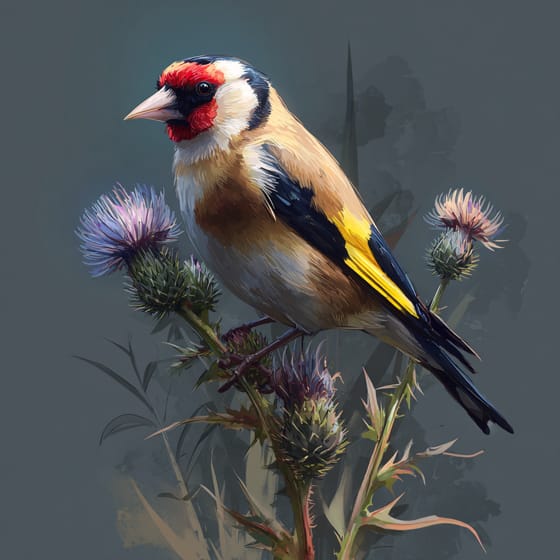
Carduelis carduelis
Feeds on mature thistle seeds.
Lixus iridis
Larvae bore into its stems.
Flowering plants are any plants that produce flowers as part of their reproductive cycle.
Summer blooming plants produce their flowers during the summer season, often providing vibrant color when many other plants have finished.
Fragrant flowers emit a pleasant aroma, often to attract pollinators or for defense.
Colorful describes organisms or objects displaying a wide range of bright and distinct colors.

Grassland habitats are terrestrial biomes dominated by grasses and herbaceous plants, supporting a variety of grazing animals.

Describes plants that are particularly attractive and beneficial to a wide range of pollinating organisms.

Possessing sharp, pointed projections or spines on the body or surface.
No aliases listed yet.
Danger
1/5 · Very low
Always look but don't touch the spiky leaves to stay safe!
The easiest way to identify Queen Anne's thistle is to use the Snappit nature identifier app.
50-200 cm
30-60 cm
2-4 cm
Summer
No
None
Perennial
Zoom in to split clusters and explore where this object has been snapped.
Recent snaps will appear here as new observations are added.
Take the discovery with you
Snap it with Snappit to identify it, learn what makes it special, and add the discovery to your collection.








.jpg&width=800)


_001.jpg&width=800)




