





Rainbow boa
Epicrates cenchria
The rainbow boa is a colorful snake known for its beautiful scales that shine in the light. It is friendly and loves to live in warm, tropical places like rainforests.
Habitat: Rainforests
The Rainbow boa has smooth, iridescent scales that shimmer with all the colours of the rainbow, especially in bright light. Its body is typically reddish-brown to orange with distinct dark saddles and spots along its back and sides, creating a striking pattern.
Category
ReptilesRarity
Common
Danger
2/5 · Low
Snaps
Be the first to snap!
Instead of laying eggs, Rainbow boas give birth to fully formed, live baby snakes!
Rainbow boas are nocturnal hunters, silently stalking prey under the cover of night!
They have tiny 'spurs' near their tail, remnants of hind legs from ancient snake ancestors!
Wow! The rainbow shimmer on their scales comes from special microstructures, not pigments!
Rainbow boa has scales that sparkle like a rainbow, helping them blend into their diverse rainforest environment as sunlight filters through leaves.
Rainbow boa can sense the body heat of prey using special pits on its snout, allowing it to hunt effectively in the dark.
Rainbow boa can squeeze prey with immense strength, quickly immobilizing small animals before swallowing them whole.
These nocturnal predators feast on small mammals and birds found in their forest homes.
Proechimys cayennensis
Mainly hunts these rodents in tropical forests.
Coereba flaveola
Actively preys on small birds, including this common species.
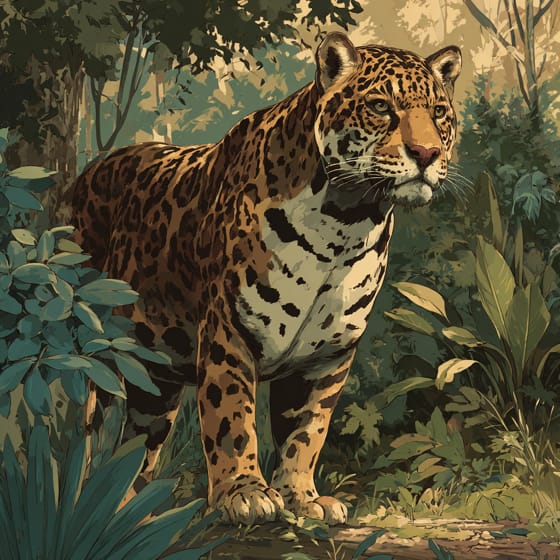
Panthera onca
May fall prey to this large, powerful feline predator.
Marked with parallel bands or lines of color.
Solitary animals live alone for most of their lives, only interacting with others for mating or parental care.
Arboreal animals live primarily in trees, utilizing them for shelter, food, and protection from predators.
Colorful describes organisms or objects displaying a wide range of bright and distinct colors.

This habitat trait refers to species found in tropical rainforests, characterized by high annual rainfall, high biodiversity, and dense tree cover.

This trait identifies organisms whose diet consists entirely or primarily of animal tissue.
Danger
2/5 · Low
Always keep a safe distance from snakes and never try to touch them without an adult.
The easiest way to identify Rainbow boa is to use the Snappit nature identifier app.
120-180 cm
1-3 kg
15-20 years
8 km/h
These nocturnal predators feast on small mammals and birds found in their forest homes.
Rainforests
Ambush
Zoom in to split clusters and explore where this object has been snapped.
Recent snaps will appear here as new observations are added.
Take the discovery with you
Snap it with Snappit to identify it, learn what makes it special, and add the discovery to your collection.














