





Ravine Salamander
Plethodon richmondi
The Ravine Salamander is a small, colorful creature that loves to hide under rocks and leaves. It has smooth skin and can be found in cool, moist places. These little salamanders are fun to spot in the wild!
Habitat: Forests
The Ravine Salamander is a slender, dark-bodied amphibian, typically black or dark brown. It has two narrow, often gray or bronze, parallel stripes running down its back. Its tiny limbs and long tail differentiate it from many other salamanders.
Category
AmphibiansRarity
Common
Danger
1/5 · Very low
Snaps
Be the first to snap!
Ravine salamanders are completely terrestrial; they never enter water, even to lay their eggs!
Ravine salamanders can live for over 10 years, a long time for a tiny, lungless amphibian!
These shy creatures are nocturnal, meaning they are most active exploring under moonlight!
They are part of a special group of salamanders that don't have lungs at all!
Ravine Salamander can breathe entirely through its moist skin and mouth lining, allowing it to thrive in damp, low-oxygen spots.
Ravine Salamander can shed its tail when grabbed by a predator, giving it a chance to escape to safety while the tail wiggles.
Ravine Salamander has glands that secrete a sticky, mild toxin, making them unpleasant for predators to try and eat.
They munch on tiny insects and other small creepy crawlies found hidden in damp soil and leaf litter.
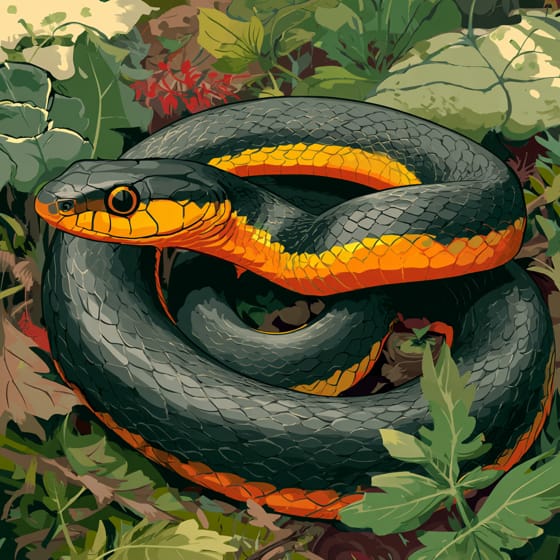
Diadophis punctatus
A common predator in their woodland habitat.
Sorex cinereus
Shrews are opportunistic predators of small amphibians.
Orchesella cincta
A tiny insect they forage for in leaf litter.
Staphylinus erythropterus
Larvae and adults of small beetles are part of their diet.
Solitary animals live alone for most of their lives, only interacting with others for mating or parental care.
Camouflaged describes organisms that possess coloring or patterns that allow them to blend into their environment.
Colorful describes organisms or objects displaying a wide range of bright and distinct colors.
This trait identifies organisms whose diet primarily consists of insects and other small invertebrates.

Describes organisms that break down dead organic material, recycling nutrients back into the ecosystem.

Forest habitats are terrestrial environments dominated by dense tree cover, supporting a high diversity of plant and animal life.
Regenerative organisms possess the ability to regrow lost or damaged body parts, tissues, or organs.

Nocturnal animals are primarily active during the nighttime hours, typically resting or sleeping during the day.

Endangered status indicates a species is at a very high risk of extinction in the wild in the near future.
No aliases listed yet.
Danger
1/5 · Very low
If you see a salamander, be gentle and don’t pick it up too much. They are delicate creatures!
The easiest way to identify Ravine Salamander is to use the Snappit nature identifier app.
8-12 cm
0.002-0.005 kg
5-10 years
0.5 km/h
They munch on tiny insects and other small creepy crawlies found hidden in damp soil and leaf litter.
Forests
Foraging
Zoom in to split clusters and explore where this object has been snapped.
Recent snaps will appear here as new observations are added.
Take the discovery with you
Snap it with Snappit to identify it, learn what makes it special, and add the discovery to your collection.





.JPG&width=800)


.jpg&width=800)

