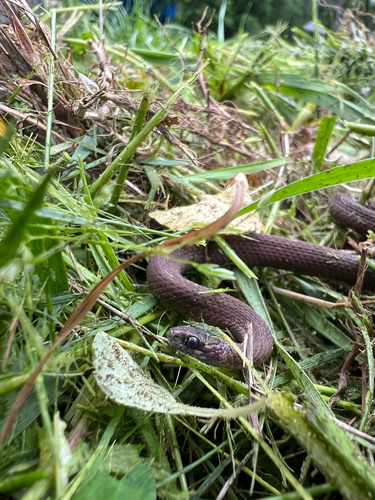
Red-bellied Snake
Storeria occipitomaculata
The Red-bellied Snake is a small, friendly snake with a bright red belly. It loves to hide under leaves and logs, making it a great friend for exploring nature!
Habitat: Forests
The Red-bellied Snake is a tiny, slender snake, typically brownish, gray, or black on its back. Its most striking feature is a bright red, orange, or pink belly, often contrasting sharply with its dark top. It usually has three distinct light spots behind its head.
Category
ReptilesRarity
Common
Danger
1/5 · Very low
Snaps
14
Some Red-bellied Snakes don't actually have red bellies, but orange or pink!
Their special hinged jaws let them swallow surprisingly large slugs and worms.
These tiny snakes are one of North America's smallest reptile species!
When startled, they quickly flatten their body to appear wider and bigger!
Red-bellied Snake can play dead by flipping over and staying still, which helps them trick predators into thinking they're not tasty!
Red-bellied Snakes have tiny, pointed teeth perfect for grasping slippery slugs and earthworms, helping them catch their favorite meals.
Red-bellied Snakes give birth to live, miniature baby snakes instead of laying eggs, helping their young have a head start.
This tiny snake loves to slurp up slugs and earthworms, along with other soft-bodied insects!
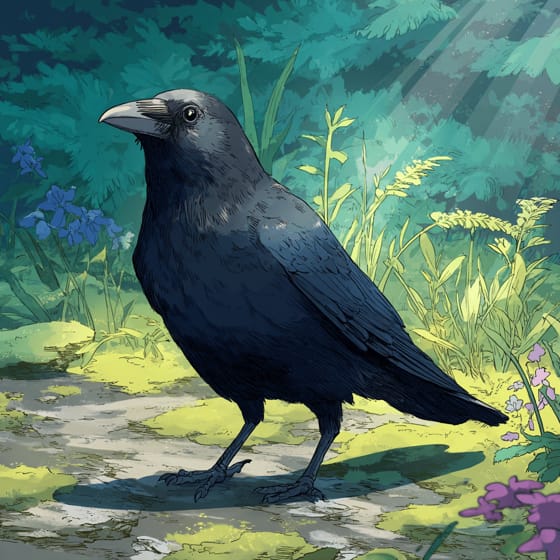
Corvus brachyrhynchos
Crows will prey on small snakes found in open areas.
Thamnophis sirtalis
Larger garter snakes can sometimes prey on smaller snakes.
Mephitis mephitis
Skunks are opportunistic predators that eat small reptiles.
Arion subfuscus
This snake's specialized diet includes various species of slugs.
Lumbricus terrestris
Earthworms are a primary food source for Red-bellied Snakes.
Solitary animals live alone for most of their lives, only interacting with others for mating or parental care.
Camouflaged describes organisms that possess coloring or patterns that allow them to blend into their environment.
Colorful describes organisms or objects displaying a wide range of bright and distinct colors.
This trait identifies organisms whose diet primarily consists of insects and other small invertebrates.

Forest habitats are terrestrial environments dominated by dense tree cover, supporting a high diversity of plant and animal life.
Hibernating animals enter a state of metabolic depression during cold periods or when food is scarce, characterized by reduced body temperature and activity.
No aliases listed yet.
Danger
1/5 · Very low
If you see a snake, it's best to watch from a distance and not touch it.
The easiest way to identify Red-bellied Snake is to use the Snappit nature identifier app.
20-40 cm
0.002-0.014 kg
2-4 years
0.5 km/h
This tiny snake loves to slurp up slugs and earthworms, along with other soft-bodied insects!
Forests
Foraging
Zoom in to split clusters and explore where this object has been snapped.
May 29, 2026
Hopkins Mill Historic DistrictPhoto attribution
(c) Deana Tempest Thomas, some rights reserved (CC BY)
License: CC BY 4.0 ↗
Image may be shown cropped inside the card frame.

New Hampshire, US
You might spot Eastern White Pine and White-Tailed Deer.
View guide →

Indiana, US
You might spot Common Reed, Rosepink, and Bearberry.
View guide →

Maine, US
You might spot Rugosa Rose and European Green Crab.
View guide →

South Carolina, US
You might spot American Alligator, Great Blue Heron, and Anhinga.
View guide →

Massachusetts, US
You might spot Eastern Newt, Ghost Pipe, and Partridgeberry.
View guide →

Virginia, US
You might spot Osage-Orange, Purple Finch, and Turkey.
View guide →
Take the discovery with you
Snap it with Snappit to identify it, learn what makes it special, and add the discovery to your collection.