Red Rainbowfish
glossolepis incisa
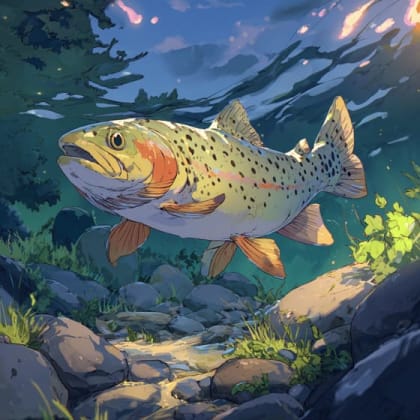
The Red Rainbowfish is a colorful fish that loves to swim in schools. Its bright colors can make any aquarium look like a rainbow!
Habitat: They live in freshwater rivers and lakes in Papua New Guinea.
The Red Rainbowfish is famed for its shimmering, deep red body, particularly the males, while females are more subdued with a silvery-pink hue. Its deeply compressed body and prominent dorsal and anal fins give it a distinctive, athletic profile, shining brightly under the water.
Category
FishRarity
Common
Danger
0/5 · No known danger
Snaps
Be the first to snap!
Females are often silvery-pink, letting the bold males steal the show with their fiery red!
Male Red Rainbowfish get much brighter and more colourful as they grow older!
Their dazzling scales sparkle like tiny jewels, reflecting a rainbow of light underwater!
These lively fish love to jump, sometimes catching insects flying just above the surface!
Red Rainbowfish can intensify their vibrant red color because of special cells, signalling readiness to breed.
Red Rainbowfish has powerful tail muscles that helps them leap out of water to catch insects or escape danger.
Red Rainbowfish can gather in large groups because of their social nature, that helps them confuse predators and find food together.
These omnivores enjoy a varied diet of tiny insects, larvae, and plant matter found in their freshwater home.
Channa striata
A larger predatory fish in their habitat.
Chironomus plumosus
Feeds on their larvae found in sediments.
Vallisneria spiralis
Provides shelter and a foraging ground for food.
Social animals live in organized groups, cooperating for survival benefits such as foraging, defense, and raising offspring.
Colorful describes organisms or objects displaying a wide range of bright and distinct colors.
This trait identifies organisms whose diet consists entirely or primarily of animal tissue.
Diurnal animals are primarily active during daylight hours, typically resting or sleeping at night.

Aquatic habitats encompass environments where organisms live predominantly in water, including oceans, rivers, lakes, and wetlands.
Danger
0/5 · No known danger
No special safety notes yet.
The easiest way to identify Red Rainbowfish is to use the Snappit nature identifier app.
10-15 cm
0.01-0.03 kg
3-6 years
These omnivores enjoy a varied diet of tiny insects, larvae, and plant matter found in their freshwater home.
8 km/h
They live in freshwater rivers and lakes in Papua New Guinea.
Foraging
Zoom in to split clusters and explore where this object has been snapped.
Recent snaps will appear here as new observations are added.
Take the discovery with you
Snap it with Snappit to identify it, learn what makes it special, and add the discovery to your collection.