





Red-tailed Monkey
Cercopithecus ascanius
Red-tailed monkeys are playful and lively animals with beautiful red tails! They live in trees and love to swing around, making them fun to watch.
Habitat: Forests
The Red-tailed Monkey has a distinctive rusty-red tail, especially vibrant on the underside. Its face features a white nose spot and white cheeks, contrasting with dark fur around the eyes. The body fur is typically olive-grey to blackish, helping it blend into the forest.
Category
MammalsRarity
Common
Danger
2/5 · Low
Snaps
Be the first to snap!
Baby red-tailed monkeys are born with dark fur and a paler tail.
Some red-tailed monkeys love to "groom" other animals, like antelopes!
Their bright red tails can grow twice as long as their bodies!
They communicate with over 20 different sounds, like chirps and barks!
Red-tailed Monkeys can leap between trees because of their powerful legs and long tails, helping them navigate the forest canopy with incredible agility.
Red-tailed Monkeys have a variety of specific alarm calls that help them warn their troop about different predators, keeping everyone safe.
Red-tailed Monkeys use their nimble fingers to skillfully pluck small fruits and insects, helping them find delicious snacks hidden in the leaves.
These omnivores enjoy a varied diet of fruits, leaves, and insects found high in the forest canopy.
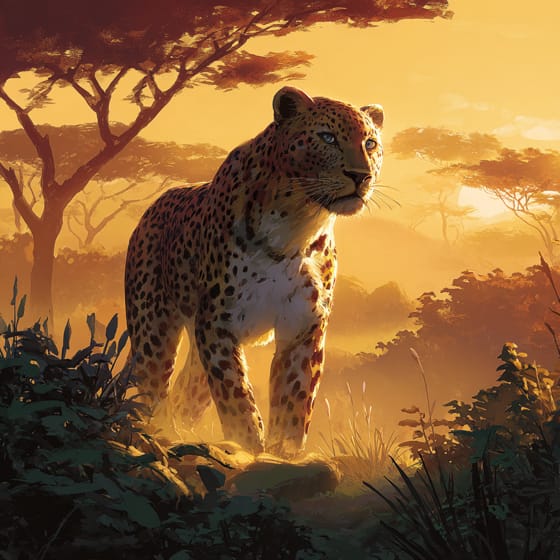
Panthera pardus
A powerful predator in their forest environment.
%2C_at_Ndumo_Nature_Reserve%2C_KwaZulu-Natal%2C_South_Africa_(28947411865).jpg&width=800)
Stephanoaetus coronatus
This large raptor hunts monkeys from the air.
Ficus sur
Monkeys frequently feast on its sweet fruits.
Caracal aurata
A swift feline predator that hunts in the undergrowth.
Furry describes animals possessing a dense covering of soft hair or fur.
Social animals live in organized groups, cooperating for survival benefits such as foraging, defense, and raising offspring.
Colorful describes organisms or objects displaying a wide range of bright and distinct colors.
This trait characterizes organisms whose diet consists entirely or primarily of plant material.

Forest habitats are terrestrial environments dominated by dense tree cover, supporting a high diversity of plant and animal life.

Diurnal animals are primarily active during daylight hours, typically resting or sleeping at night.

Endangered status indicates a species is at a very high risk of extinction in the wild in the near future.
Danger
2/5 · Low
Always watch monkeys from a distance and never try to touch them.
The easiest way to identify Red-tailed Monkey is to use the Snappit nature identifier app.
32-50 cm
2.5-4.5 kg
15-20 years
35 km/h
These omnivores enjoy a varied diet of fruits, leaves, and insects found high in the forest canopy.
Forests
Foraging
Zoom in to split clusters and explore where this object has been snapped.
Recent snaps will appear here as new observations are added.
Take the discovery with you
Snap it with Snappit to identify it, learn what makes it special, and add the discovery to your collection.




.jpg&width=800)

.JPG&width=800)


.jpg&width=800)
