

Redear Sunfish
lepomis microlophus
The Redear Sunfish, affectionately known by anglers as the 'shellcracker,' is a vibrant and robust freshwater fish native to the southeastern United States. Renowned for its unique diet and strong fighting ability on light tackle, this species has become a beloved target for sport fishers. Unlike many of its sunfish relatives that dart around the upper water column feeding on floating insects, the redear prefers to stealthily patrol the bottom in search of hard-shelled prey. What truly sets this fish apart is its specialized anatomy—a set of powerful, flat teeth located in its throat that allows it to effortlessly crush snail shells. This unique ecological niche makes the Redear Sunfish not only an interesting biological specimen but also a highly valuable natural pest controller in many aquatic environments, helping to keep snail populations in check and reducing the spread of certain aquatic parasites.
Habitat: Found primarily in warm, sluggish waters of lakes, ponds, and slow-moving rivers, preferring areas with abundant aquatic vegetation, submerged stumps, and a muddy or sandy bottom.
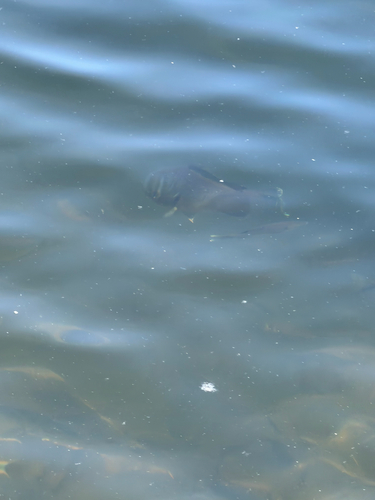
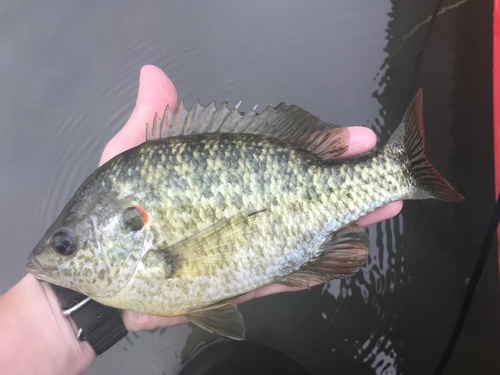
The Redear Sunfish boasts a deep, laterally compressed body typical of sunfishes, featuring an olive-green to bronze back that transitions into paler, yellow-green sides adorned with darker, mottled spots. Its most defining field mark is the opercular flap (the 'ear'), which is black and famously edged with a bright cherry-red or vivid orange crescent in adult males, and a lighter orange in females. The breast is often a bright yellow or yellowish-orange, while the dorsal fin is continuous, containing both spiny and soft rays. Compared to the closely related bluegill, it generally lacks vertical barring and has a slightly more elongated, pointed snout suited for bottom-feeding.
Category
FishRarity
Common
Danger
1/5 · Very low
Snaps
3
Anglers commonly refer to the Redear Sunfish as the 'shellcracker' because, in quiet waters, one can sometimes hear the fish actually cracking snail shells underwater when feeding.
The red or orange edge on the gill cover that gives the 'redear' its name is noticeably brighter and more vivid in males, especially during the breeding season.
They are frequently introduced into private ponds and lakes not just for fishing, but specifically to break the lifecycle of the 'yellow grub,' a fish parasite that relies on snails as an intermediate host.
Unlike many other sunfishes that eagerly strike surface lures, Redears rarely feed at the top of the water column, strongly preferring to hunt along the bottom.
Possesses a specialized set of flat, molar-like teeth in its throat designed specifically to crack open the tough shells of snails and small clams.
By heavily consuming aquatic snails, which act as intermediate hosts for various fish and bird parasites, they naturally regulate and break the lifecycle of aquatic diseases.
Males sweep out saucer-shaped depressions in the substrate to create nests, clustering them closely together in large colonies to cooperatively defend their eggs from predators.
A specialized benthic predator that feeds almost exclusively on hard-shelled invertebrates and bottom-dwelling aquatic insects.
Age differences: Juveniles feed heavily on microcrustaceans and soft-bodied insects, transitioning almost entirely to hard-shelled prey as their pharyngeal jaws develop.

Micropterus salmoides
Largemouth Bass are a primary apex predator in their shared habitats, heavily preying upon juvenile Redear Sunfish.
Physella gyrina
Redear Sunfish actively hunt and consume Tadpole Snails, keeping their populations in check.

Lepomis macrochirus
Bluegills share the same habitats and spawning grounds, often competing for nesting sites and occasionally hybridizing.
No trait badges are assigned for this object yet.
No aliases listed yet.
Collections for this object will appear here as more themes are added.
Danger
1/5 · Very low
No special safety notes yet.
Look at body shape, where the fins sit and their outline, mouth position, stripes and spots. Young fish and breeding adults can wear different patterns, and aquarium color varieties can look nothing like wild fish. Fish Identifier: upload a photo and compare the visible details.
20-30 cm
0.2-1.5 kg
5-8 years
A specialized benthic predator that feeds almost exclusively on hard-shelled invertebrates and bottom-dwelling aquatic insects.
Found primarily in warm, sluggish waters of lakes, ponds, and slow-moving rivers, preferring areas with abundant aquatic vegetation, submerged stumps, and a muddy or sandy bottom.
Foraging
10000-60000
Zoom in to split clusters and explore where this object has been snapped.
Jun 3, 2026
Bean Hill Historic DistrictPhoto attribution
(c) Sawyer Baran, some rights reserved (CC BY)
License: CC BY 4.0 ↗
Image may be shown cropped inside the card frame.

Connecticut, US
You might spot Striped Wintergreen and Common Eastern Bumble Bee.
View guide →

Connecticut, US
You might spot Striped Wintergreen and Common Eastern Bumble Bee.
View guide →

Virginia, US
You might spot Eastern Tiger Swallowtail, Fowler's Toad, and Monarch.
View guide →

Virginia, US
You might spot Canada Goose, Duck, and Great Blue Heron.
View guide →

Virginia, US
You might spot Duck, Canada Goose, and Red Deadnettle.
View guide →

Alabama, US
You might spot Eastern Newt, Six-Lined Racerunner, and Giant Floater.
View guide →
Take the discovery with you
Snap it with Snappit to identify it, learn what makes it special, and add the discovery to your collection.