





Rose Pogonia
Pogonia ophioglossoides
The Rose Pogonia is a beautiful flower that grows in wetlands. It has lovely pink petals and a sweet smell that attracts butterflies and bees.
Habitat: Wetlands
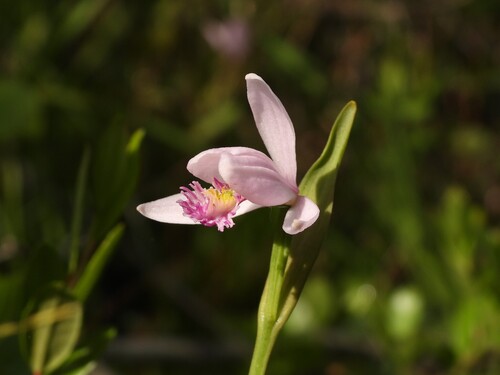
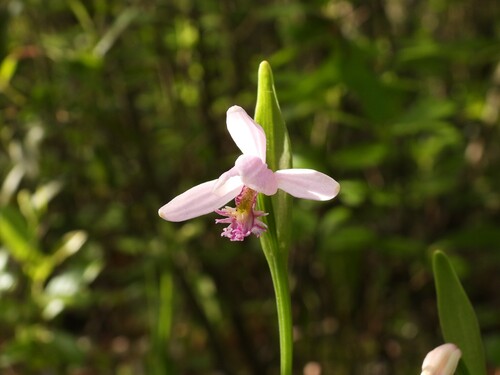
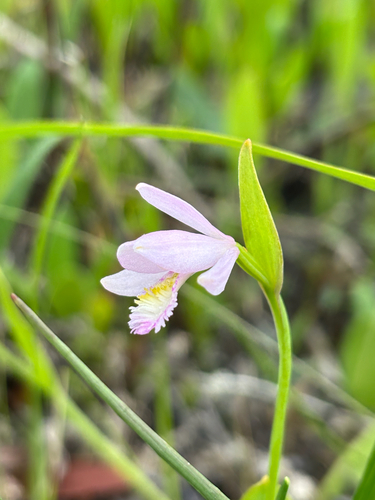
The Rose Pogonia is a striking orchid with a single, rose-purple flower. Its distinctive fringed lip, spotted with yellow and sometimes white hairs, gives it a 'snake mouth' appearance. The flower stands out against its simple, solitary green leaf.
Category
PlantsRarity
Common
Danger
1/5 · Very low
Snaps
6
Each plant usually produces only one beautiful flower, making each bloom precious!
It often blooms alongside vibrant pitcher plants in its boggy, wetland home.
Rose Pogonia flowers often mimic the appearance of nectar-rich blooms to attract bees.
This orchid gets its 'Snake Mouth' nickname from its unique, open lip!
Rose Pogonia can emit a sweet fragrance to lure bees, but offers no nectar, tricking them into pollinating it.
Rose Pogonia has roots adapted to thrive in acidic, waterlogged soils, allowing it to grow where few other plants can.
Rose Pogonia depends on special fungi underground to help it absorb nutrients, especially when young.
Bombus impatiens
Attracted by its scent, helps flowers reproduce.
Bombus bimaculatus
Visits flowers, aiding in pollen transfer.

Odocoileus virginianus
Browses on wetland vegetation, including orchids.
Ornamental plants are cultivated primarily for their aesthetic appeal, enhancing landscapes and gardens with their attractive foliage, flowers, or form.
Summer blooming plants produce their flowers during the summer season, often providing vibrant color when many other plants have finished.
Fragrant flowers emit a pleasant aroma, often to attract pollinators or for defense.
Describes plants that are particularly attractive and beneficial to a wide range of pollinating organisms.

This habitat trait identifies species found in wetlands, which are areas of land saturated with water, either permanently or seasonally, including marshes, swamps, and bogs.

Threatened status denotes a species likely to become endangered in the foreseeable future without effective conservation interventions.
No aliases listed yet.
Danger
1/5 · Very low
Always look but don't pick flowers so they can keep growing for everyone to enjoy.
The easiest way to identify Rose Pogonia is to use the Snappit nature identifier app.
10-40 cm
5-10 cm
2-5 cm
Late spring to mid-summer
No
None
Perennial
Zoom in to split clusters and explore where this object has been snapped.
Jun 2, 2026
Monmouth Battlefield State ParkPhoto attribution
(c) geosesarma, some rights reserved (CC BY)
License: CC BY 4.0 ↗
Image may be shown cropped inside the card frame.
Jun 2, 2026
Monmouth Battlefield State ParkPhoto attribution
(c) geosesarma, some rights reserved (CC BY)
License: CC BY 4.0 ↗
Image may be shown cropped inside the card frame.
Apr 19, 2026
Dead Lakes ParkPhoto attribution
no rights reserved
License: CC0 1.0 ↗
Image may be shown cropped inside the card frame.

New York, US
You might spot American Toad and Purple Pitcher Plant.
View guide →

Maryland, US
You might spot Spectacled Bear, Jaguar, and Canis Lupus Rufus.
View guide →

Florida, US
You might spot Yellow Pitcher Plant and Parrot Pitcher Plant.
View guide →

New Jersey, US
You might spot White-Tailed Deer and Spotted Lanternfly.
View guide →
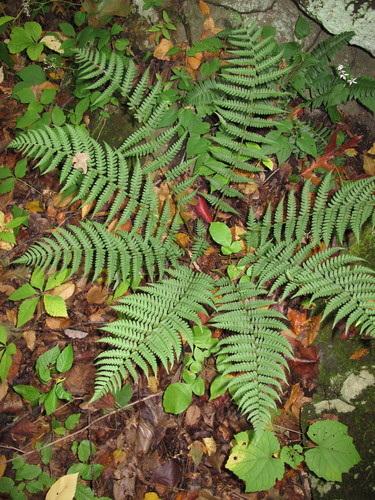
Missouri, US
You might spot Marginal Wood Fern and Common Map Turtle.
View guide →

New Jersey, US
You might spot Spoonleaf Sundew, Purple Pitcher Plant, and Sheep Laurel.
View guide →
Take the discovery with you
Snap it with Snappit to identify it, learn what makes it special, and add the discovery to your collection.









.jpg&width=800)


_001.jpg&width=800)




