





Royal Fern
Osmunda regalis
The Royal Fern is a majestic plant with large, feathery fronds that can grow in damp, shady areas. Its name 'Royal' suits its grand appearance in the forest.
Habitat: Wetlands
The Royal Fern has striking, bright green fronds that are broad and upright, often reaching over a meter tall. Uniquely, it features separate fertile fronds tipped with rusty-brown, spore-bearing structures that stand distinctly above the sterile green foliage, giving it a regal, almost flower-like appearance.
Category
PlantsRarity
Common
Danger
1/5 · Very low
Snaps
Be the first to snap!
Despite its ancient look, it produces no flowers or seeds, only tiny spores!
It's called 'Royal' because it's one of the largest and most majestic ferns!
Its young shoots are called 'fiddleheads' and some people eat them as a vegetable!
This amazing fern can live for over 100 years, growing bigger each passing season!
Royal Fern has specialized fronds that release millions of tiny spores into the wind, helping it spread far and wide.
Royal Fern can thrive in very wet, boggy soils, using its strong roots to absorb nutrients where most plants struggle.
Royal Fern has a very long evolutionary history, allowing it to adapt and persist through vast geological periods.
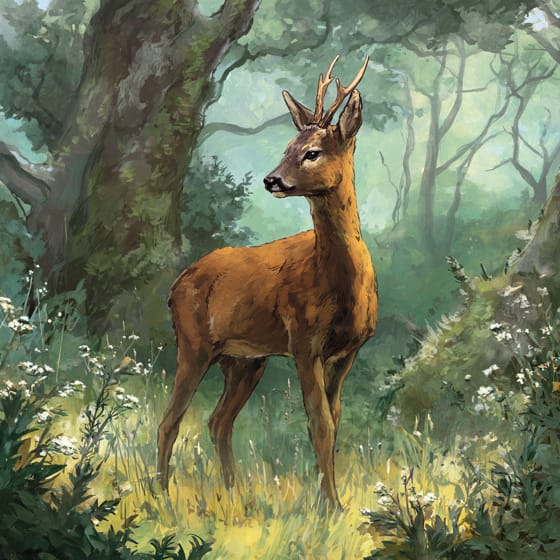
Capreolus capreolus
Young fronds are browsed.
Rana temporaria
Dense fronds offer excellent cover.
Limax maximus
Slugs sometimes feed on its leaves.
Deciduous plants periodically shed all their leaves, typically during autumn or dry seasons.
Fronded plants possess large, divided leaves, characteristic of ferns and certain palms.
Shade tolerant plants are adapted to grow and thrive in areas with low light levels, requiring less direct sunlight.
Spore-producing organisms reproduce by releasing small, often single-celled, reproductive units called spores.

This trait signifies organisms belonging to a very old evolutionary group with ancestors dating back millions of years.

This habitat trait identifies species found in wetlands, which are areas of land saturated with water, either permanently or seasonally, including marshes, swamps, and bogs.
Danger
1/5 · Very low
Enjoy looking at the Royal Fern from a distance and avoid touching or picking it.
The easiest way to identify Royal Fern is to use the Snappit nature identifier app.
60-180 cm
60-120 cm
Yes
None
Perennial
Wind
Wetlands
Zoom in to split clusters and explore where this object has been snapped.
Recent snaps will appear here as new observations are added.
Take the discovery with you
Snap it with Snappit to identify it, learn what makes it special, and add the discovery to your collection.








.jpg&width=800)



_001.jpg&width=800)



