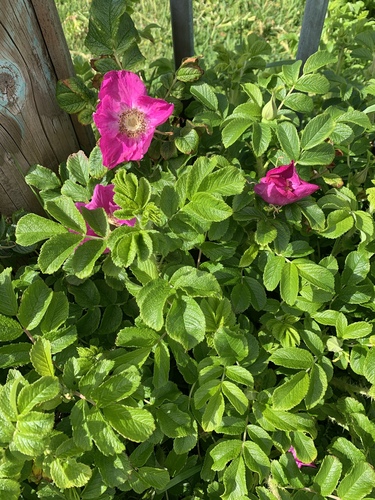


Rugosa Rose
rosa rugosa
The Rugosa Rose, commonly known as the beach rose or Japanese rose, is a robust and visually striking shrub renowned for its resilience and beauty. Native to eastern Asia, it has successfully established itself along coastlines and sandy dunes across the globe. This hardy plant is celebrated for its deeply veined, wrinkled leaves—from which it gets the name 'rugosa'—and its intensely fragrant, wide-petaled blossoms. Emitting a sweet, classic rose scent, its blooms give way in the autumn to large, bright red or orange rose hips that look somewhat like cherry tomatoes. These hips are packed with Vitamin C and are prized by foragers and wildlife alike. Beyond its aesthetic appeal, the Rugosa Rose plays a crucial role in coastal ecosystems by stabilizing dunes and preventing soil erosion. Its exceptional tolerance to salt spray, harsh winds, and poor soils makes it a true survivor, as well as a popular ornamental plant in both manicured gardens and wild, untamed landscapes.
Habitat: Found along sandy coastal dunes and beaches, often forming dense thickets tolerant of salt spray.
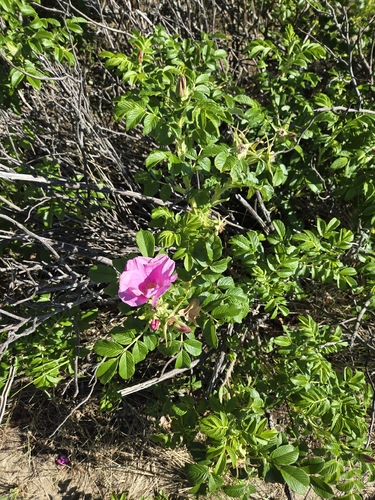
Rosa rugosa is a dense, suckering shrub that typically grows between 1 to 2 meters tall. Its defining feature is its distinctively wrinkled (rugose), dark green leaves with prominent veins that turn stunning shades of yellow and orange in the fall. The stems are notoriously prickly, covered densely in straight, needle-like thorns of varying sizes. From early summer to fall, it produces large, simple, cup-shaped flowers that are highly aromatic, ranging in color from deep pink and magenta to pure white, featuring a prominent cluster of yellow stamens in the center. In late summer and autumn, the flowers are replaced by 'hips'—large, fleshy, spherical to slightly flattened fruits that ripen to a brilliant, shiny red-orange.
Category
PlantsRarity
Common
Danger
1/5 · Very low
Snaps
17
Because of its extreme tolerance to road salt, Rosa rugosa is frequently planted along highways in colder climates to provide a natural snow fence.
In traditional Chinese medicine, the flowers of the Rugosa Rose are used to make Mei Gui Hua, a tea believed to improve energy flow and soothe the stomach.
The fruit of the Rugosa Rose, called a rose hip, can contain up to 50 times more Vitamin C than an orange by weight.
The name 'rugosa' comes from the Latin word 'rugosus', which translates to 'wrinkled', perfectly describing the texture of its distinctive leaves.
Thrives in coastal environments by easily withstanding high soil salinity, salt spray, and extreme winds that would desiccate other plants.
Its dense, extensive network of suckering roots binds loose sand, helping to stabilize beaches and prevent coastal erosion.
Produces exceptionally nutrient-dense rose hips that contain some of the highest concentrations of Vitamin C found in the plant kingdom.
As a photosynthetic plant, it produces its own food by converting sunlight, water, and carbon dioxide into energy.
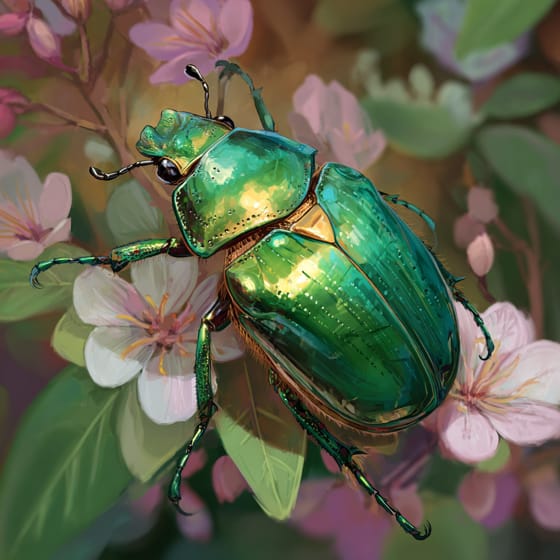
Popillia japonica
Japanese beetles are notorious for feeding heavily on the foliage and flowers of the Rugosa Rose.
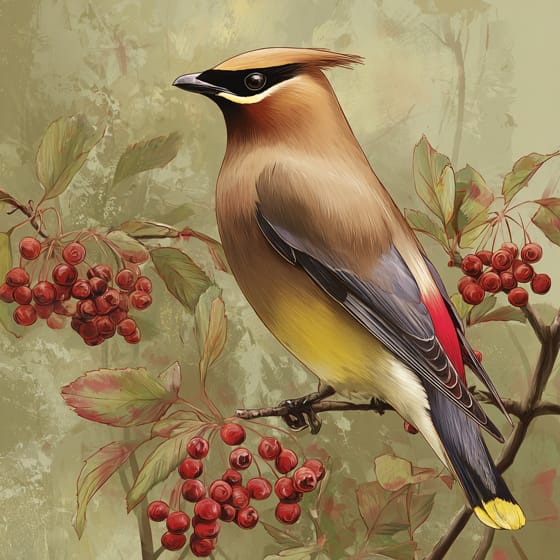
Bombycilla cedrorum
Birds like the Cedar Waxwing eat the nutritious rose hips during the winter, aiding in seed dispersal.
Bombus impatiens
Bumblebees frequently visit the fragrant, open flowers for pollen, acting as primary pollinators.
No trait badges are assigned for this object yet.
No aliases listed yet.
Collections for this object will appear here as more themes are added.
Danger
1/5 · Very low
No special safety notes yet.
The easiest way to identify Rugosa Rose is to use the Snappit nature identifier app.
100-200 cm
10-50 years
As a photosynthetic plant, it produces its own food by converting sunlight, water, and carbon dioxide into energy.
Found along sandy coastal dunes and beaches, often forming dense thickets tolerant of salt spray.
Photosynthesis
Zoom in to split clusters and explore where this object has been snapped.
Jun 13, 2026
Wellfleet Bay Wildlife SanctuaryPhoto attribution
(c) David Spindler, some rights reserved (CC BY-SA)
License: CC BY-SA 4.0 ↗
Image may be shown cropped inside the card frame.

Rhode Island, US
You might spot Rugosa Rose and American Herring Gull.
View guide →

US
You might spot Bald Eagle, Common Raven, and Salmonberry.
View guide →

Michigan, US
You might spot Yellow Lady's Slipper and Ring-Billed Gull.
View guide →

US
You might spot Common Eider, American Herring Gull, and Common Periwinkle.
View guide →

Michigan, US
You might spot Bladder Campion, Bearberry, and Common Milkweed.
View guide →

Maine, US
You might spot Rugosa Rose and European Green Crab.
View guide →
Take the discovery with you
Snap it with Snappit to identify it, learn what makes it special, and add the discovery to your collection.












.jpg&width=800)



_001.jpg&width=800)




