





Amur honeysuckle
Lonicera maackii
The Amur honeysuckle is a sweet-smelling shrub that grows tall and has beautiful flowers. It attracts butterflies and hummingbirds, making gardens lively and colorful!
Habitat: Urban areas
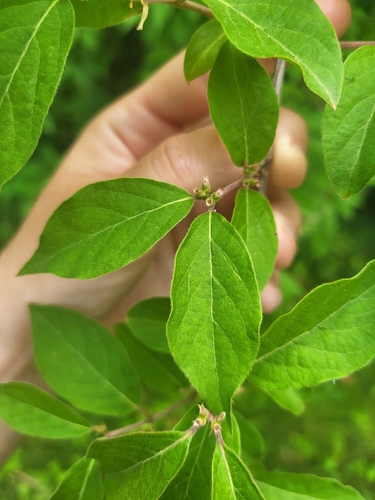
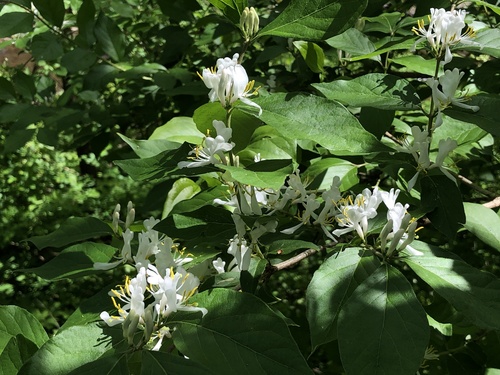
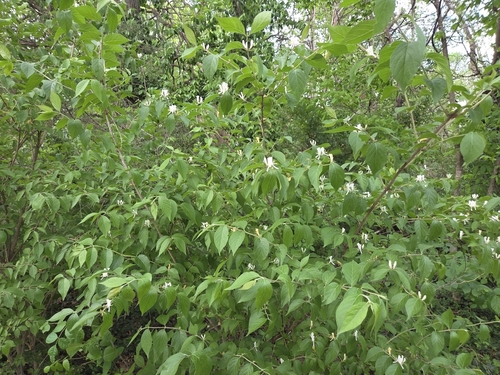
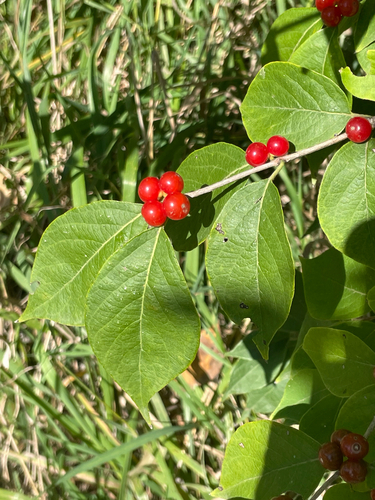
The Amur honeysuckle is a large, multi-stemmed shrub with arching branches. It has oval-shaped, opposite leaves, small white or yellowish tubular flowers, and abundant bright red berries that persist into winter. Its distinctive dense form often dominates the landscape.
Category
PlantsRarity
Common
Danger
1/5 · Very low
Snaps
46
If you cut an Amur honeysuckle stem, you might see a cool star shape inside where the pith once was!
Its bright red berries can last on the branches throughout winter, feeding birds when other food is scarce.
Older Amur honeysuckle stems are hollow inside, making them perfect tiny homes for small insects!
This plant was intentionally brought to America as a pretty garden shrub, but it secretly took over!
Amur honeysuckle can grow leaves extra early in spring and keep them late into fall, letting it soak up more sun.
It produces tons of bright red berries that birds love, helping the plant spread its seeds far and wide to new places.
Amur honeysuckle releases special chemicals into the ground that make it harder for other plants to grow nearby.
Apis mellifera
Its flowers provide nectar for bees.
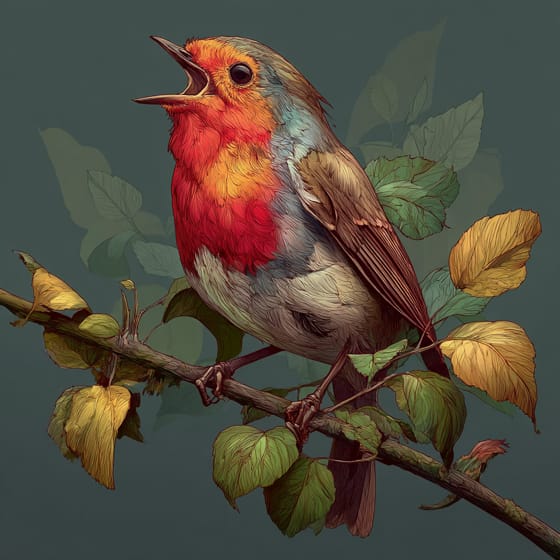
Turdus migratorius
Its berries are a food source for robins.

Peromyscus leucopus
Its dense thickets offer cover for small mammals.
Aromatic plants produce and emit fragrant volatile organic compounds, often for defense or to attract pollinators.
Deciduous plants periodically shed all their leaves, typically during autumn or dry seasons.
Flowering plants are any plants that produce flowers as part of their reproductive cycle.
A shrub is a woody plant smaller than a tree, typically with multiple stems branching from or near the ground.

Fragrant flowers emit a pleasant aroma, often to attract pollinators or for defense.

Fruit-bearing plants produce fruits, which are the mature ovaries of flowering plants containing seeds.

Describes plants that are particularly attractive and beneficial to a wide range of pollinating organisms.

Rapid growing plants exhibit accelerated growth rates, quickly increasing in size and biomass within a short period.

This habitat trait indicates species that can coexist with humans in urban and suburban environments, utilizing man-made structures and green spaces.

Invasive species are non-native organisms that cause harm to the environment, economy, or human health.
No aliases listed yet.
Danger
1/5 · Very low
Do not eat the berries without asking an adult first, as some plants can be harmful.
The easiest way to identify Amur honeysuckle is to use the Snappit nature identifier app.
300-500 cm
200-400 cm
1-2 cm
Late spring to early summer
No
Mild
Perennial
Zoom in to split clusters and explore where this object has been snapped.
May 20, 2026
Hagerstown Commercial Core Historic DistrictPhoto attribution
(c) Erin Collins, some rights reserved (CC BY)
License: CC BY 4.0 ↗
Image may be shown cropped inside the card frame.
Apr 26, 2026
Delphi Courthouse Square Historic DistrictPhoto attribution
(c) Y. Liu, some rights reserved (CC BY)
License: CC BY 4.0 ↗
Image may be shown cropped inside the card frame.
Apr 13, 2026
Lost River CavePhoto attribution
(c) Suzanne Klein, some rights reserved (CC BY)
License: CC BY 4.0 ↗
Image may be shown cropped inside the card frame.
Sep 26, 2025
High Trestle TrailPhoto attribution
no rights reserved
License: CC0 1.0 ↗
Image may be shown cropped inside the card frame.

Tennessee, US
You might spot House Sparrow, Northern Mockingbird, and Gulf Fritillary.
View guide →

Pennsylvania, US
You might spot American Robin, Red-Winged Blackbird, and Lesser Celandine.
View guide →

Ohio, US
You might spot Spotted Lanternfly and White-Tailed Deer.
View guide →

New Jersey, US
You might spot Brant, Laughing Gull, and Great Black-Backed Gull.
View guide →

Maryland, US
You might spot American Cancer-Root and Rue Anemone.
View guide →

North Carolina, US
You might spot Northern Cardinal, Carolina Wren, and Tufted Titmouse.
View guide →
Take the discovery with you
Snap it with Snappit to identify it, learn what makes it special, and add the discovery to your collection.







.jpg&width=800)

_001.jpg&width=800)




