





seaside woolly sunflower
Eriophyllum staechadifolium
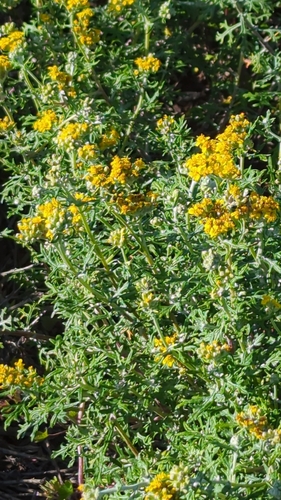
The seaside woolly sunflower is a bright yellow flower that grows near the ocean. Its soft, fuzzy leaves help it stay cool in the sun and protect it from salty winds.
Habitat: Coastal areas
The seaside woolly sunflower is a low, spreading shrub with distinct fuzzy, silvery-green leaves. Its bright yellow, daisy-like flower heads, clustered at the tips of its branches, provide a vibrant contrast to its pale foliage, making it visually unique along the coast.
Category
PlantsRarity
Common
Danger
1/5 · Very low
Snaps
2
Even in strong winds, its compact shape keeps it low to the ground, safe and snug.
Its scientific name 'Eriophyllum' literally means 'woolly leaf' in ancient Greek!
Native peoples once used its leaves for traditional remedies to help with various ailments.
This plant is a coastal hero, helping to prevent precious beach sand from blowing away.
The seaside woolly sunflower has soft, fuzzy leaves that protect it from strong winds and salty ocean spray.
Its strong, deep roots spread wide, holding loose sand in place and helping to stabilize fragile coastal dunes.
This plant can handle salty air and soil, thriving in harsh seaside conditions where many plants cannot survive.
Apis mellifera
collects nectar and pollen
Bombus vosnesenskii
gathers pollen for its young
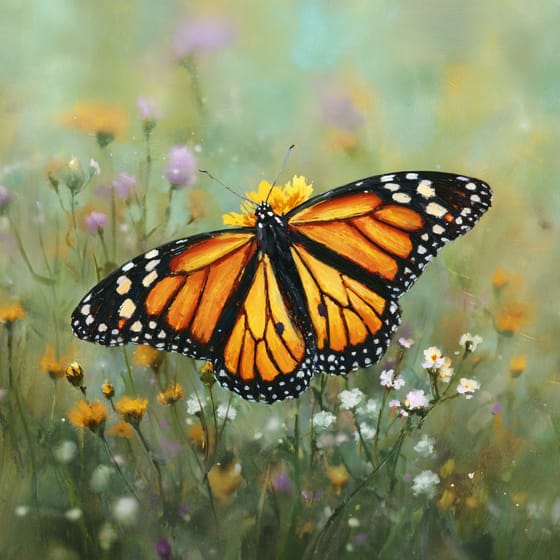
Danaus plexippus
sips nectar from its flowers
Furry describes animals possessing a dense covering of soft hair or fur.
Flowering plants are any plants that produce flowers as part of their reproductive cycle.
Spring blooming plants produce their flowers during the spring season, often signifying the end of winter and the start of new growth.
Evergreen plants retain their foliage throughout the year, never shedding all their leaves at once.
Salt tolerant plants can withstand and grow in conditions with elevated salinity levels in the soil or water.

Describes plants that are particularly attractive and beneficial to a wide range of pollinating organisms.

Coastal habitats are dynamic environments located along the interface between land and sea, influenced by tides, waves, and saltwater.
No aliases listed yet.
Danger
1/5 · Very low
Always look but don't pick flowers, so they can keep growing for everyone to enjoy.
The easiest way to identify seaside woolly sunflower is to use the Snappit nature identifier app.
30-100 cm
50-150 cm
2-4 cm
Spring-summer
No
None
Perennial
Zoom in to split clusters and explore where this object has been snapped.
Jun 6, 2026
Aquarium of the BayPhoto attribution
(c) Daveozric, some rights reserved (CC BY)
License: CC BY 4.0 ↗
Image may be shown cropped inside the card frame.

California, US
You might spot Great Blue Heron, Western Gull, and Coyote.
View guide →

US
You might spot Ochre Sea Star and Giant Green Anemone.
View guide →

California, US
You might spot Great Blue Heron, Anna's Hummingbird, and Red-Tailed Hawk.
View guide →

California, US
You might spot Western Gull, Great Blue Heron, and Anna's Hummingbird.
View guide →

California, US
You might spot North American River Otter, Leopard Shark, and Bat Ray.
View guide →
California, US
You might spot North American River Otter, Leopard Shark, and Bat Ray.
View guide →
Take the discovery with you
Snap it with Snappit to identify it, learn what makes it special, and add the discovery to your collection.








.jpg&width=800)



_001.jpg&width=800)



